Travertine — Material
Red Travertine Tables
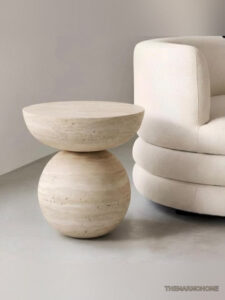
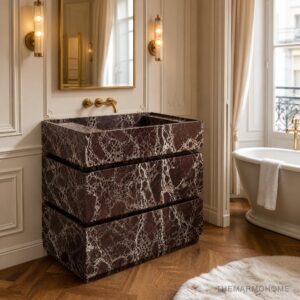
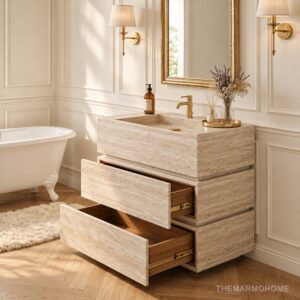
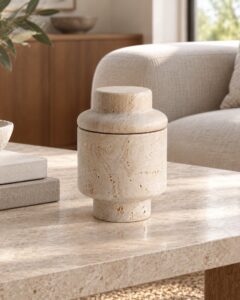
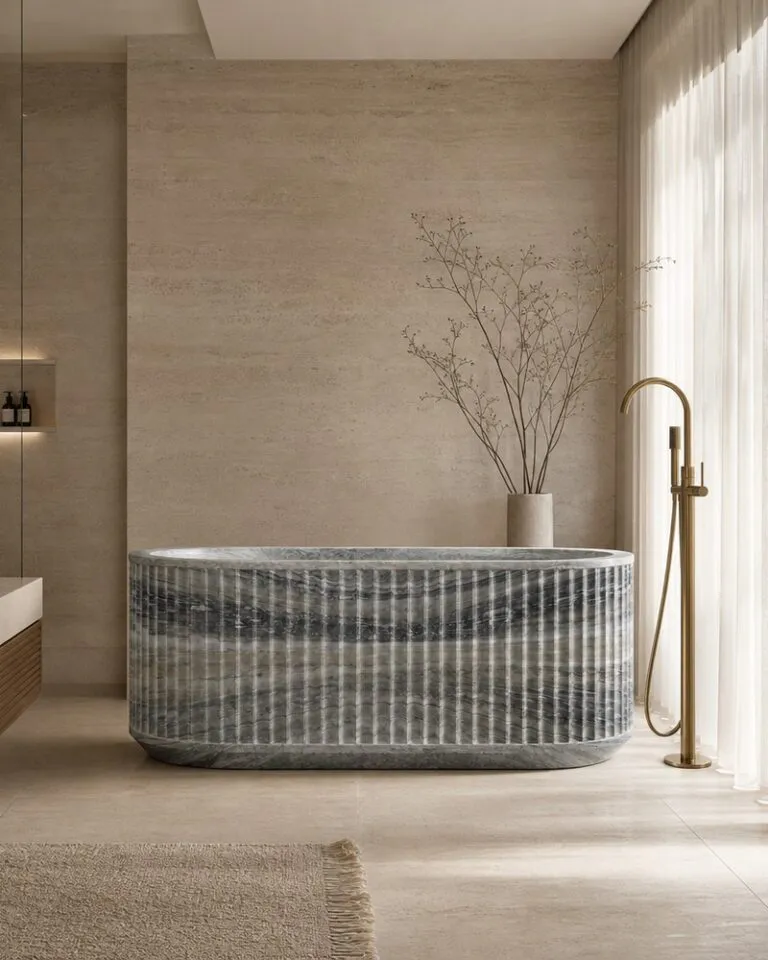
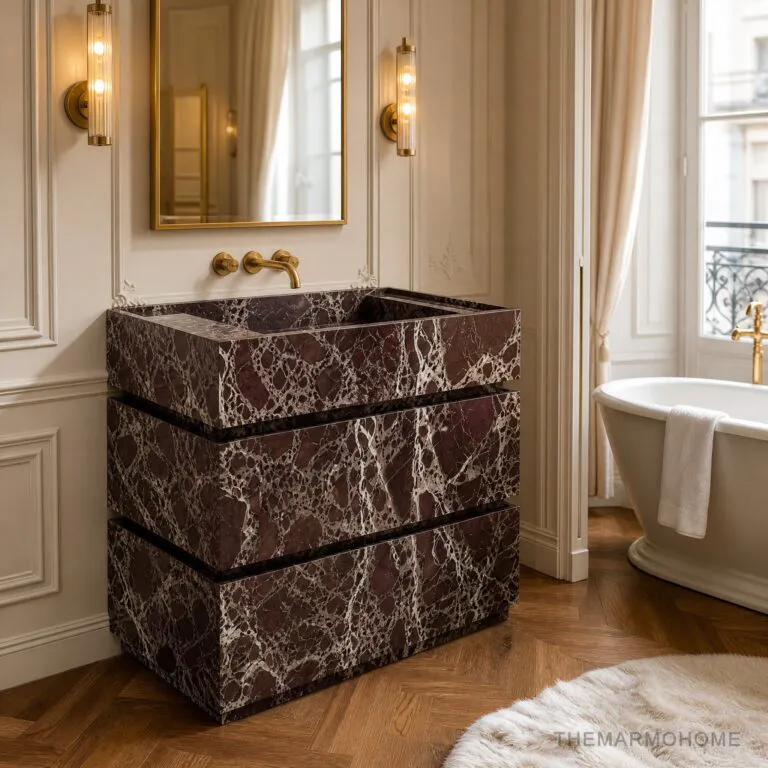
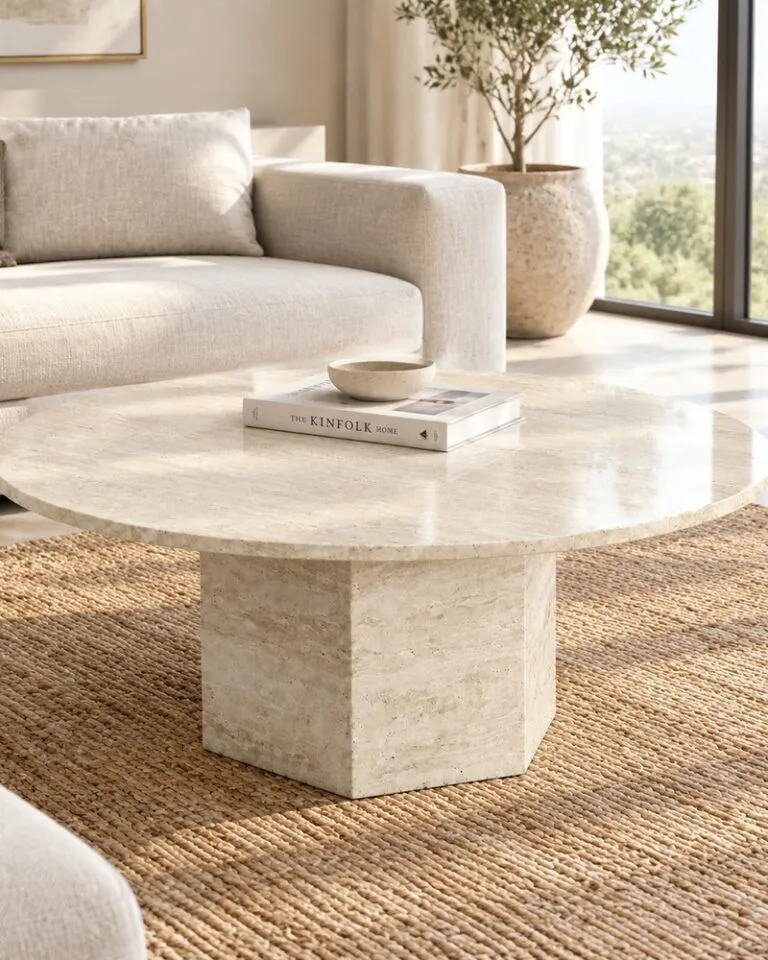
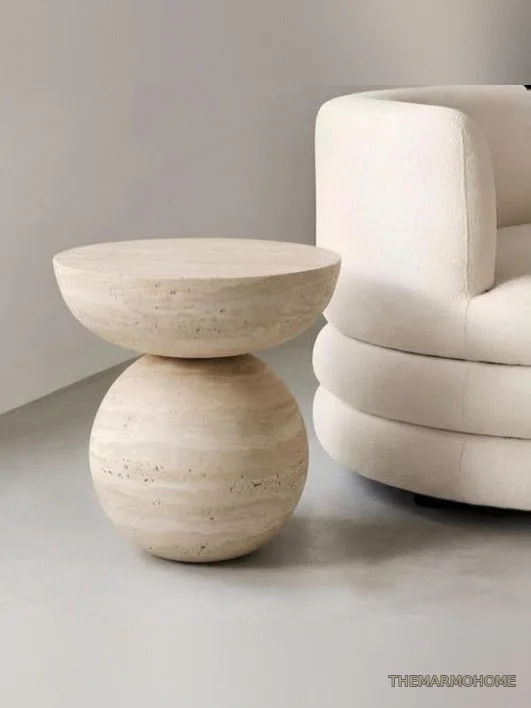
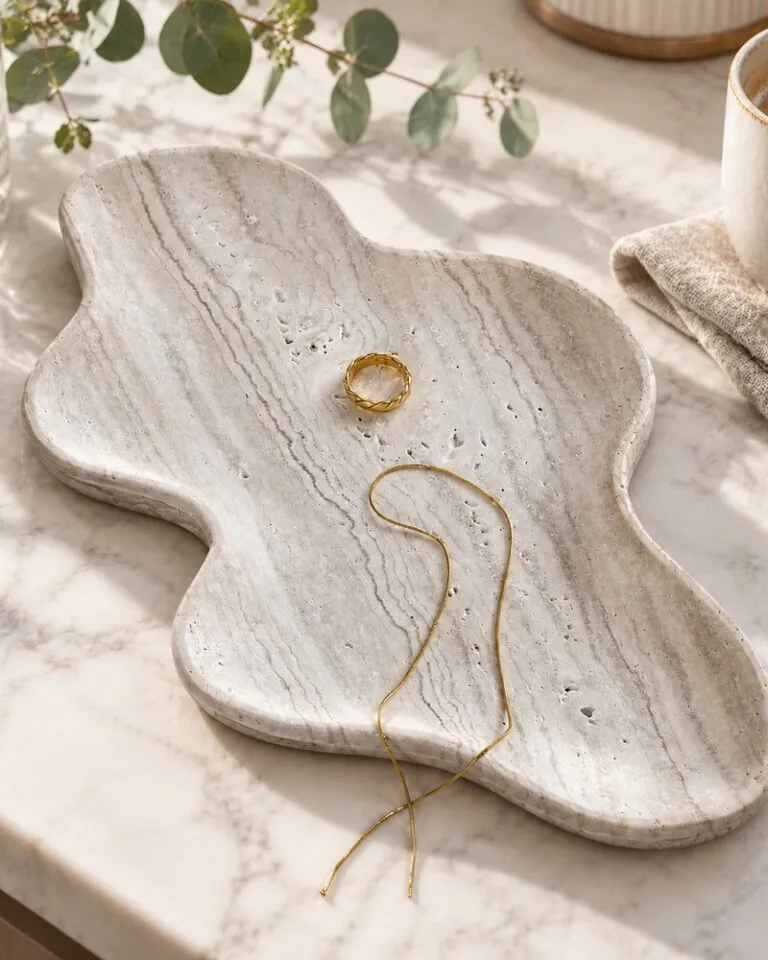
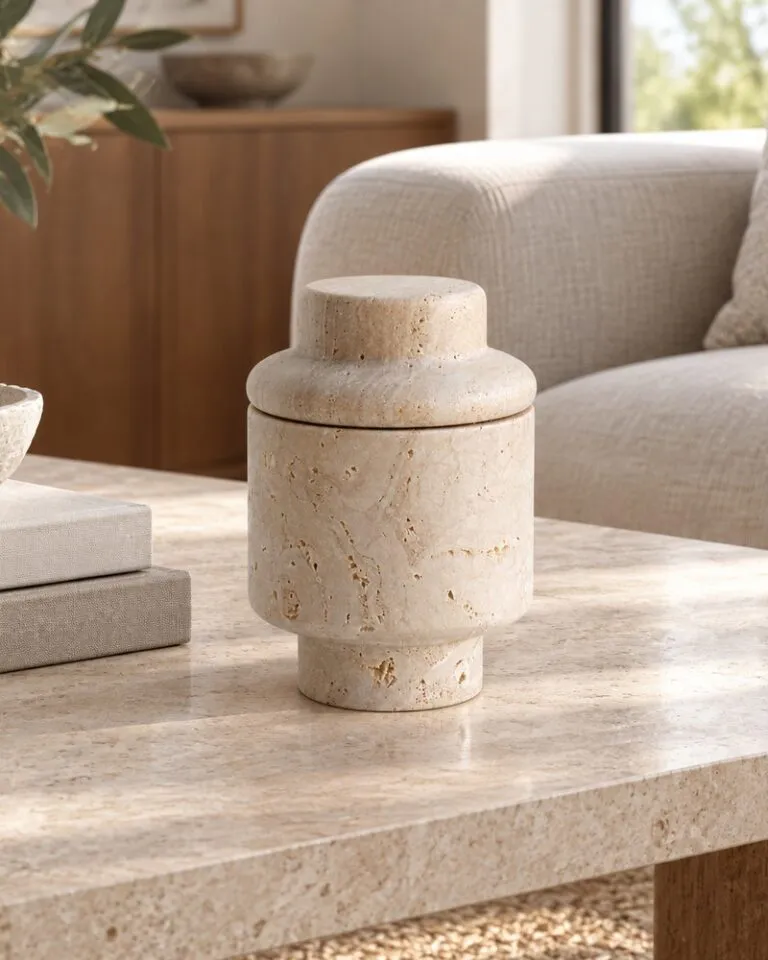
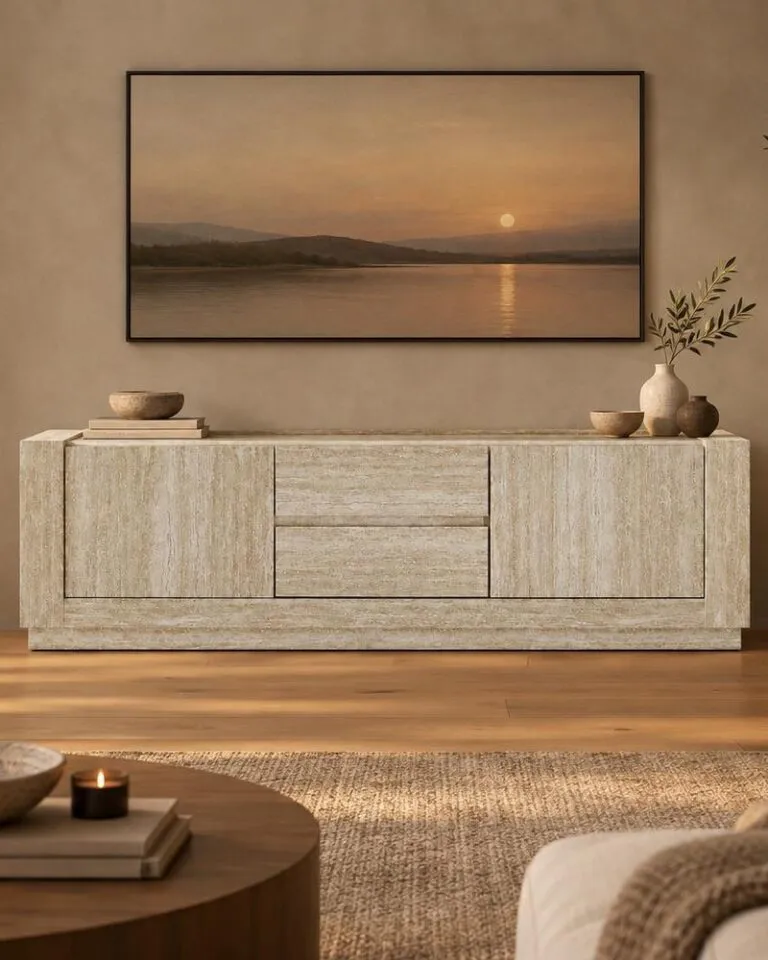
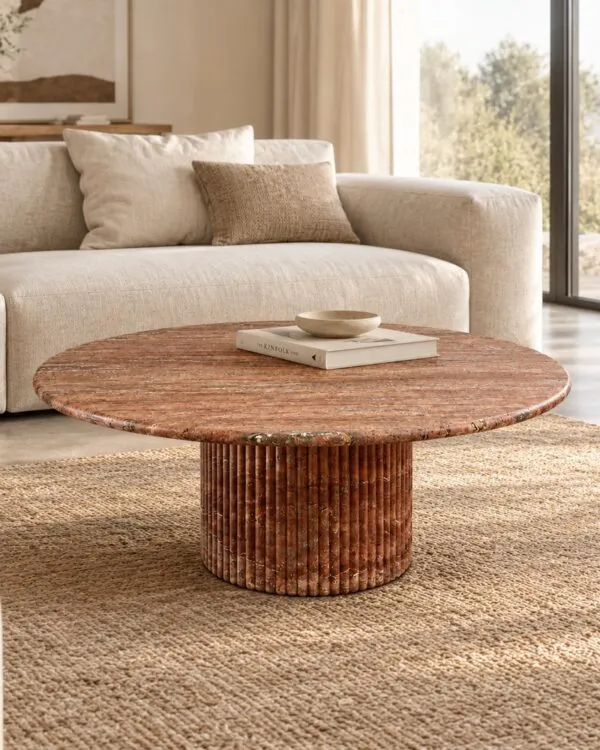
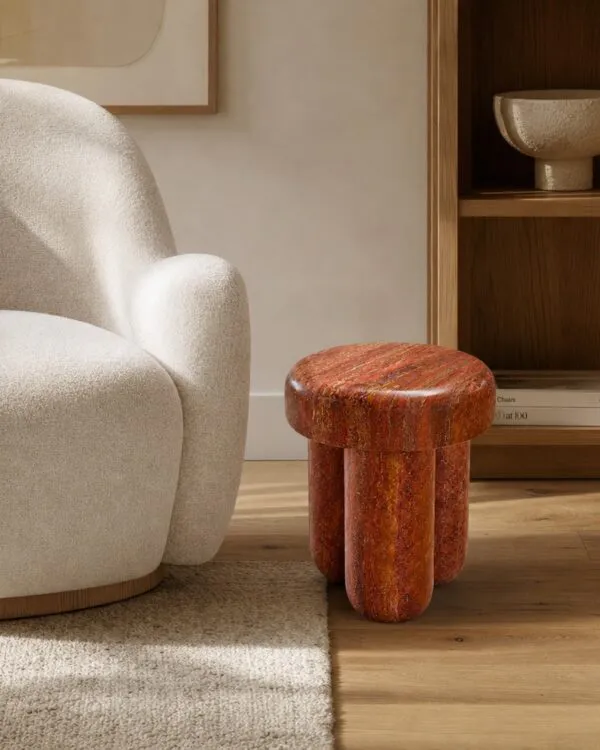
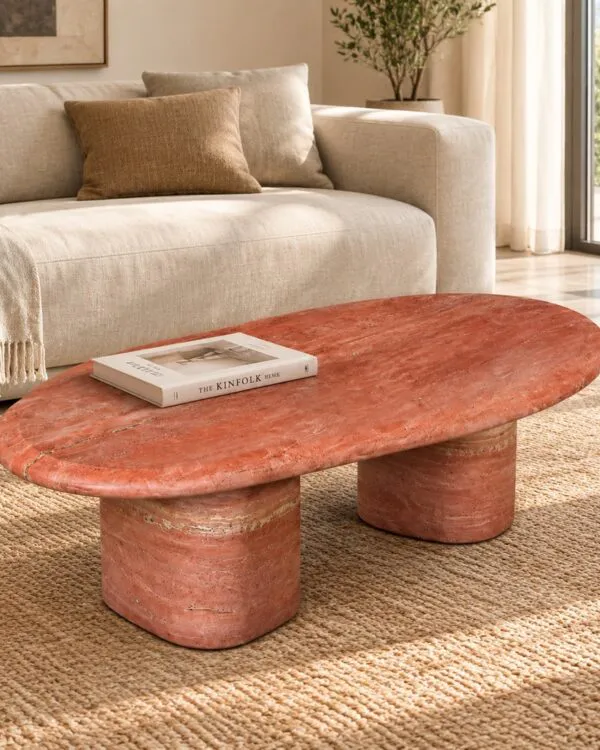
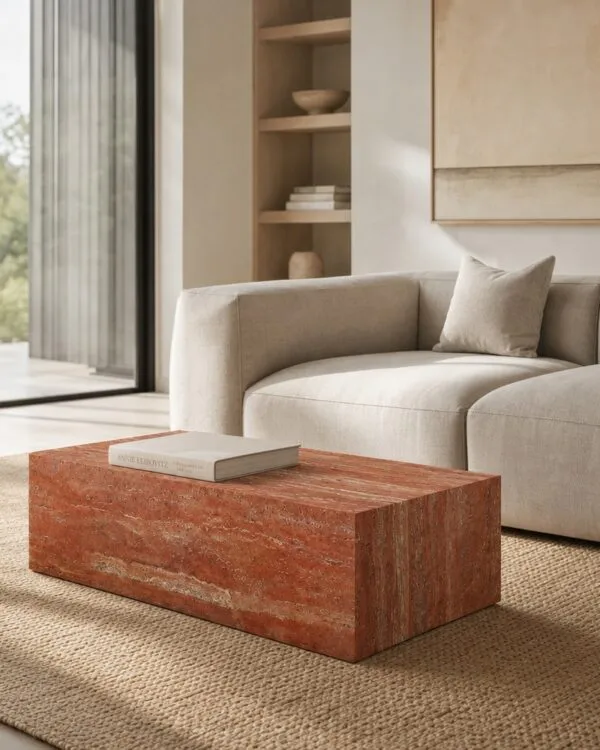
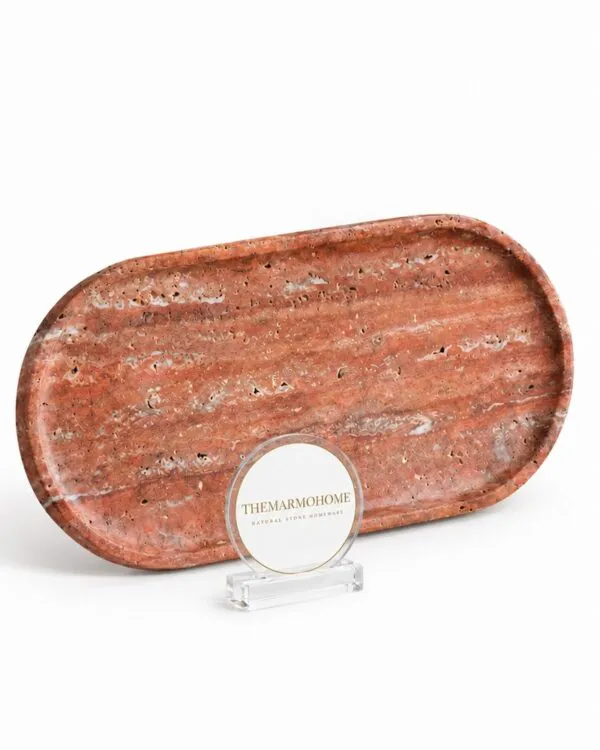
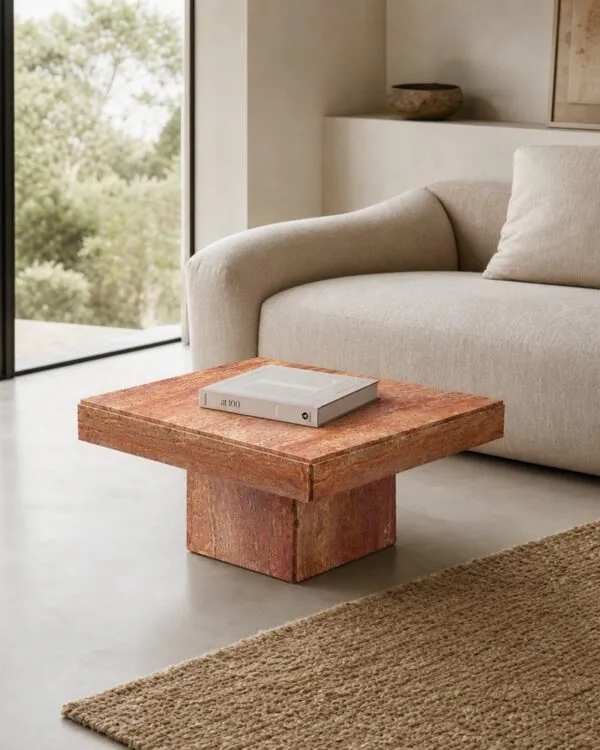
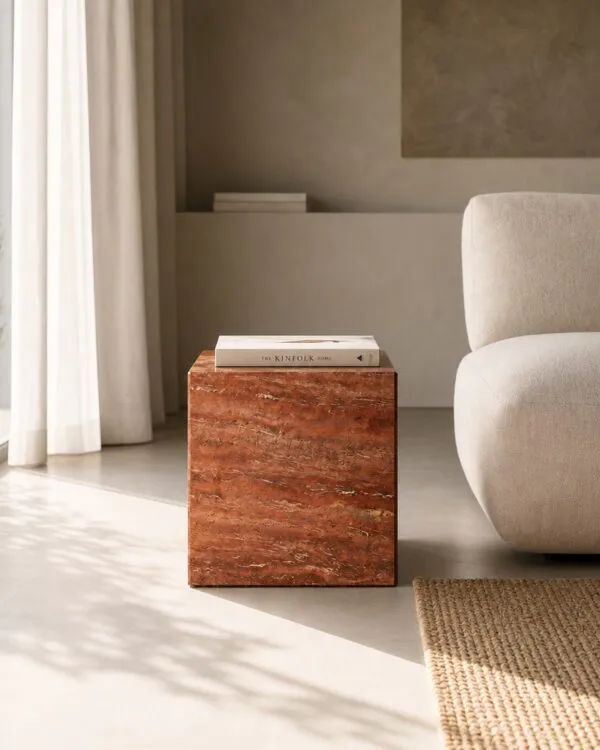
Red travertine tables carry the warmth of terracotta with the texture of stone — coffee tables, side tables, consoles and trays in a rust-red to brick ground banded in lighter sand. Made to order in our own factory, with stone sections, joins and bases varying by design. Sinks and bath surrounds are available for a warm, spa-like bathroom.
- Origin
- Denizli basin — Turkey
- Finish
- Honed · filled · brushed
- Available now
- 8 finished pieces
- Supply
- Factory direct — no middlemen
Where red travertine comes from
Red travertine is the iron-rich grade of the same spring-formed stone. Where white and beige travertine carry little mineral content, red material absorbed iron oxides as it precipitated, and the colour survived metamorphism — producing the rust, brick and terracotta tones the stone is known for.
The Denizli basin in western Turkey is the main source. Red is a smaller part of the deposit than beige, and the tone varies from a soft salmon to a deep umber depending on the layer, so matching pieces from the same block matters more here than with a neutral stone.
How red travertine reads
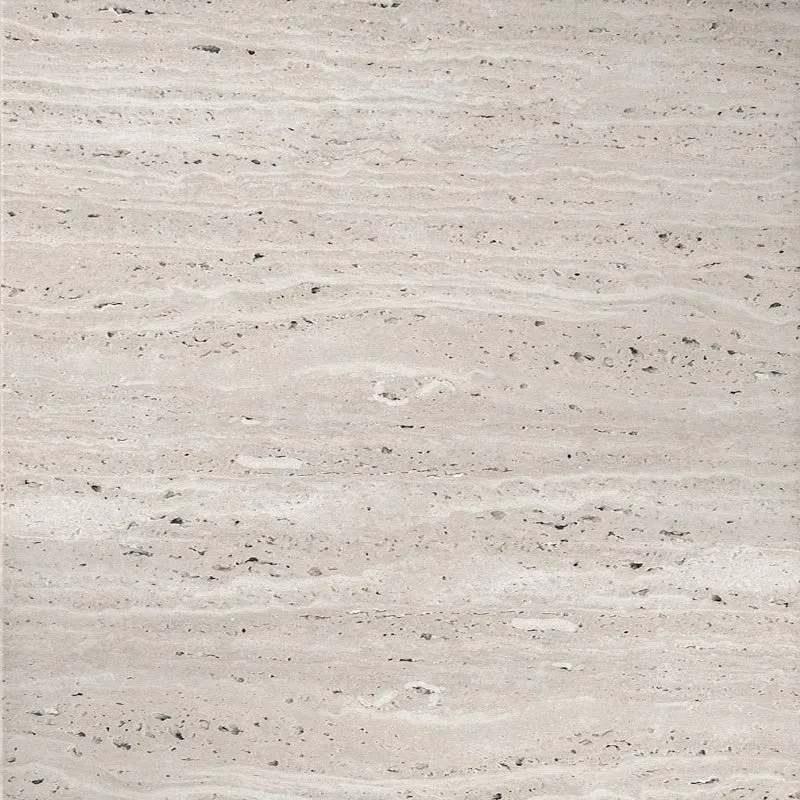
The colour is warm and slightly dusty rather than saturated — closer to aged terracotta than to a true red. Banding runs from pale sand to deep rust, and on a honed surface the effect is a soft, mottled field of warm tones rather than a single flat colour.
This is a material that brings warmth without pattern. It works beautifully in rooms built around natural textures — lime plaster, oak, linen, wool — and it is one of the few stones that looks right against green. In a cool grey interior it can look out of place, so it is best used where the palette is already warm.
Colour range
- Light sand
- Brick red
- Rust
- Deep umber
Sampled from current production. Natural stone varies by block — the slab on your piece is photographed before cutting.
What red travertine suits
Coffee tables, side tables, consoles and trays are its natural use — pieces where a warm earthy accent is welcome. In bathrooms, a red travertine sink or stone bath surround makes a spa-like statement that pairs unusually well with wood and white tile.
Because it is a mid-tone, it also works well as a bridge between a pale floor and dark furniture. On very large surfaces the colour can feel heavy, so we usually keep red travertine to pieces under two metres.
Living with red travertine
Ships sealed; re-seal annually. pH-neutral soap and water only. Because the stone is porous, wipe wine, oil and vinegar-based dressings promptly — on red stone, oil marks are less visible but they still darken the surface over time.
Avoid acidic cleaners entirely: they etch the calcium carbonate regardless of the stone’s colour. On honed surfaces, dust with a soft dry cloth before wet-wiping to avoid dulling the finish with grit.
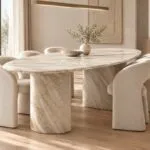
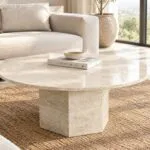
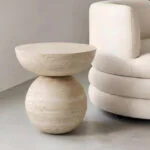
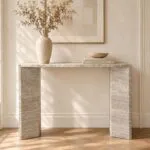
Made in Red Travertine
Available now in Red Travertine
See all Travertine pieces →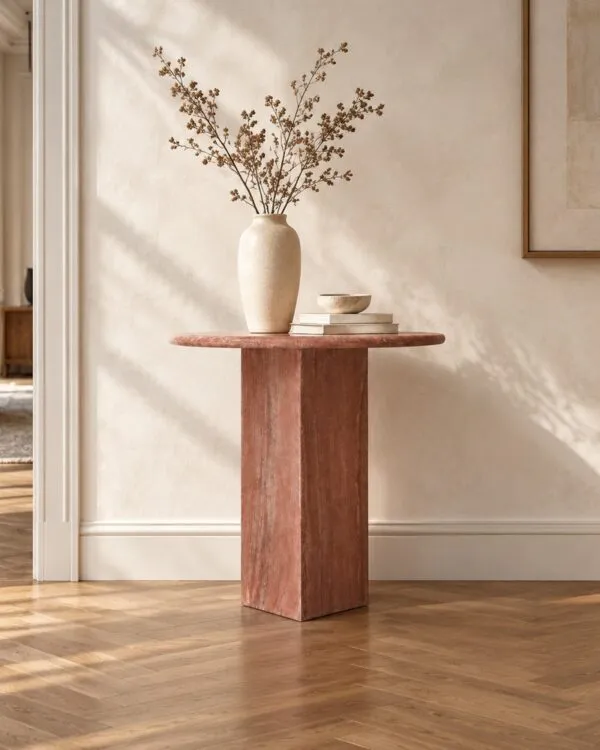
Red Travertine — questions we get asked
- Is red travertine a natural colour?
- Yes. The rust and brick tones come from iron oxides absorbed as the stone formed; nothing is added or dyed.
- Does red travertine fade in sunlight?
- No. The colour is mineral, not a surface treatment. Prolonged direct sun is best avoided for other reasons — it can dry out the sealer — but the stone itself does not fade.
- Is red travertine suitable for a bathroom?
- Yes, and it makes a warm alternative to white stone. Re-seal annually and clean with pH-neutral products only.
- Will red travertine match beige travertine tiles?
- Usually yes — both come from the same deposit and share the same texture. Send us the tile reference and we will match the tone as closely as the block allows.
Need a size or a shape that isn’t listed?
We cut from our own stock, so a custom size, edge profile or finish in Red Travertine is a normal order rather than an exception. Send us the dimensions and we will quote within 48 hours.
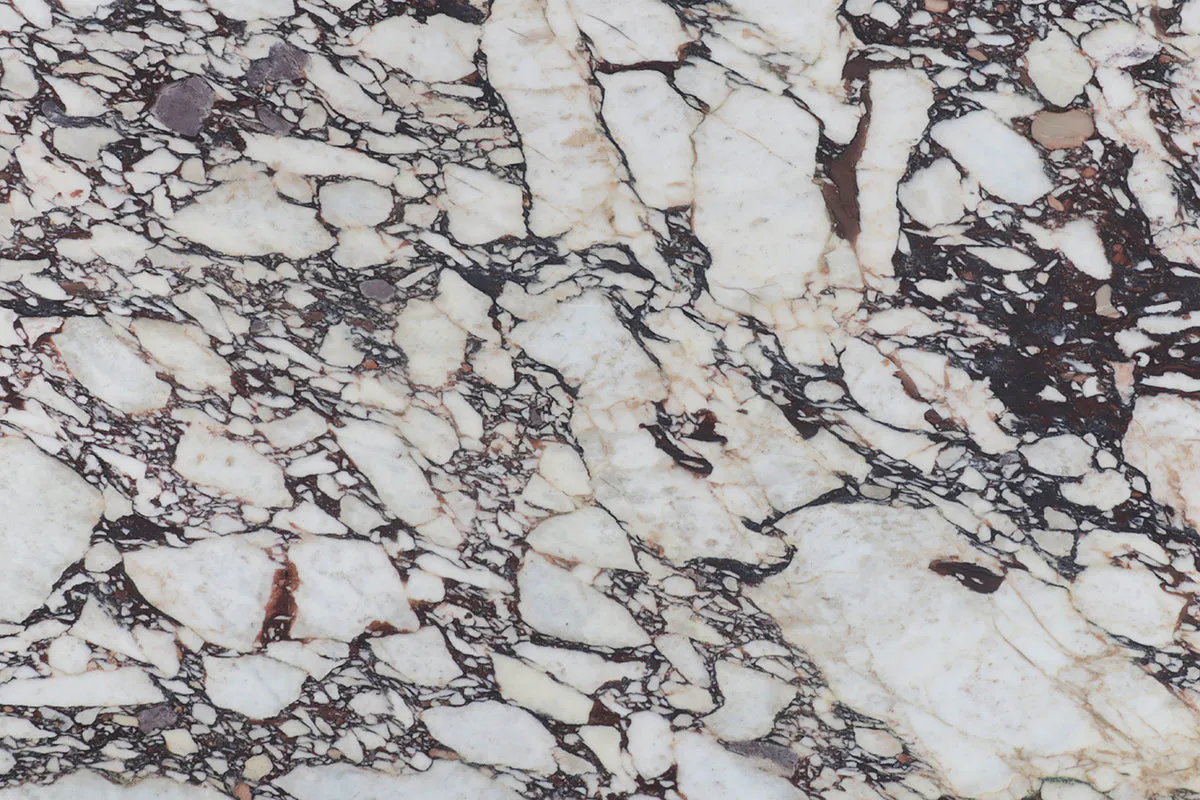 Calacatta Viola