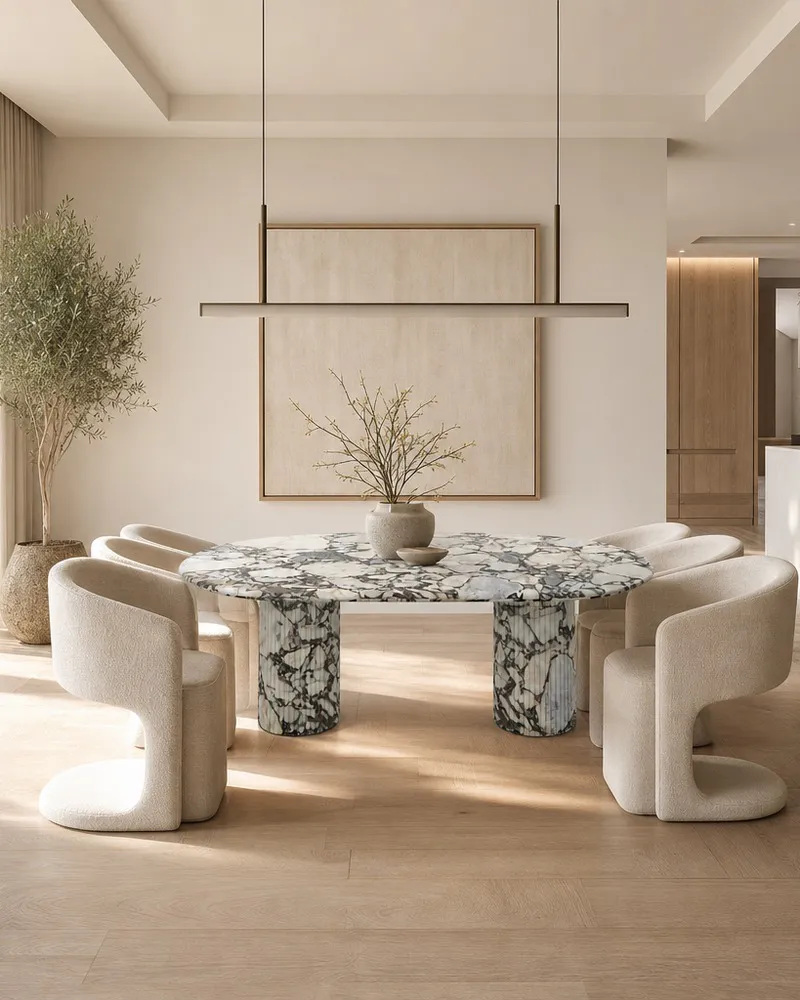
Marble Dining Tables
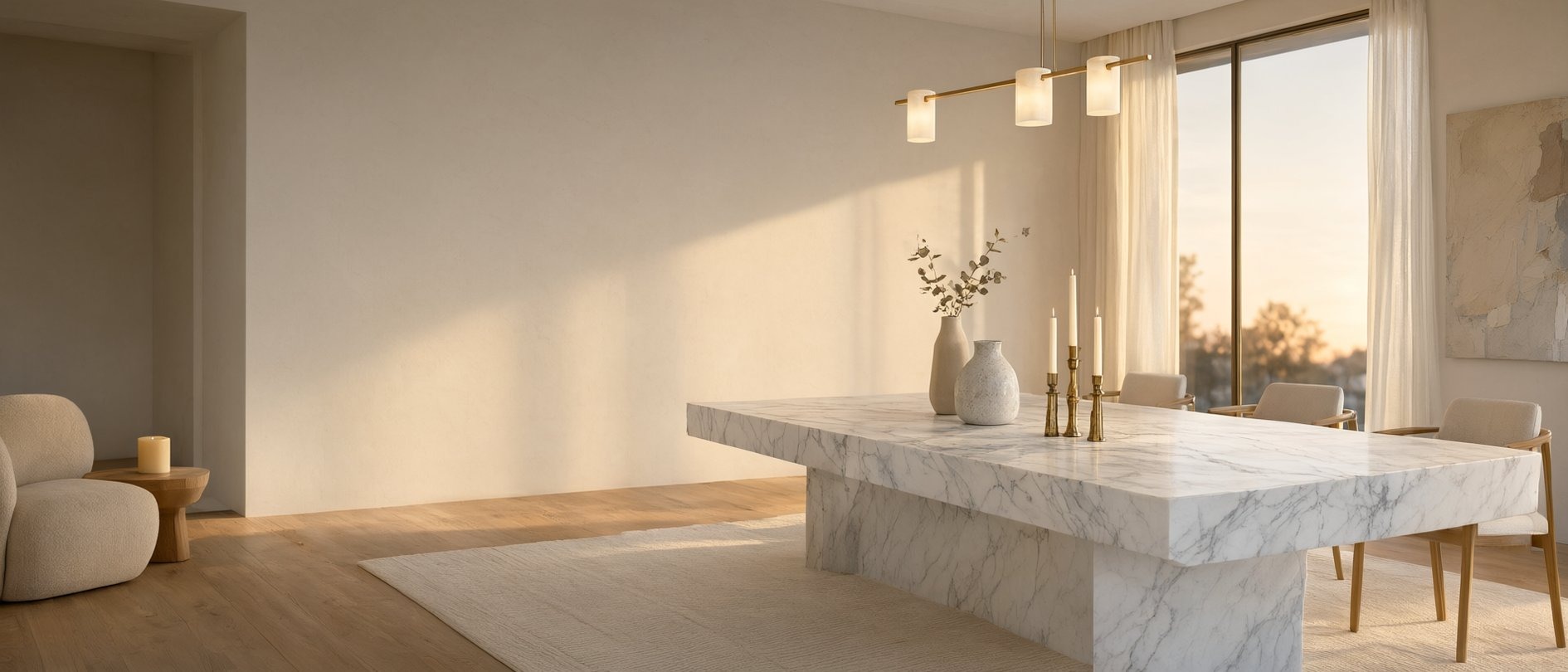
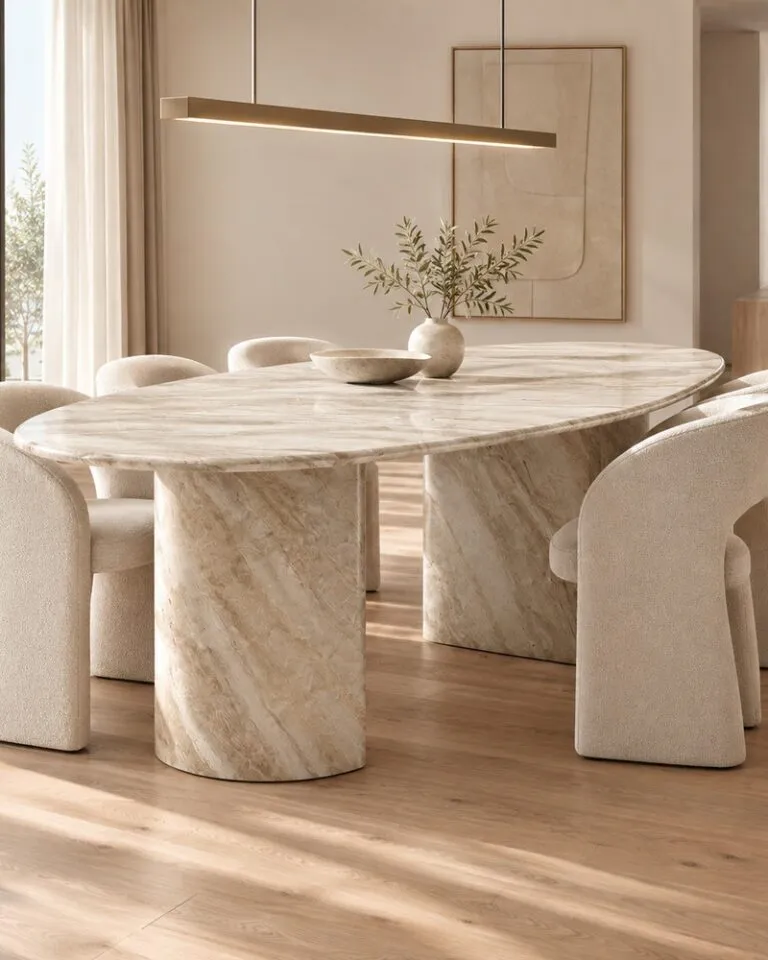
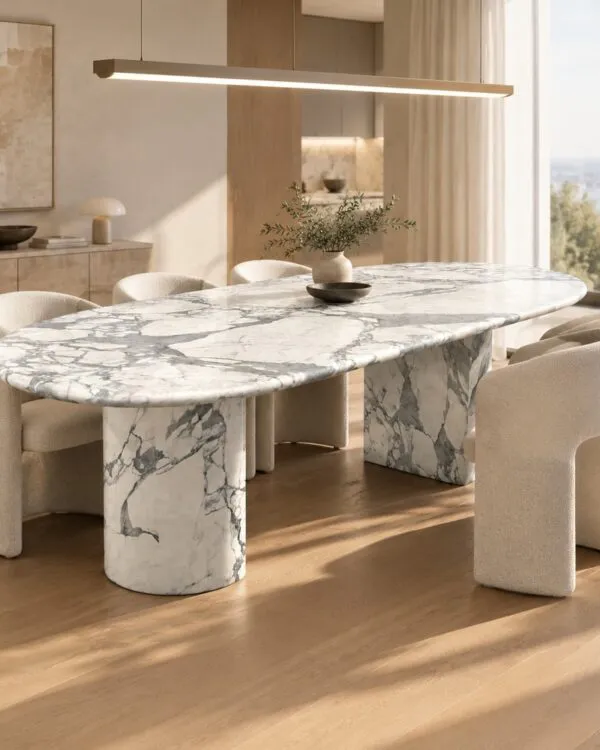
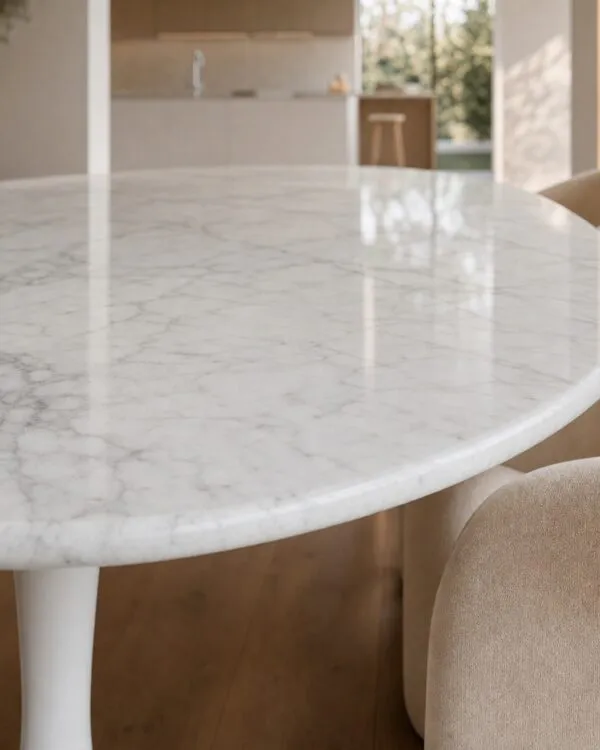
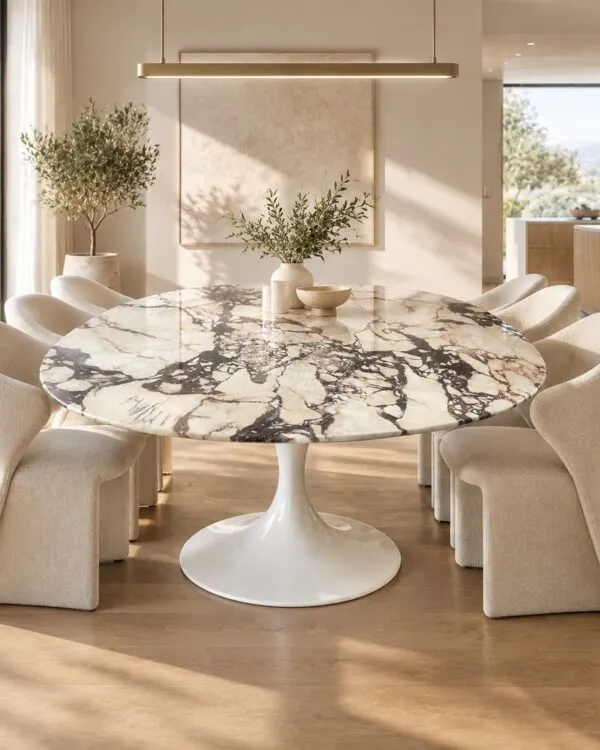
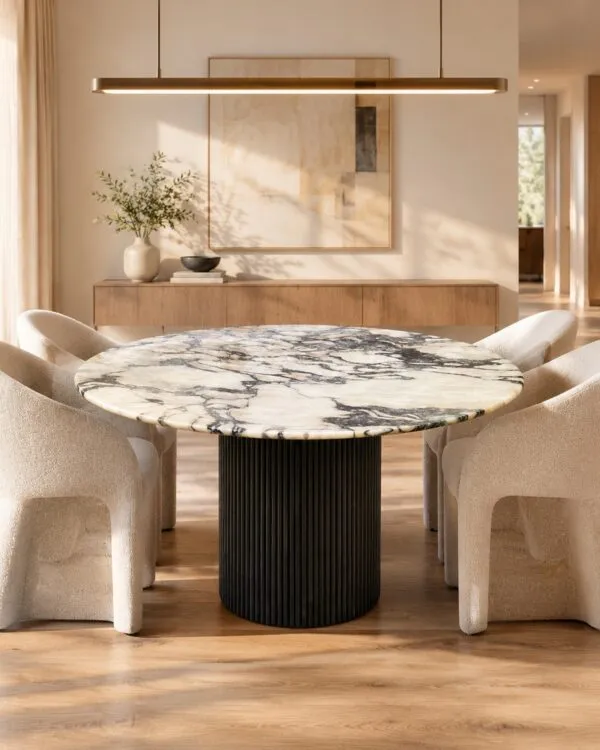
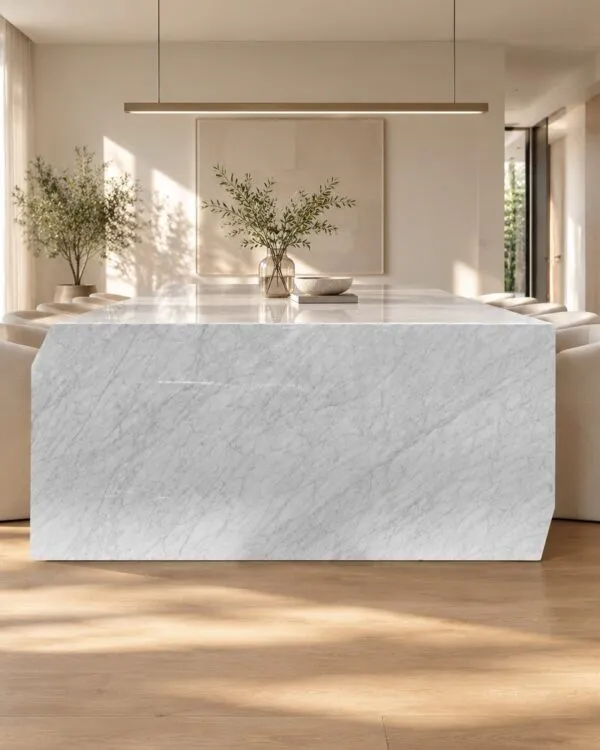
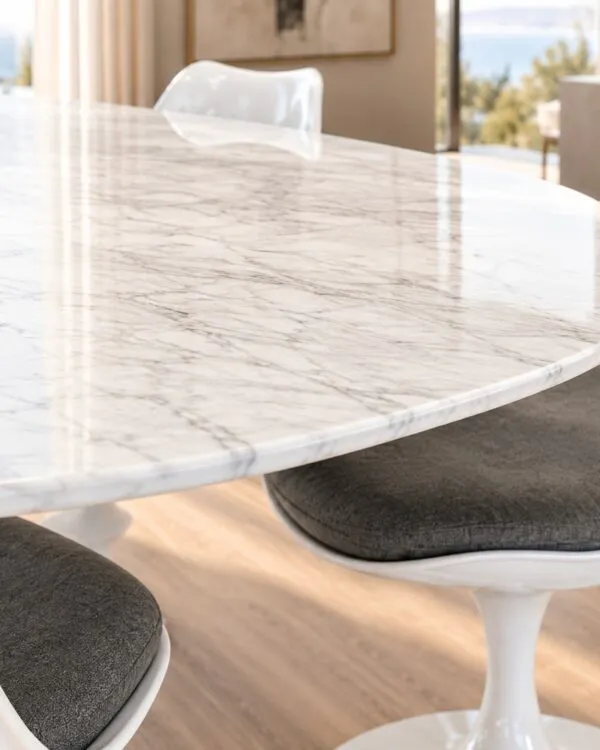
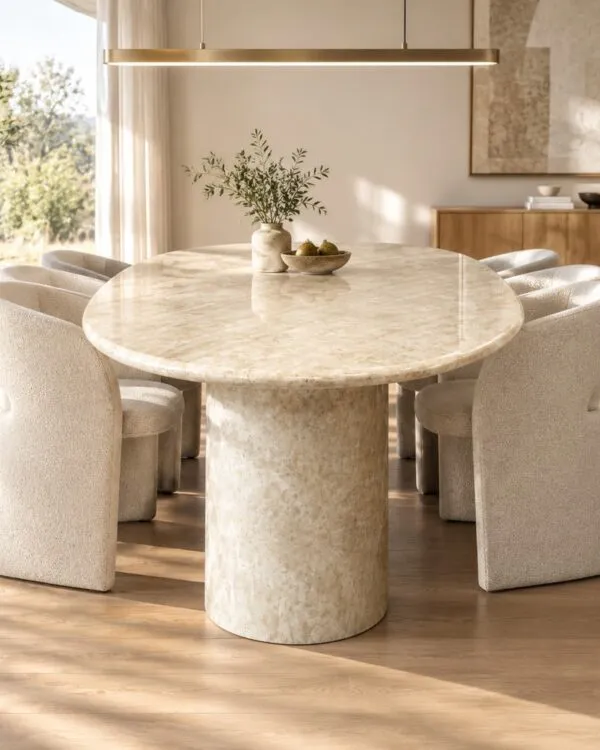
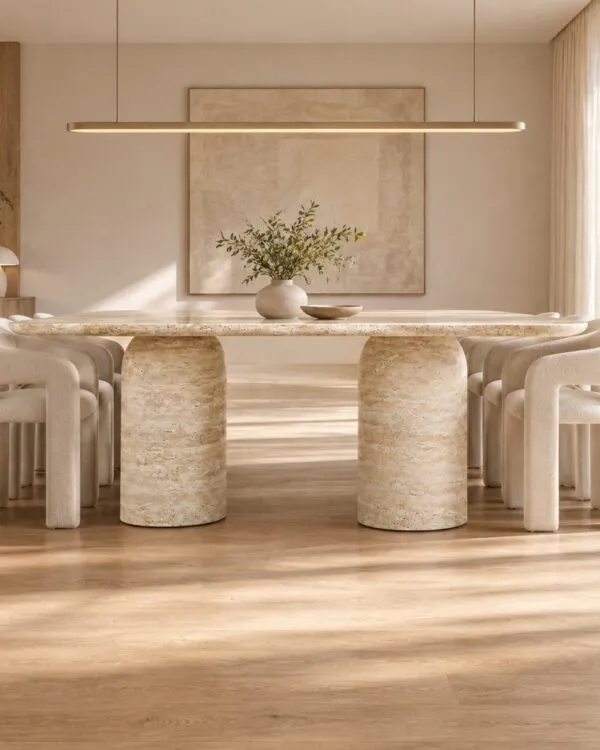
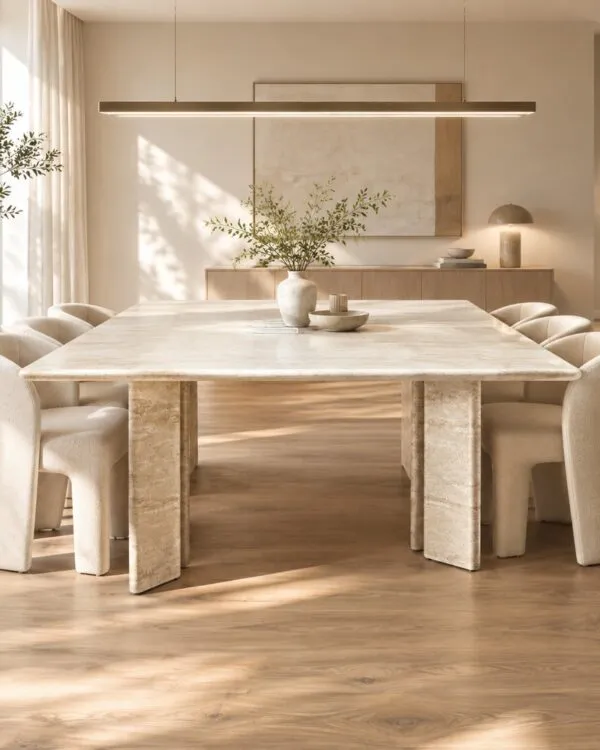
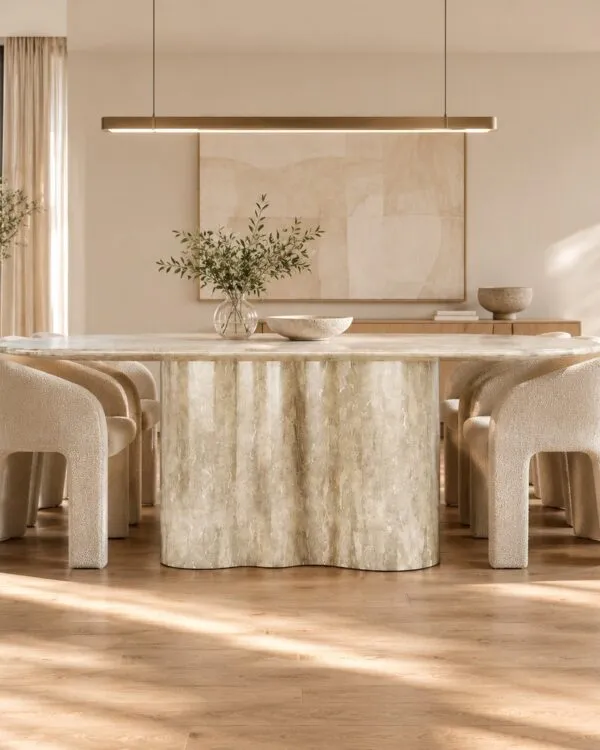
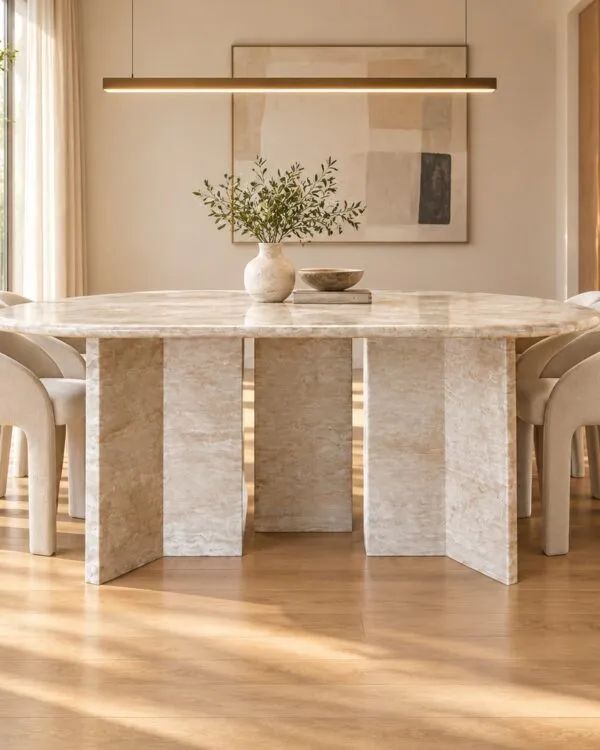
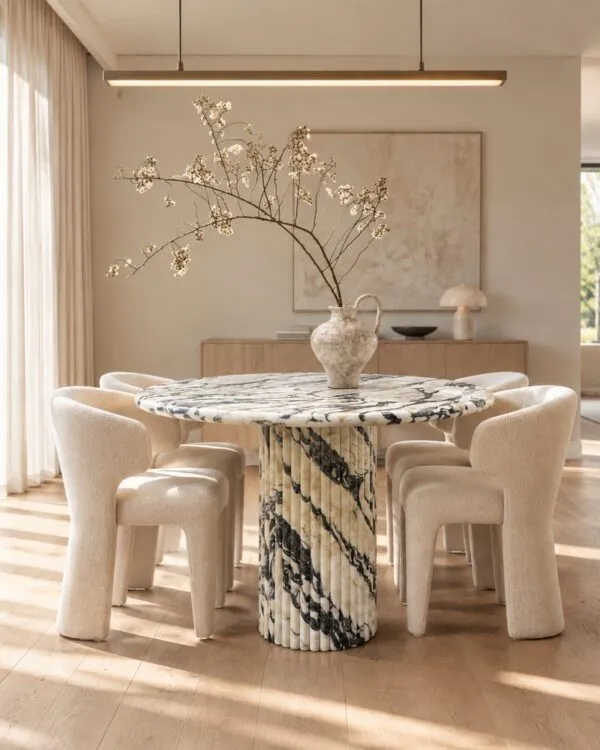
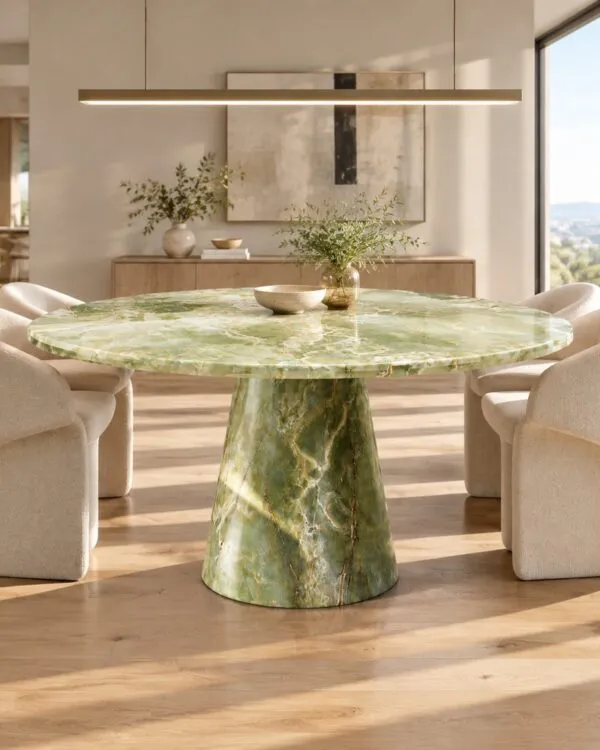
Dining tables carved from single slabs of marble and travertine, sized to seat six to ten without a single joint.
-
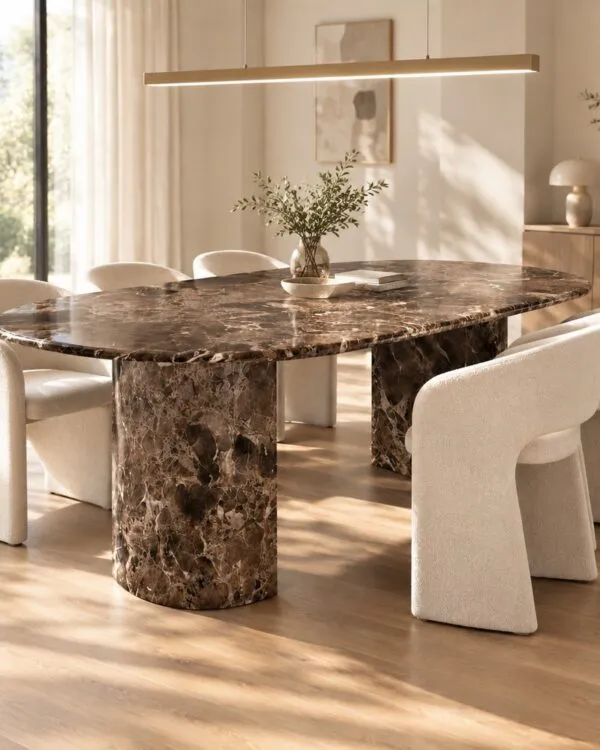
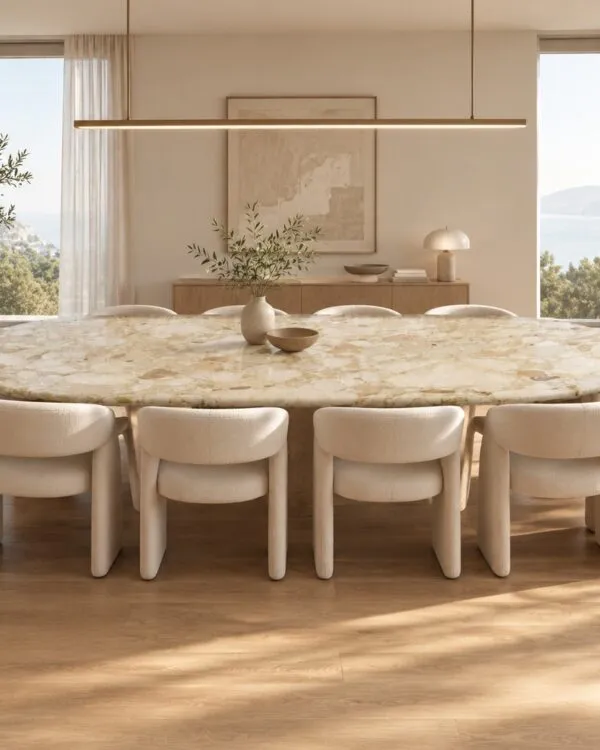
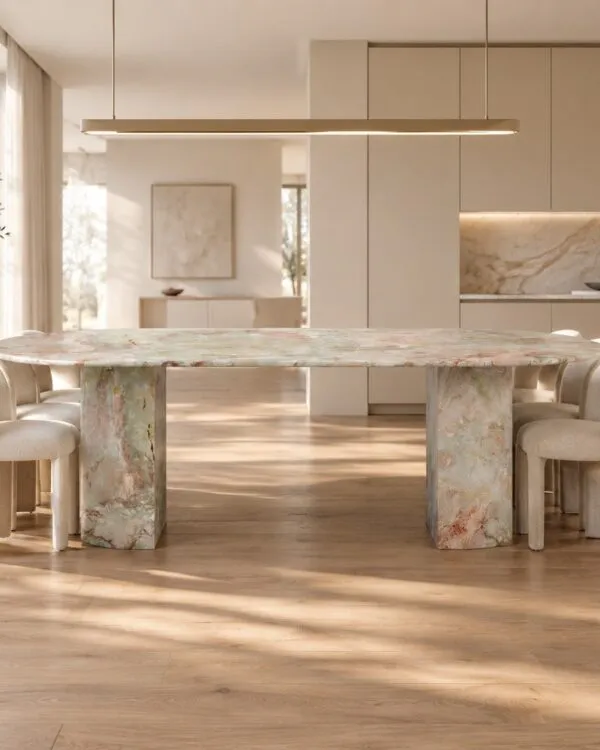
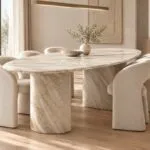
EmperadorEmperador Marble Oval Dining Table with Double D-Shaped Legs | Luxury Natural Stone Dining Furniture$3,310– $4,870
-
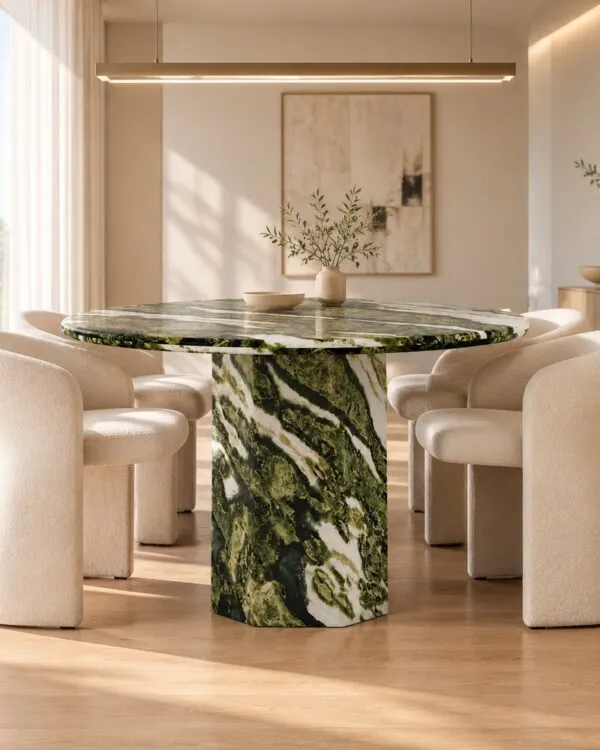
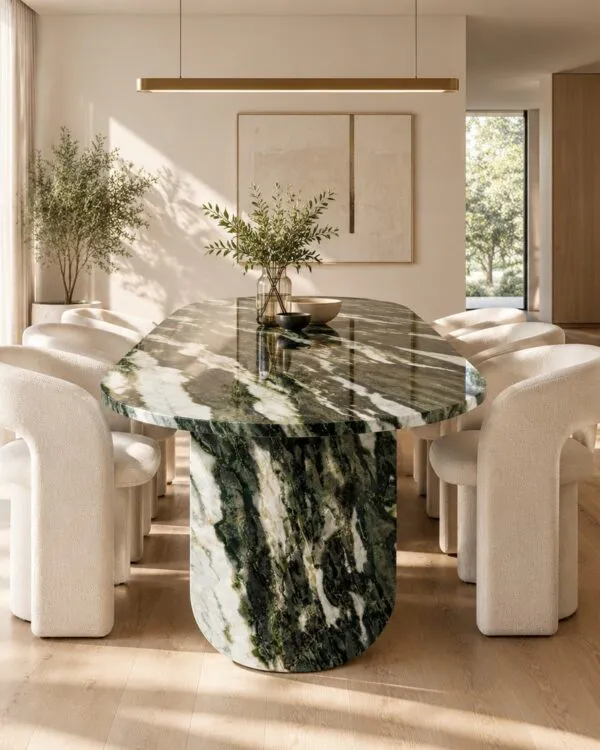
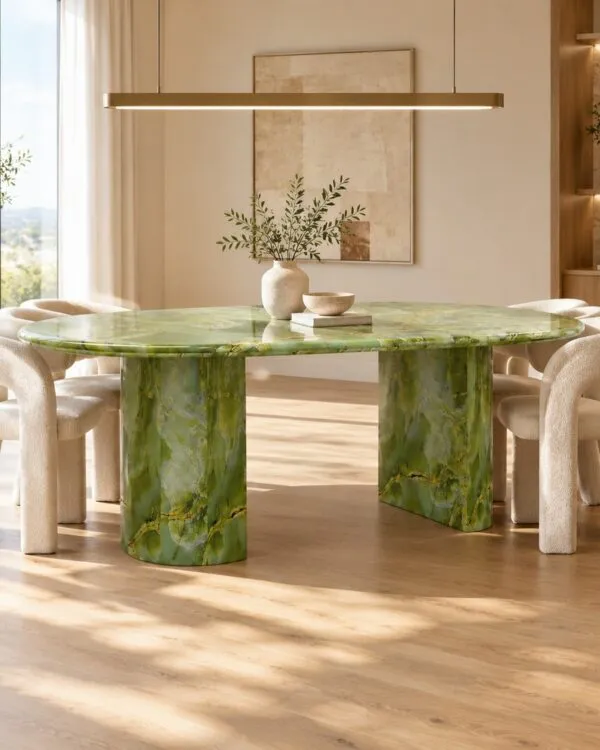
Green ForestLuxury Green Forest Marble Oval Dining Table with Sculptural D-Shaped Pedestal Base$4,080– $5,970
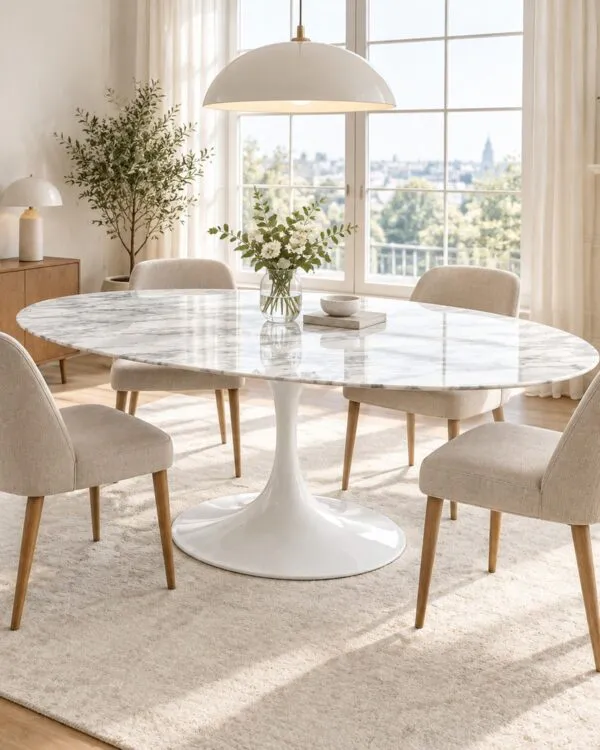
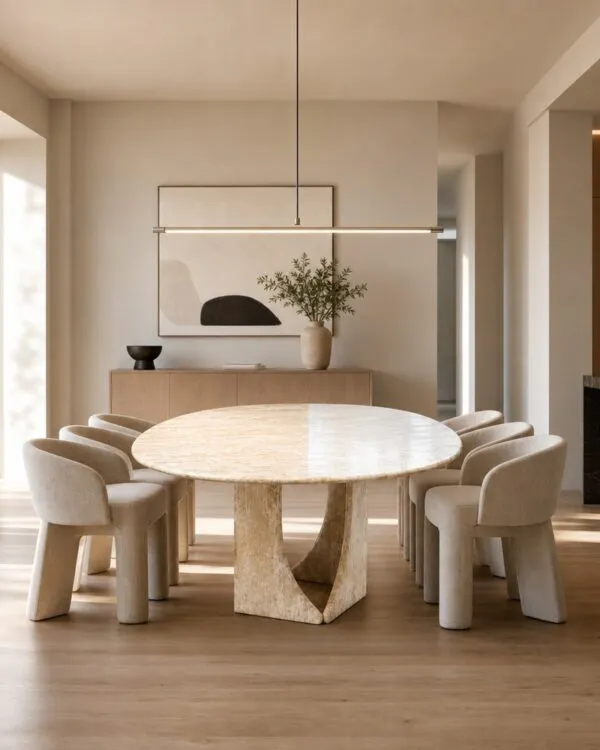
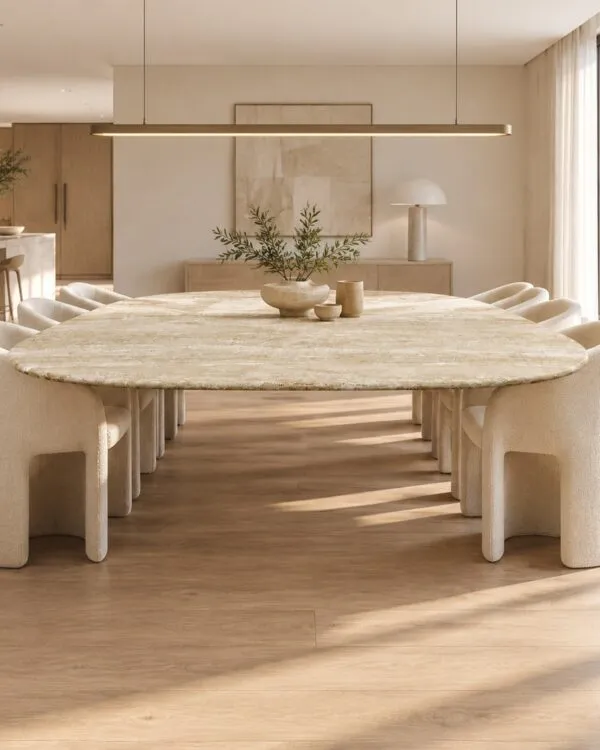
Stones used in this collection
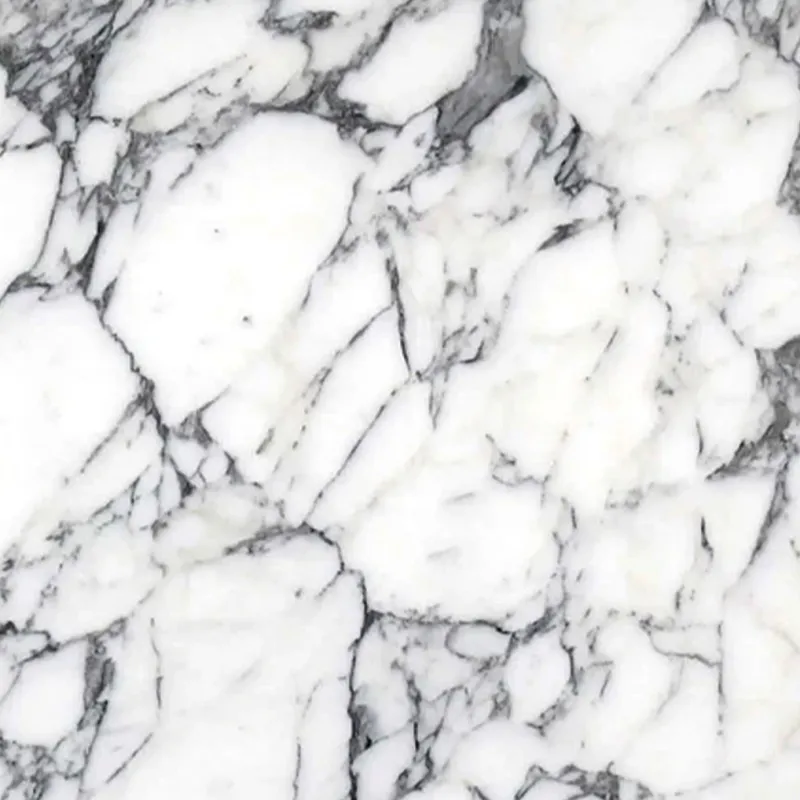
- Arabescato
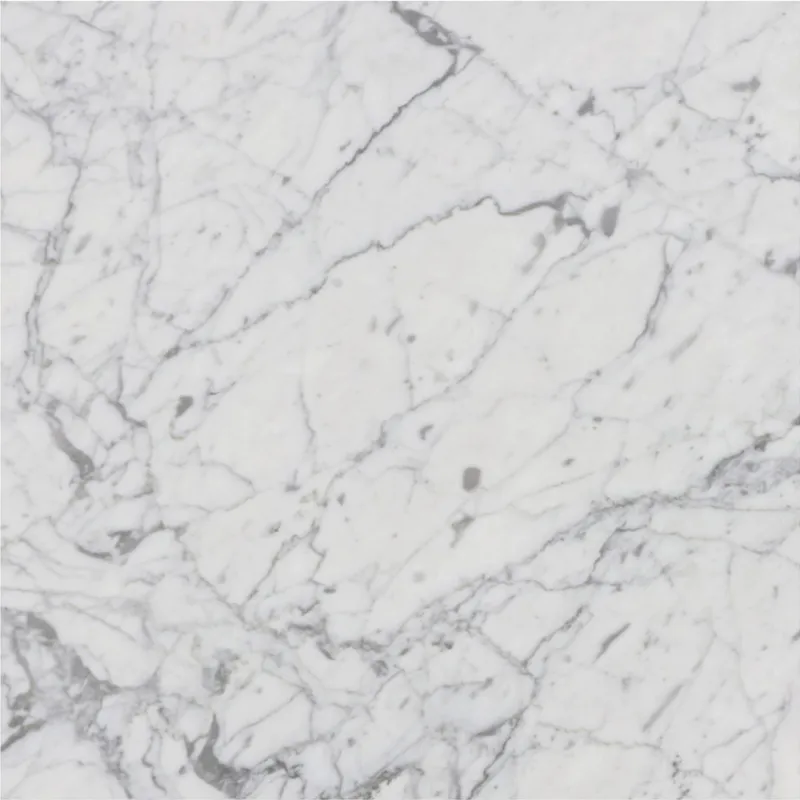
- Carrara
- Bianco Statuario Venato
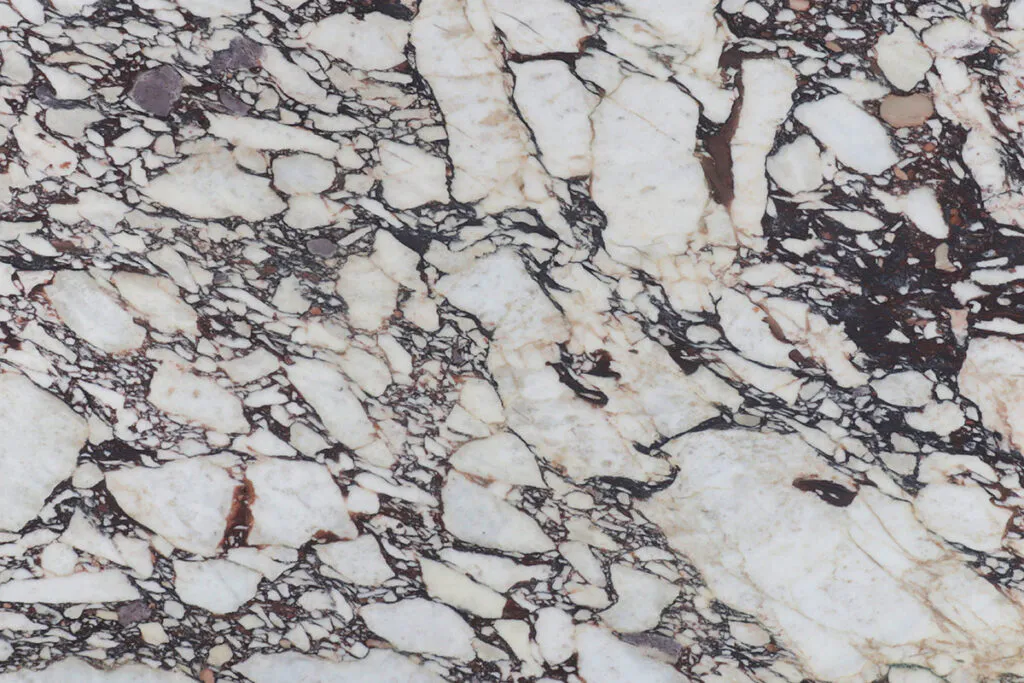
- Calacatta Viola
- Ocean Storm
- Rosso Levanto
- Taj Mahal Quartzite
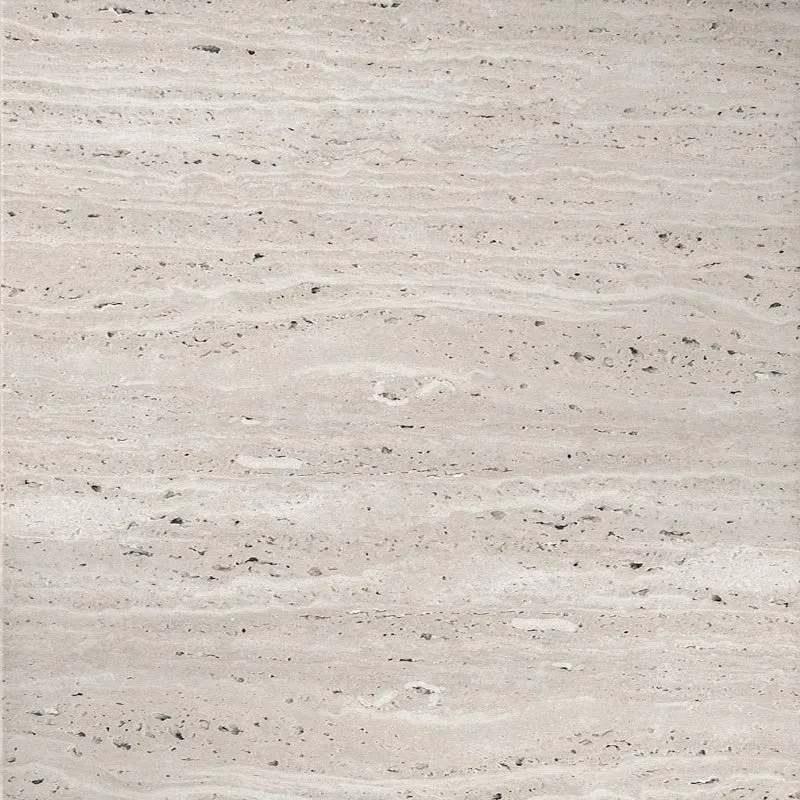
- Beige Travertine
- White Travertine
- Red Travertine
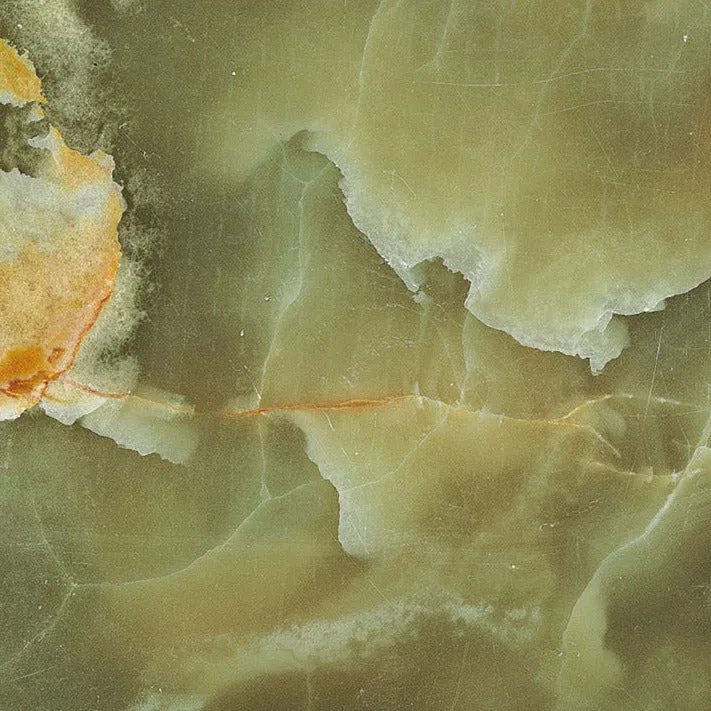
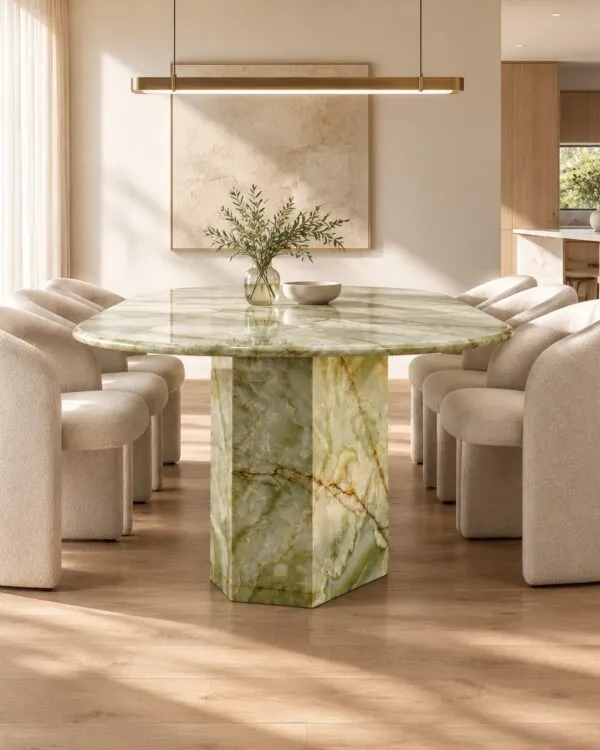
- Green Onyx
- Green Forest
- Emperador
Buying Guide
Stone Dining Tables: Size, Base & Stone
A dining table is the one piece of furniture in the house that everyone touches, every day, for decades. Choosing it in stone means choosing a surface that will not laminate, will not peel and will not date — a slab cut from a single block, with a pattern that exists in exactly one place in the world.
Start with the Size You Can Actually Seat
Work backwards from the room rather than forwards from the table. As a rule of thumb, allow about 60 cm of table width per person seated along the long side, and 90 cm of clear space behind each chair so it can be pushed back without hitting a wall. A 180 cm top seats six comfortably; 240 cm seats eight; beyond that you are into ten-seat territory and a room that needs to be genuinely large.
- Height. Standard dining height is 75 cm to the top of the stone. Sideboards, benches and chairs are all built around that number, so it is worth treating as fixed.
- Knee clearance. Check the space under the top against your chair arms, not just the seat height. A deep apron or a chunky pedestal can make a comfortable-looking table unusable.
- Doorways. A stone top arrives crated and heavy. Measure the narrowest doorway, stair turn and lift depth on the route to the room before you order, not after.
Then Choose the Base
The base decides whether the table reads as architecture or as furniture. A plinth — a solid slab standing on end — is the most architectural and the calmest in a small room, because it visually blocks less floor than four legs. A pedestal is the softer, more sculptural option and the easiest to walk around. Trestle and double-pedestal bases suit long tops and let you seat people at the ends. Sculptural forms — carved, organic, monolithic — are the statement choice, and they work best when the table stands free with space on all sides.
Whatever the shape, stone bases are heavy for a reason: a top of this size needs mass underneath it to stay put. That stability is also why a stone table never develops the wobble that thin-leg timber tables do after a few years.
Choosing the Stone
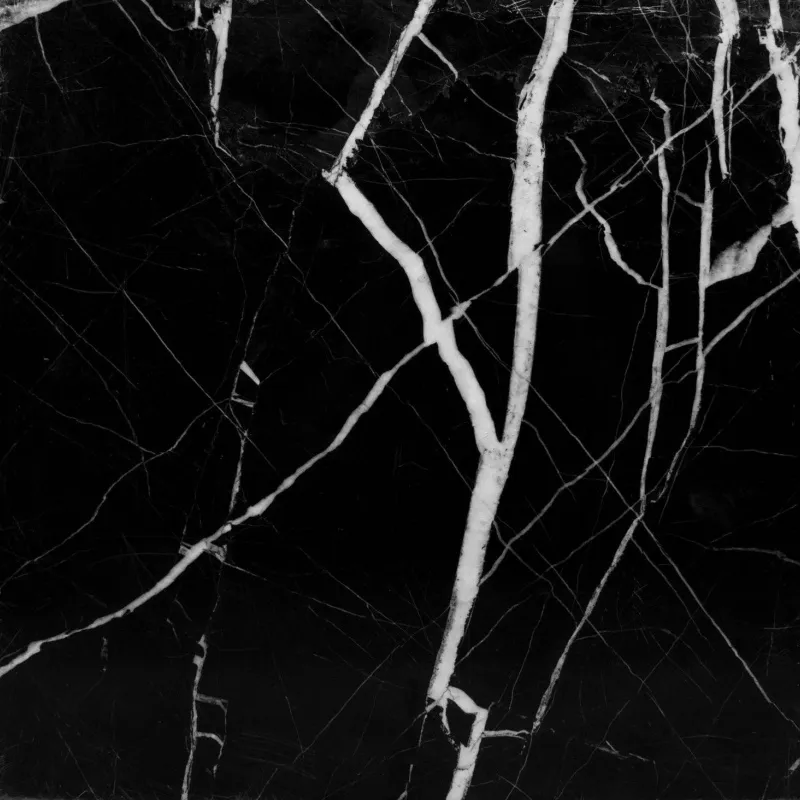
Travertine is the warm, matte option — beige and silver travertine are the two most-used dining stones we cut, because the tone is neutral and the texture is the interest. White and grey marble (Carrara, Arabescato, Statuario) gives a brighter, more formal surface that reflects light back into the room. Dark marble (Nero Marquina, Emperador, Rosso Levanto) anchors a pale dining room and hides everyday marks better than white stone. Onyx is spectacular but softer — we would steer a family with young children towards marble or travertine instead.
Finish matters as much as colour. A polished top is the classic dining surface and wipes clean easily; a honed top is matte, hides water marks and fingerprints, and looks more contemporary. For a table that will see daily family use, honed is usually the more forgiving choice.
Living With a Stone Dining Table
Every top ships sealed. Wipe wine, oil, citrus and vinegar-based dressings promptly — marble and travertine are calcium stones, and acid is the one thing that will etch them. Use coasters under hot dishes and a felt-backed runner if the surface will host serving dishes. Re-apply a penetrating sealer about once a year, or whenever water stops beading.
One practical note on weight: a large stone top and its base together can approach the load of a small car spread across four feet. Concrete slabs and ground floors are never a problem; suspended timber floors are worth a quick structural conversation, and we can confirm the exact weight of any model before you order.
Rounds, Ovals and Rectangles
A rectangle is the most efficient shape for a given wall length and the easiest to seat along both sides. A round top seats more people in a smaller room because there are no corners to negotiate, and it makes conversation easier — worth considering if the table will double as a place to work or talk rather than only to eat. An oval splits the difference: the length of a rectangle with the softness of a round, and no sharp corner at shin height.
What matters more than the outline is the proportion of top to room. A rectangular table wants roughly 90 cm of clear space on every side; a round one needs less, because you walk around a curve rather than past a corner. If the room is narrow rather than small, a round or oval top will feel more generous than a rectangle of the same seating capacity.
- How many people does a stone dining table seat?
- Allow about 60 cm of width per person along the long side. A 180 cm top seats six comfortably, 240 cm seats eight, and anything longer is a ten-seat table that needs a genuinely large room.
- Marble or travertine for a dining table?
- Marble is denser with a smoother, more reflective surface and suits a formal room. Travertine is matte and warm, hides everyday marks better and feels softer in a modern interior. Both are sealed calcium stones and need the same pH-neutral care.
- Will a stone dining table stain?
- Sealed stone resists everyday spills. Wipe wine, coffee, oil and vinegar promptly and re-seal annually — that routine is what keeps a polished top looking new for decades.
- Can you make a dining table in a custom size?
- Yes. We cut from our own stock, so a specific length, width, height or base style is a normal order rather than an exception. Send the dimensions and we quote within 48 hours.

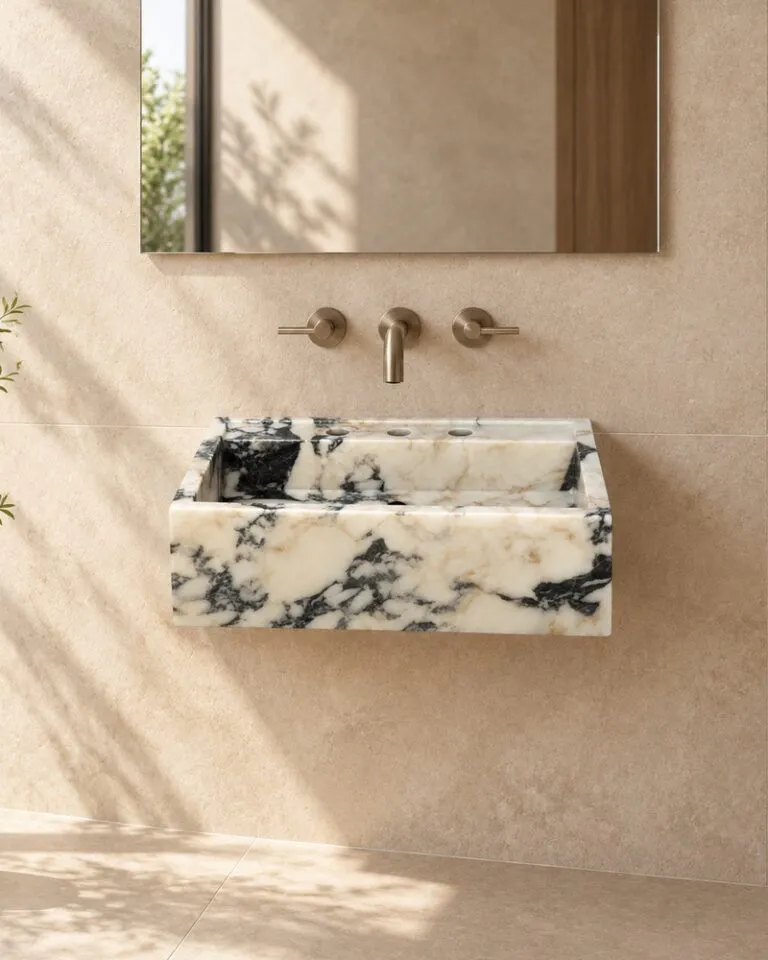
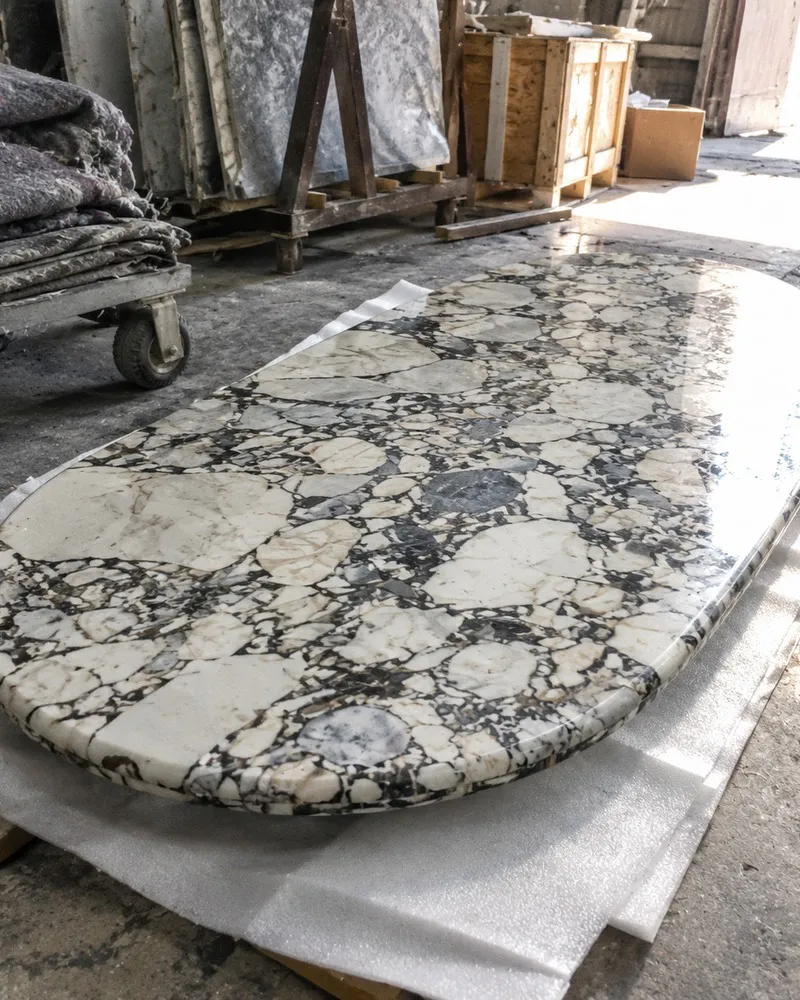
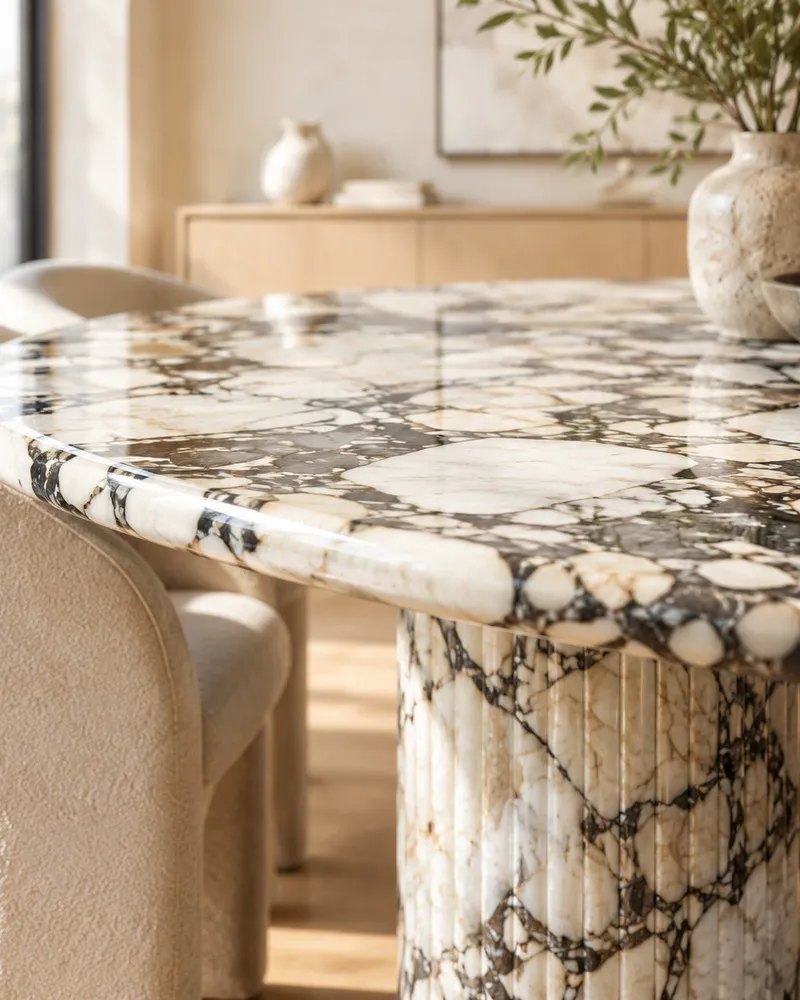
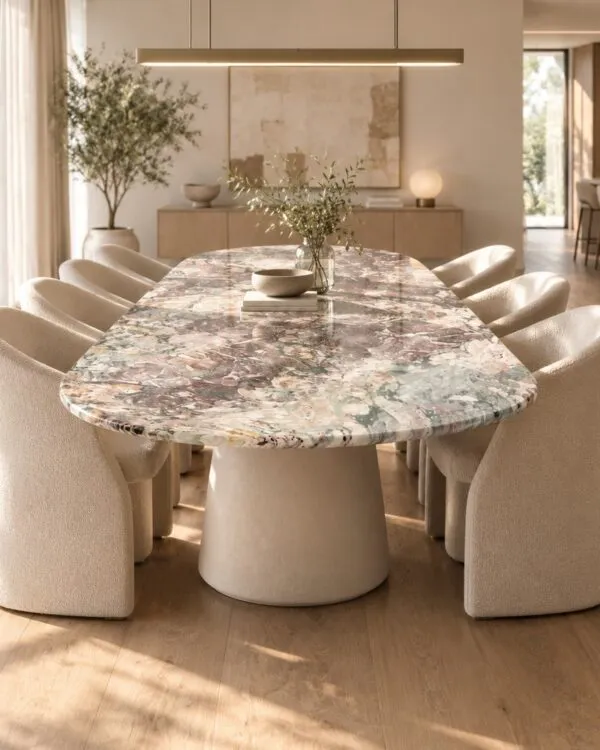
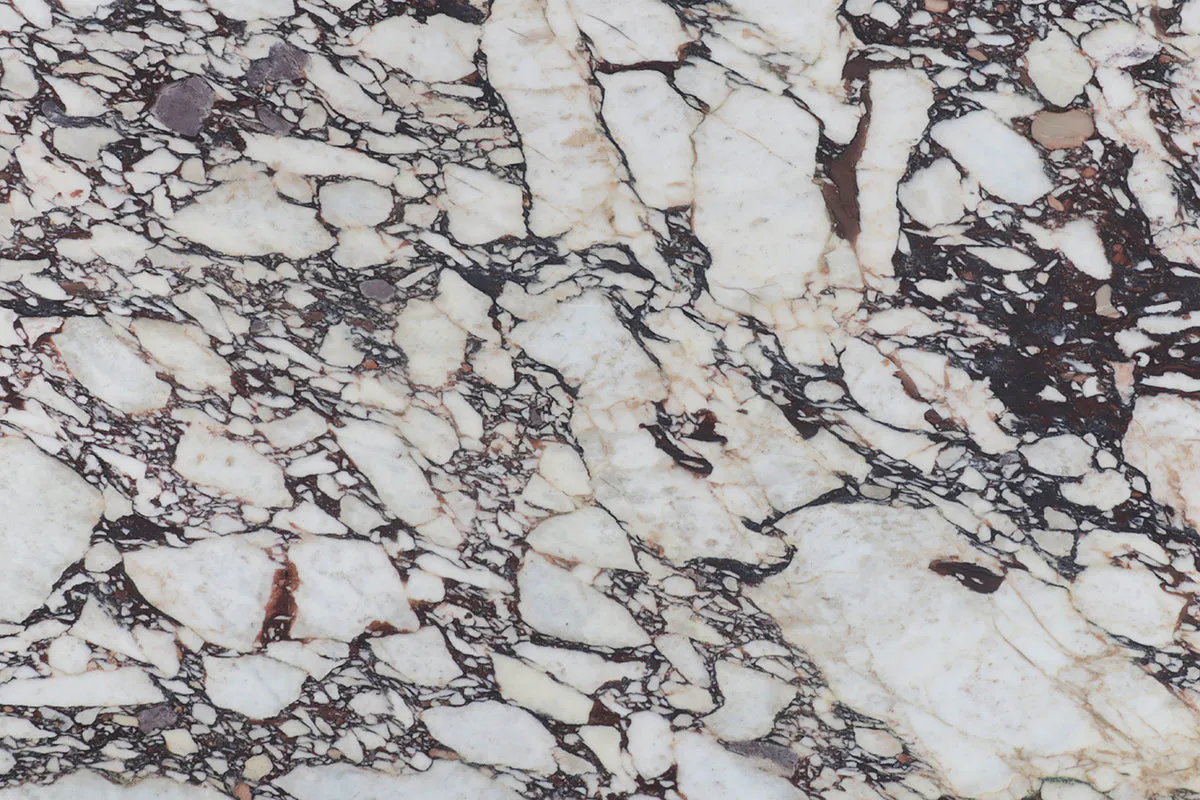 Calacatta Viola