Stone Bathroom Vanities
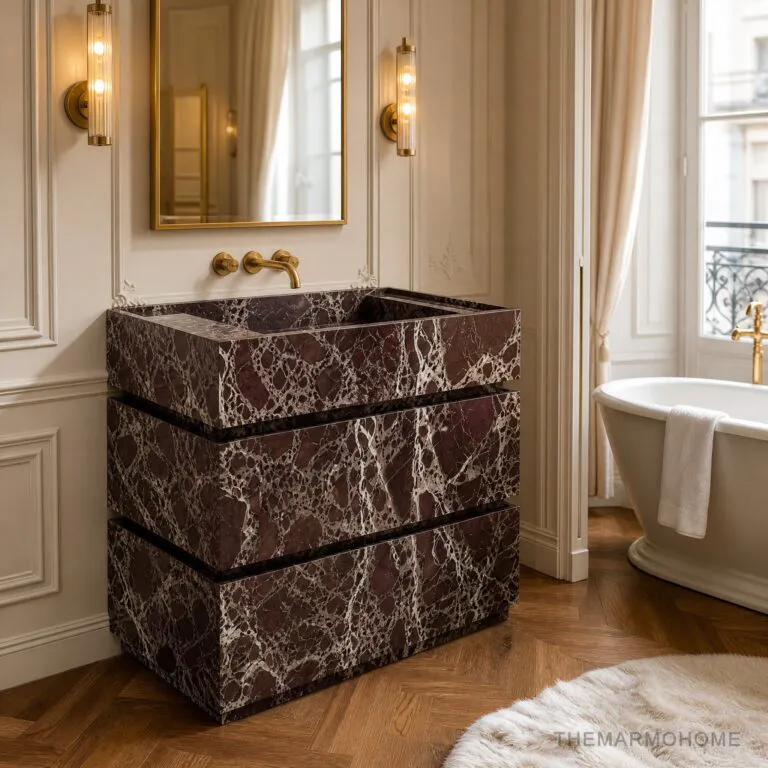
Bathroom vanities and stone cabinets carved from a single block.
-
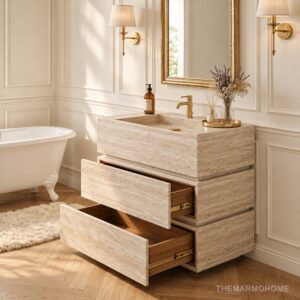
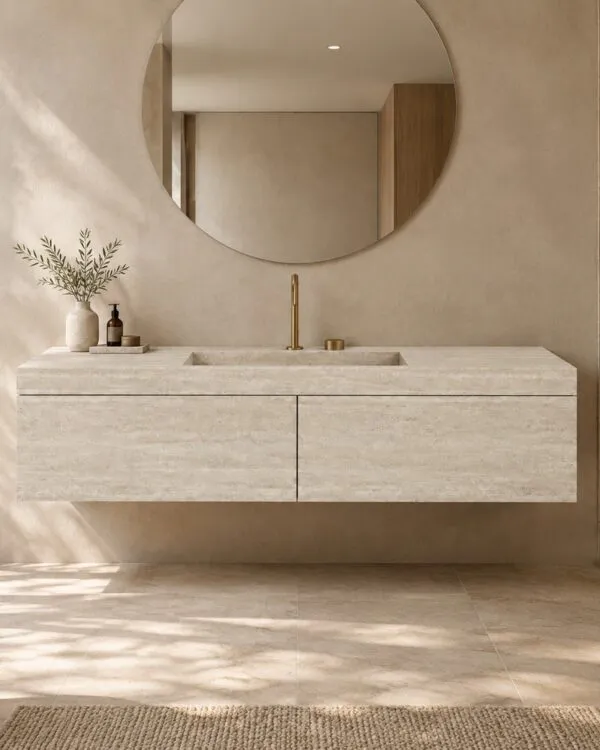
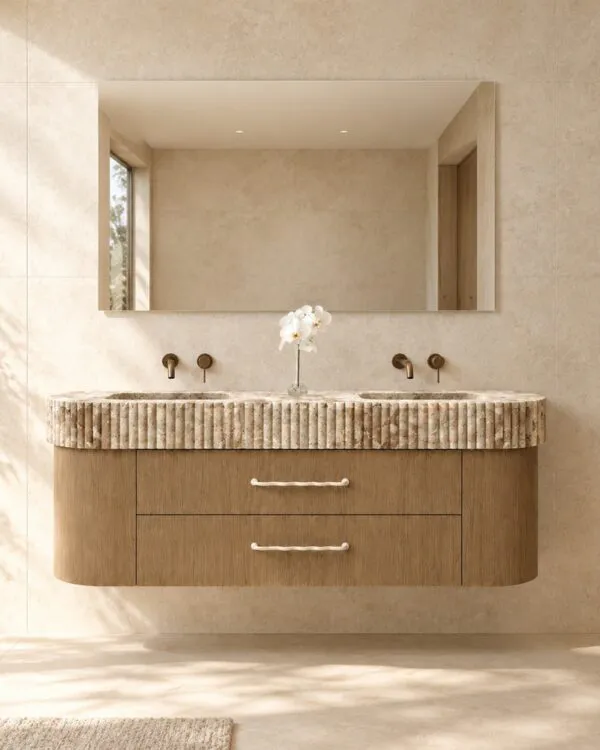
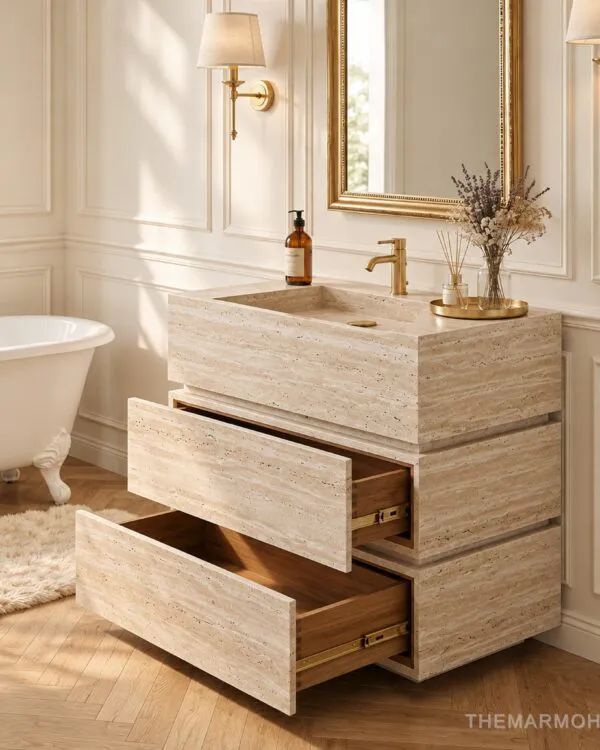
Beige Travertine170cm Large Floating Marble Bathroom Vanity with Double Drawer Cabinet, Natural Stone Countertop & Luxury Design$3,430– $5,430
-
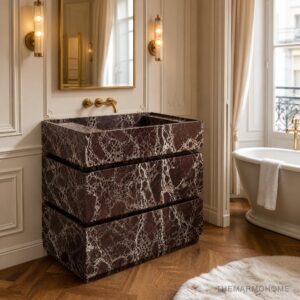
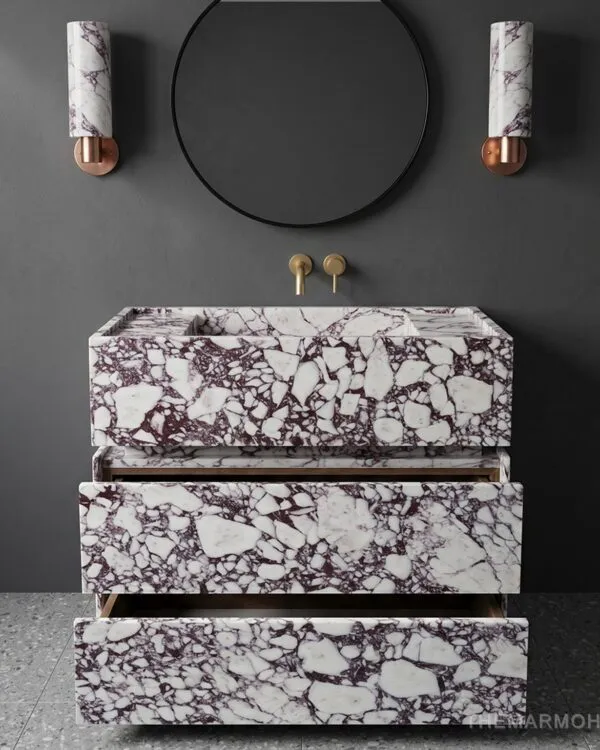
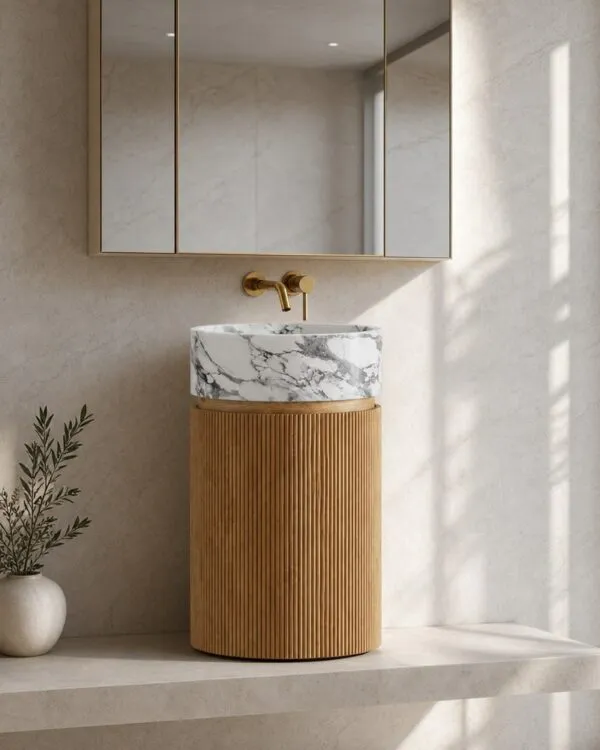
Stone Bathroom VanitiesCalacatta Viola Marble Bathroom Vanity, 65/75/90cm Freestanding Stone Sink Cabinet with Two Drawers$4,060– $5,625
-
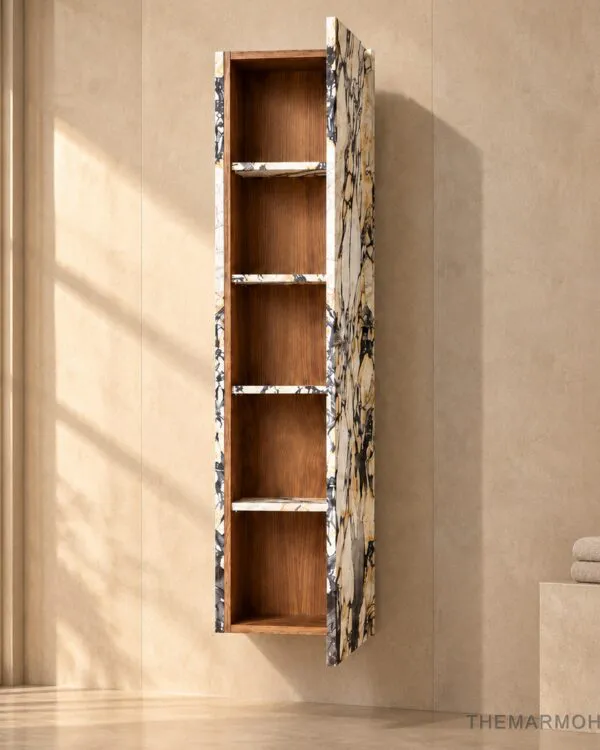
Calacatta ViolaLuxury Calacatta Viola Marble Wall Mounted Bathroom Storage Tower with Five Open Shelves$3,820
-
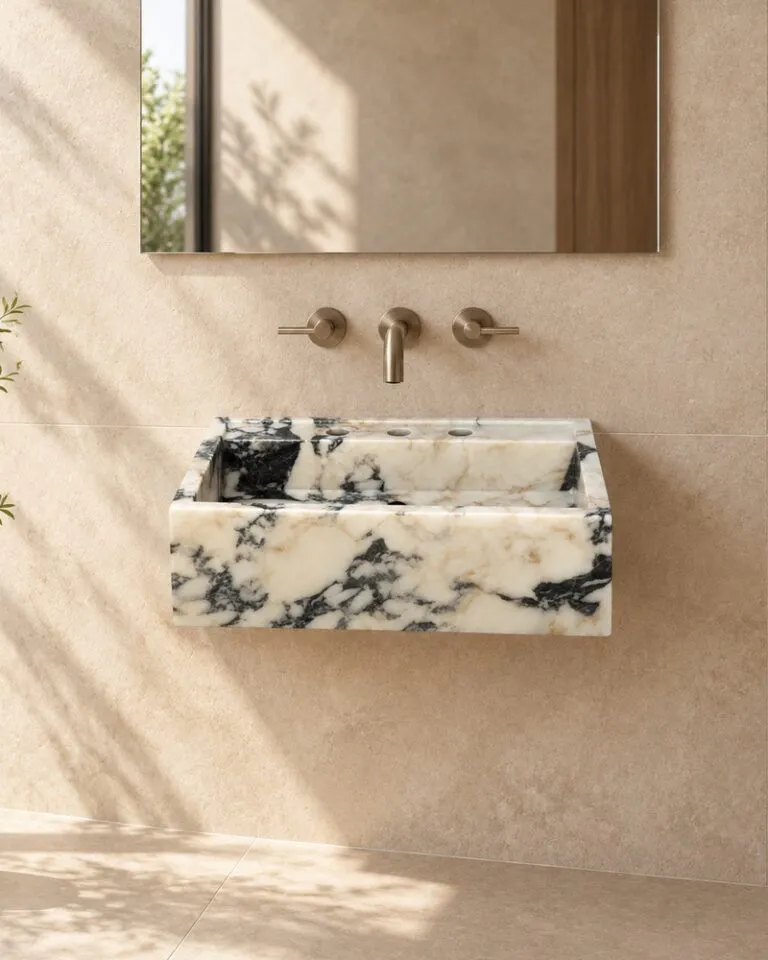
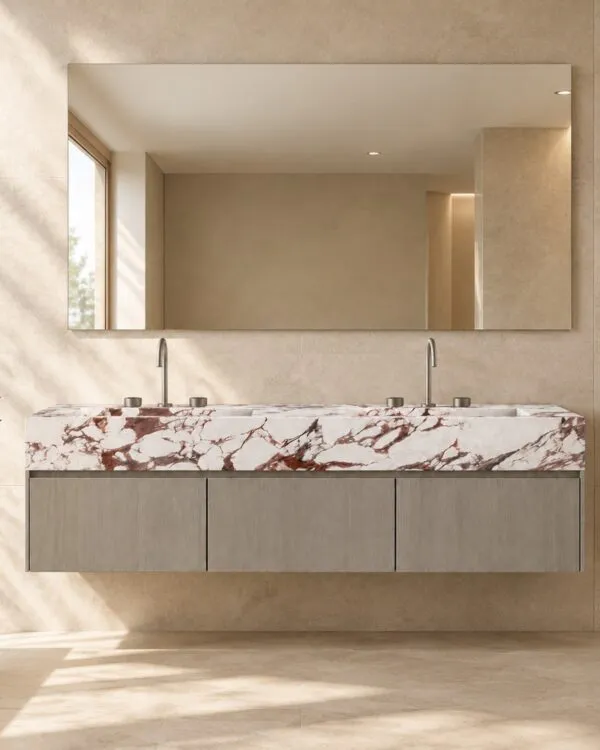
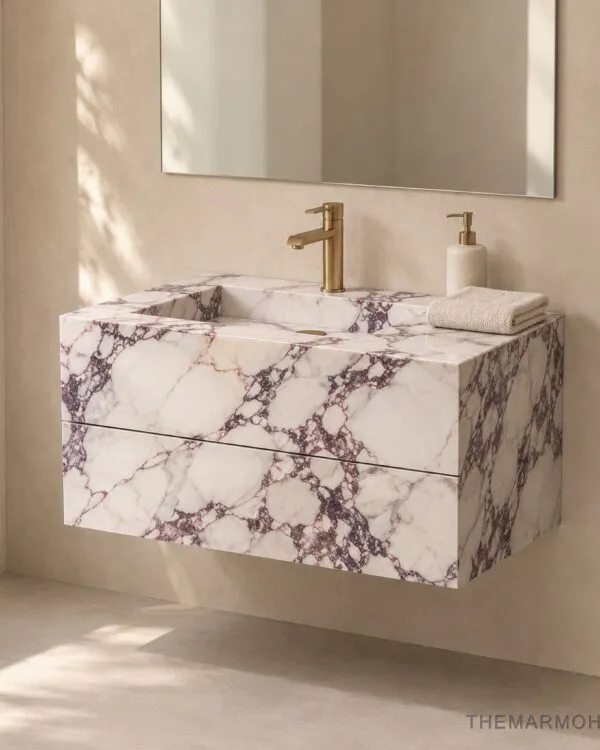
Calacatta ViolaLuxury Calacatta Viola Marble Wall Mounted Bathroom Vanity with Integrated Sink and Double Storage Drawers$2,770– $2,860
-
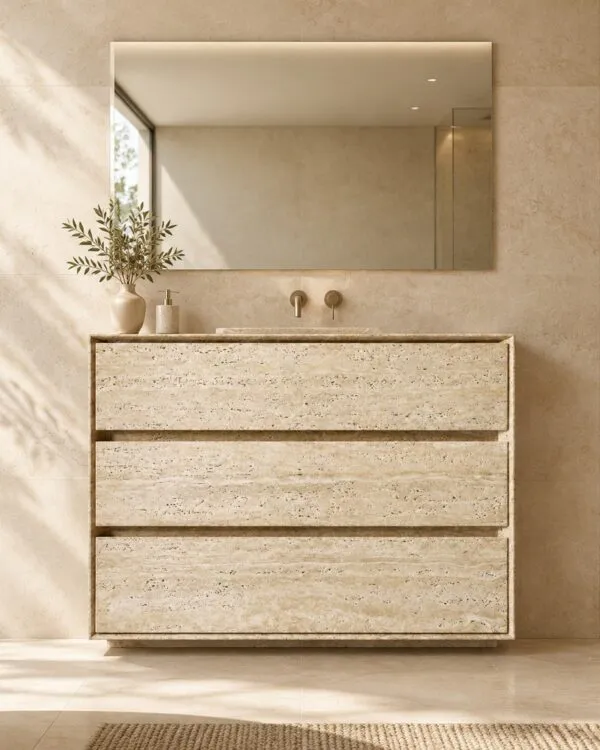
Beige TravertineNatural Beige Travertine Multi-layer Storage Cabinet | Bathroom Cabinets$1,750– $2,250
-
ArabescatoNatural Marble Bathroom Vanity with Drawer | Single Sink Vanity Cabinet | 125 × 49.8 × 83.5 cm$3,660– $6,220
-
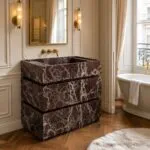
Calacatta ViolaNatural Marble Freestanding Vanity, Solid Stone Single Sink Cabinet with Square Basin, 90-152cm$3,500– $4,370
-
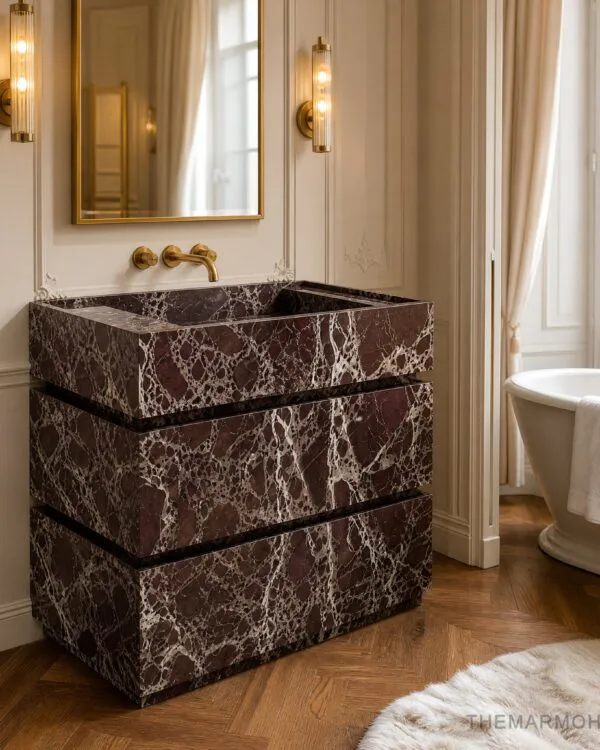
Stone Bathroom VanitiesRosso Levanto Marble Bathroom Vanity, 65/75/90cm Freestanding Stone Sink Cabinet with Two Drawers$4,060– $5,625
-
Stone Bathroom VanitiesTravertine Bathroom Vanity, 65/75/90cm Freestanding Stone Sink Cabinet with Two Drawers$4,060– $5,625
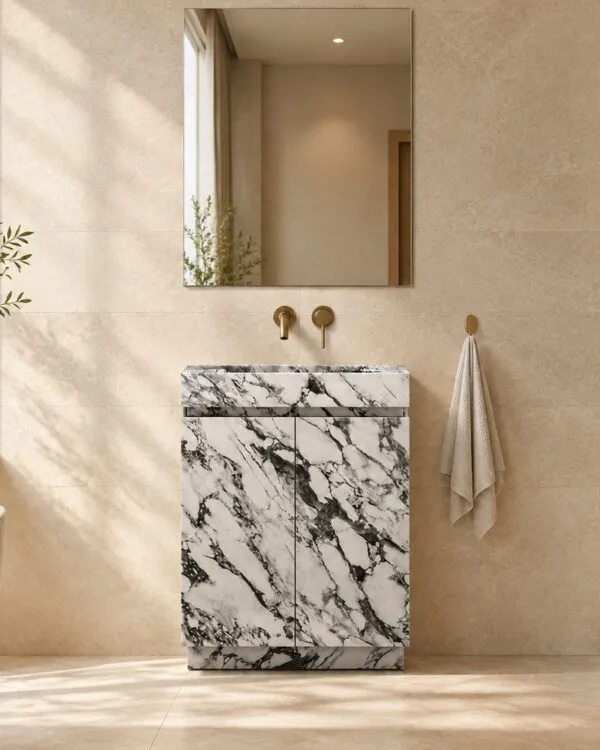
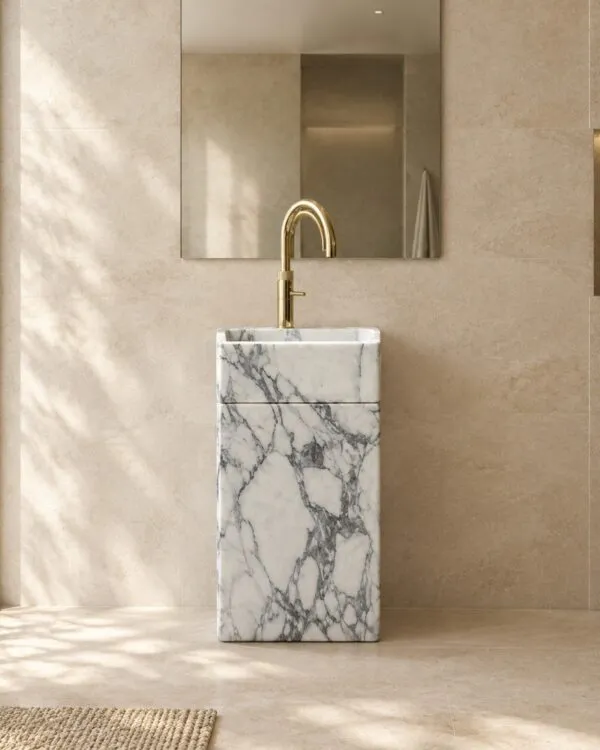
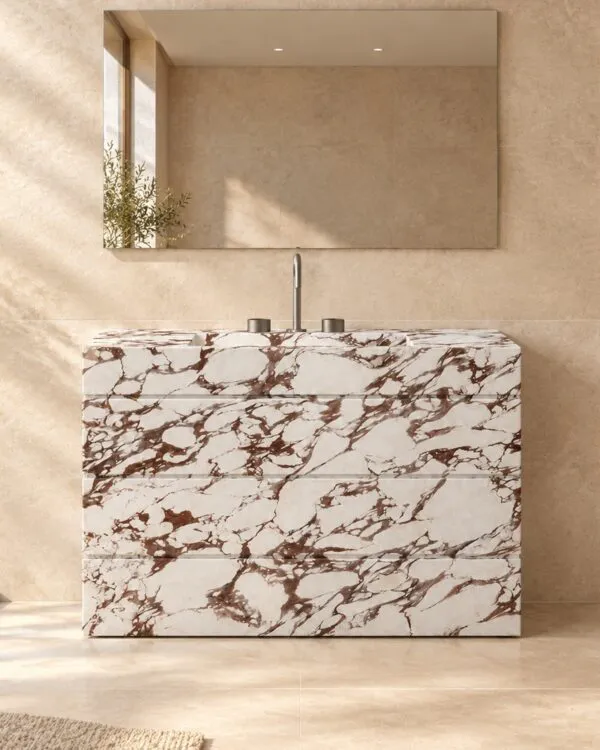
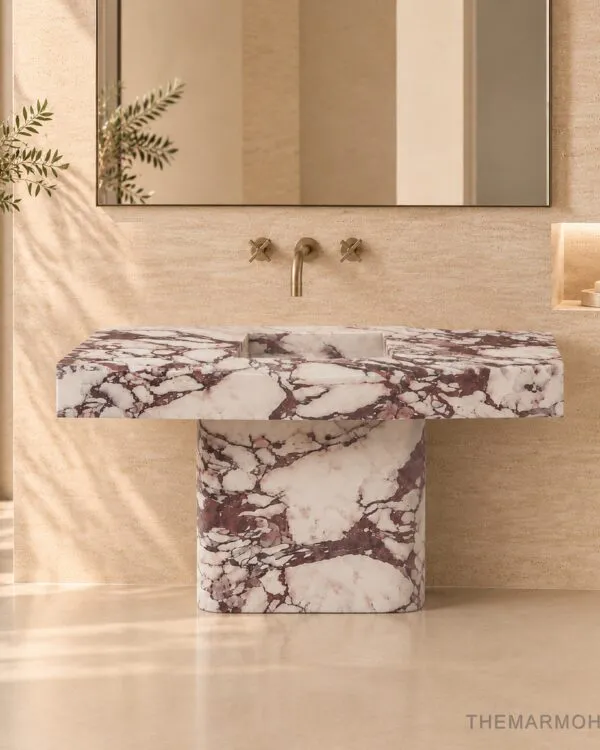
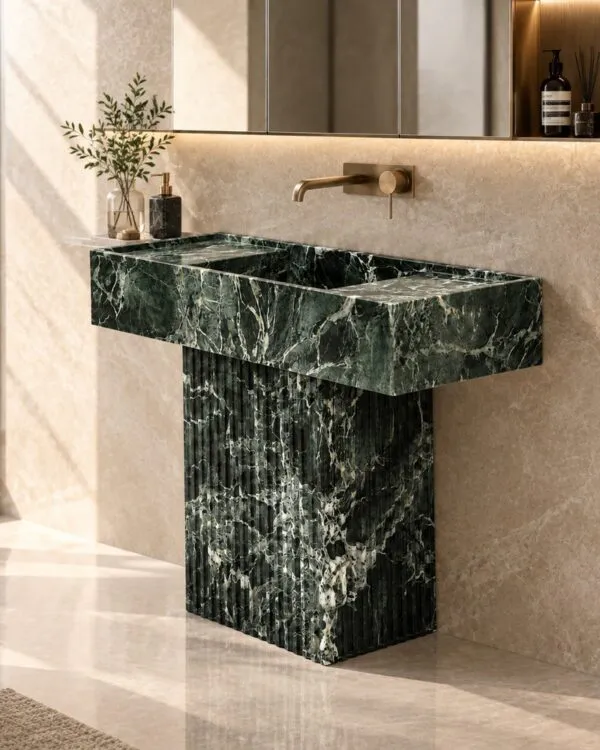
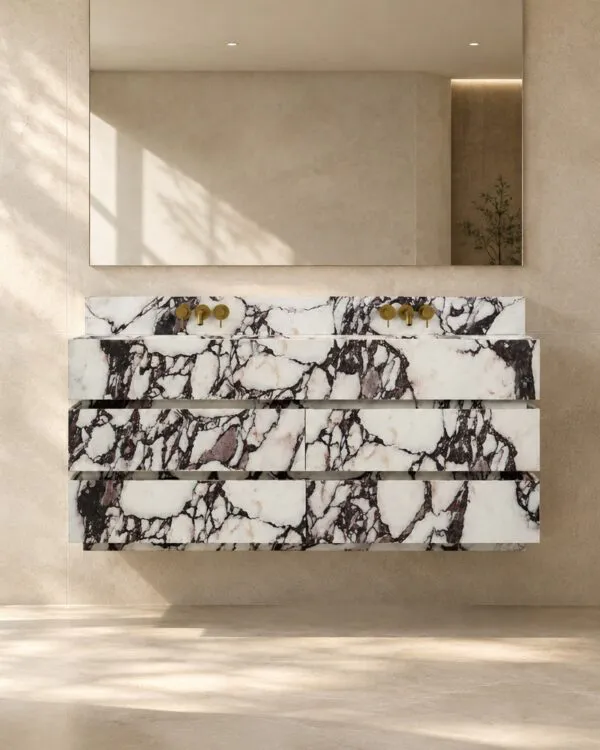
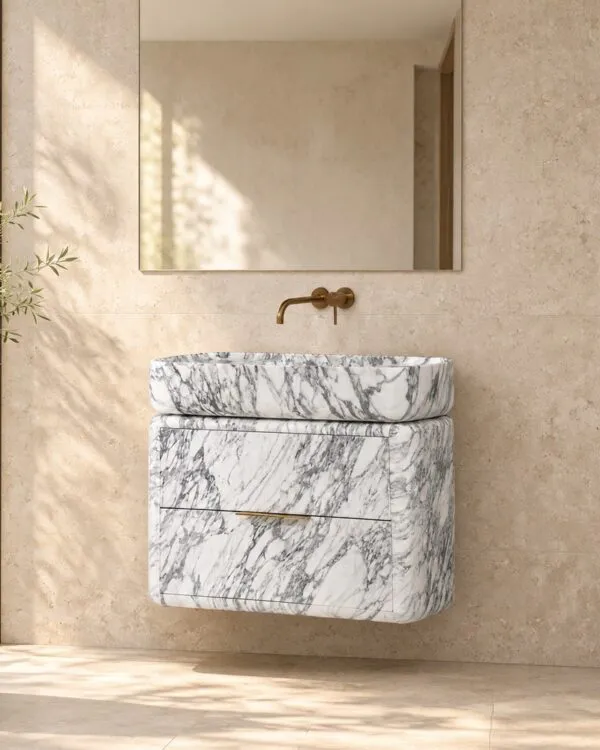
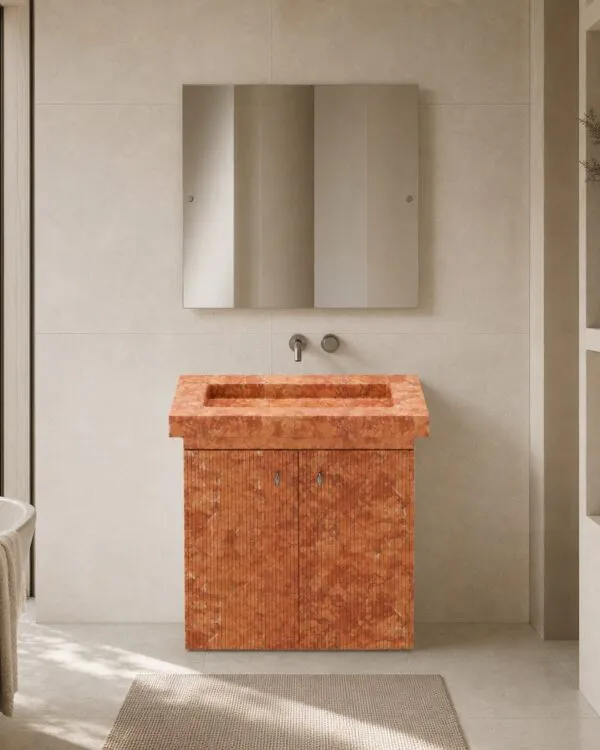
Stones used in this collection
All our stones →Buying Guide
Stone Bathroom Cabinets: What to Check First
A stone bathroom cabinet is the piece that makes a bathroom feel built rather than fitted. Natural-stone surfaces give a bathroom a distinctive texture and pattern. Cabinet construction, joins, storage fittings and any non-stone components vary by design; check each product specification.
Three Configurations
- Floating. Wall-mounted, with the floor visible beneath. This makes a small bathroom feel considerably larger, and it is easier to clean under. It requires a solid wall or proper blocking — check before ordering.
- Freestanding. Stands on the floor as a solid stone block. The most monolithic look, the easiest installation, and the heaviest. Best in rooms with enough floor space to walk around it.
- Countertop unit. A stone top and basin on a timber or metal carcass. Lighter and cheaper than a solid stone cabinet, and the practical choice when the plumbing layout is already fixed.
The Measurements That Actually Matter
Four numbers decide whether a stone cabinet works: the width you can fit between walls or obstructions, the drain rough-in position (floor or wall, and how far from the wall), the faucet drilling (single hole, three-hole, or wall-mounted), and the waste height if the unit is floating. Send us those four and we can tell you which models fit before you commit.
Also measure the route in. A solid stone cabinet is heavy and rigid; it does not fold around a stair turn. If the bathroom is upstairs, measure the stairwell and the door frame, not just the room.
Stone in a Wet Room
All stone in a bathroom is sealed before it ships, and that seal is what keeps water out of the surface. It is not permanent: in a bathroom, re-seal every six to twelve months depending on use, and more often in a shower room with poor ventilation. Water beading on the surface means the seal is still working; water darkening the stone means it is time.
Ventilation matters more than any product. A stone cabinet in a room that dries out between uses will look new indefinitely; one in a permanently damp room will grow mineral deposits along the edges and in any unfilled texture. An extractor fan is not a detail.
Choosing the Stone
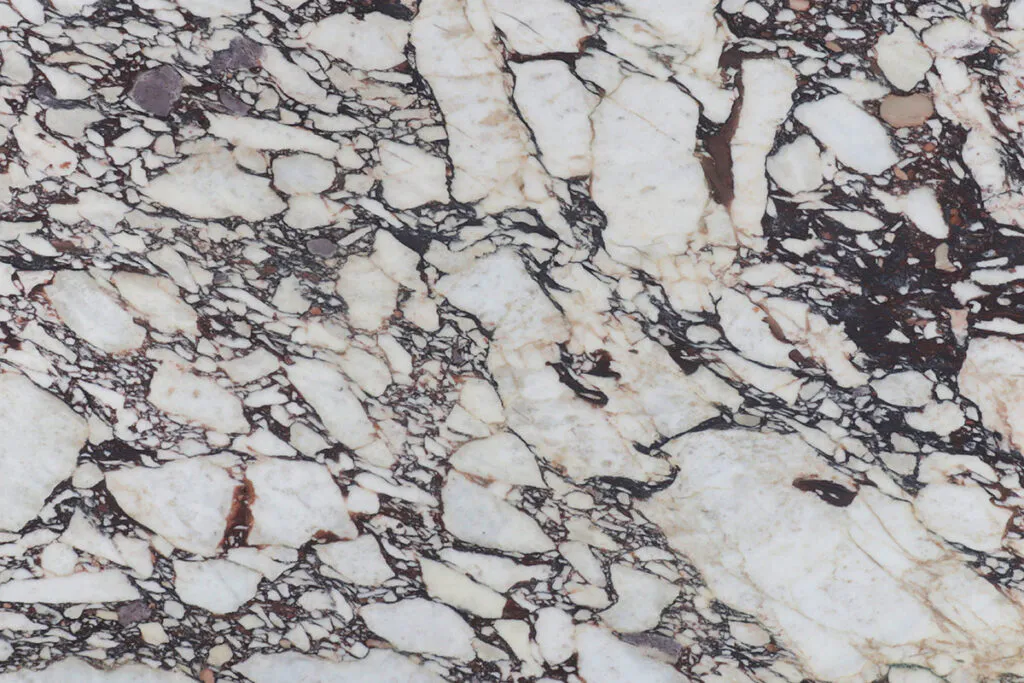
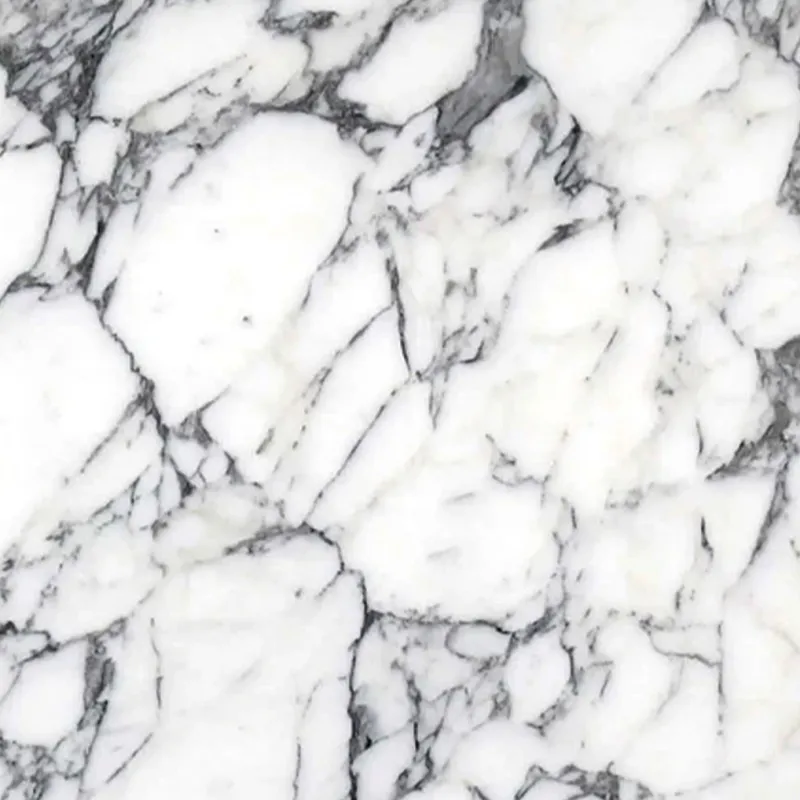
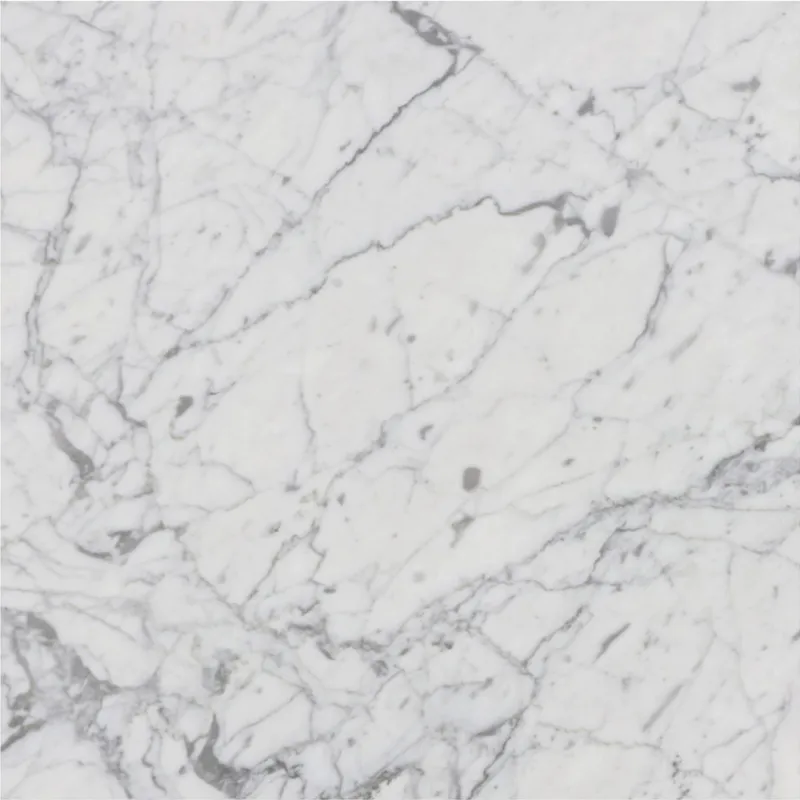
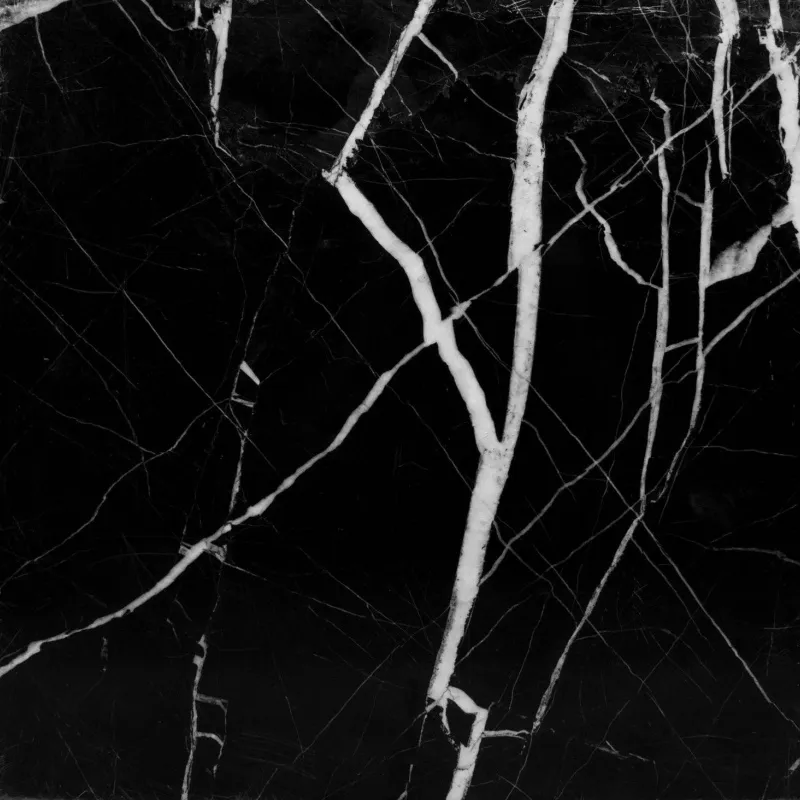
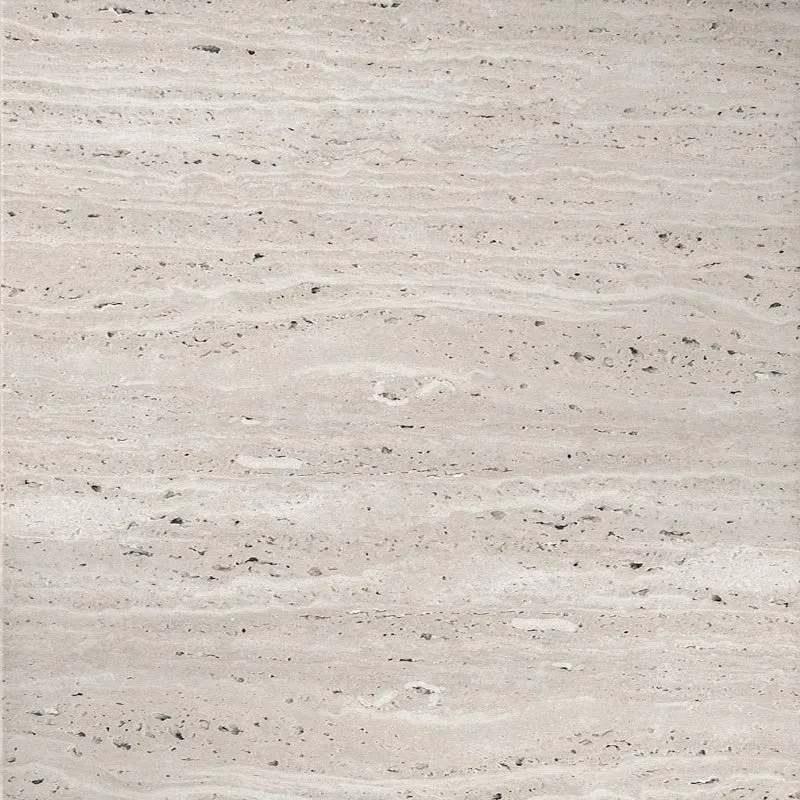
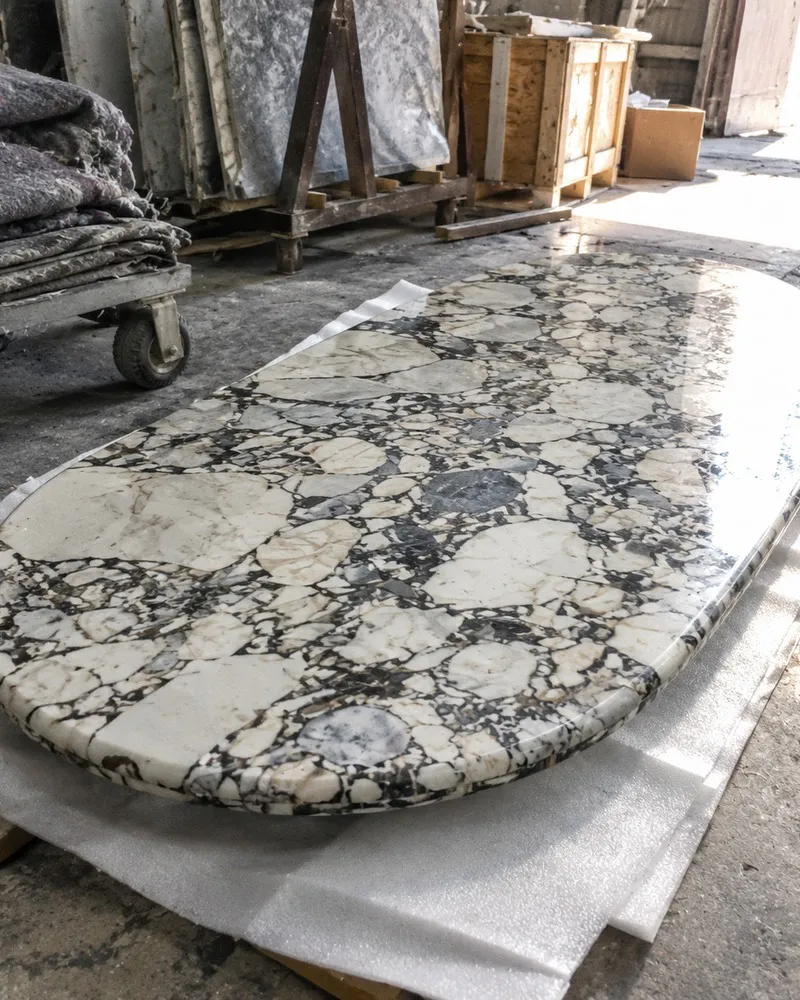
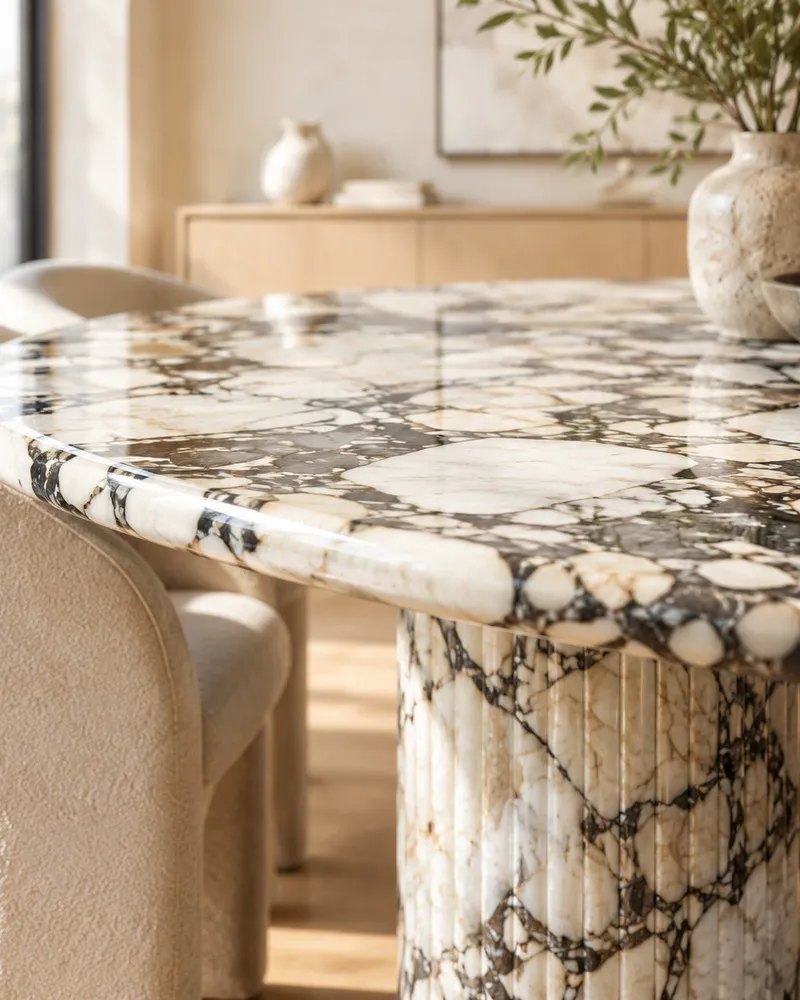
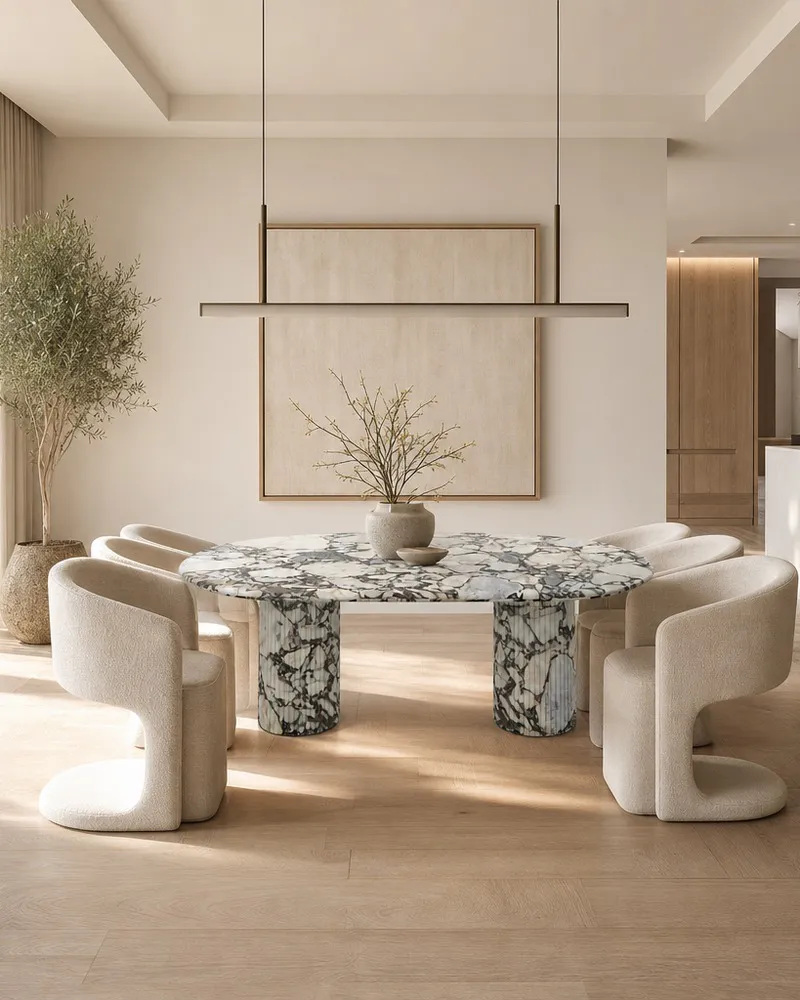
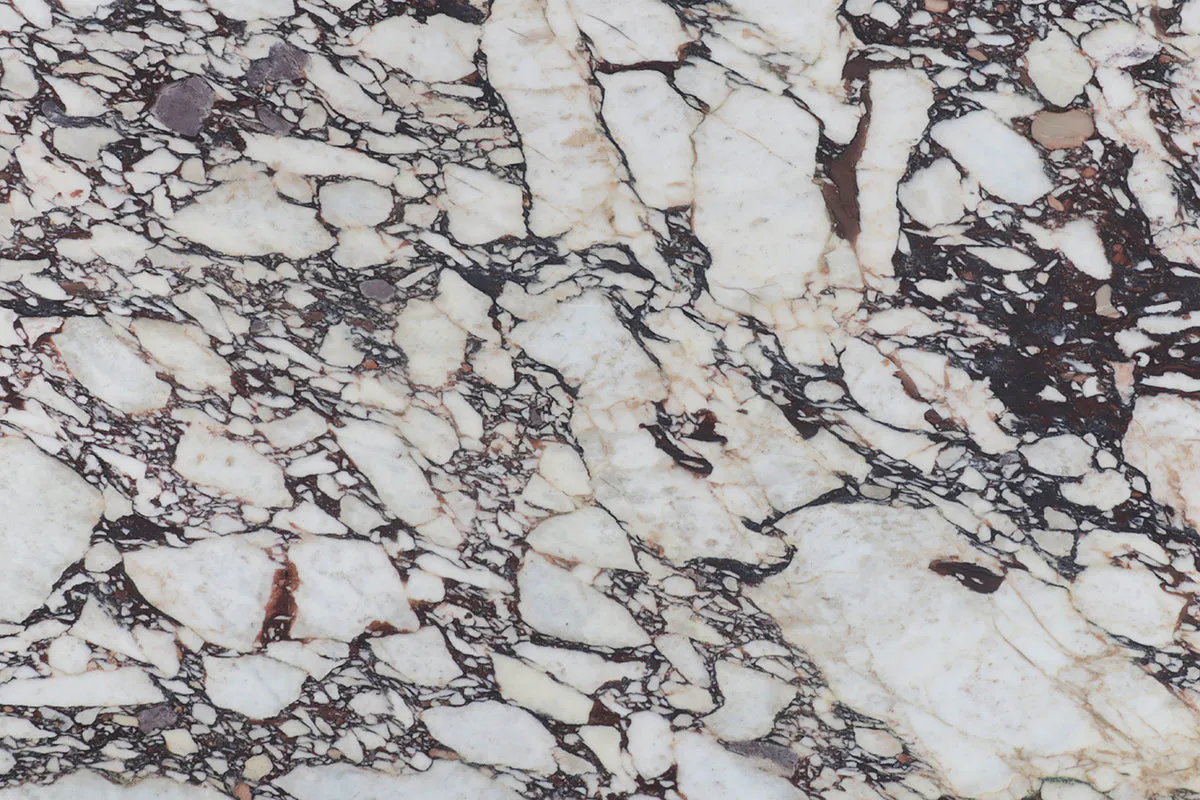
Beige and silver travertine are the warmest and most forgiving in a bathroom — mid-tone, matte, and good at hiding water marks. Carrara and Arabescato give the classic bright bathroom look. Calacatta Viola makes the cabinet the focal point of the room, which works best when the rest of the bathroom is quiet. Dark marbles are dramatic but show every water spot, so choose a honed finish if you go dark.
Clean with pH-neutral soap and water only. Bathroom cleaners are among the most acidic products in the house — limescale removers will etch marble and travertine permanently, and no sealer prevents that.
Storage Inside a Stone Cabinet
Stone cabinets are shallow by nature — the material is heavy, so depth is usually kept to 45–50 cm. That is enough for folded towels, bottles and a basket, but not for a laundry bin. Plan the interior around what the room actually lacks: a bathroom with no linen cupboard needs shelves; one with a separate cupboard needs little more than a shelf for daily items.
Stone interiors need a wipe-out occasionally, because bathroom humidity carries soap and minerals into the cabinet. Shelf linings are worth considering for anything that might leak — an oil bottle on a bare stone shelf will mark it, and the mark is inside the cabinet where nobody sees it until the bottle is moved. Ventilation applies inside as well as out: leave a small gap behind the doors rather than sealing the interior completely.
- Can a stone bathroom cabinet be wall-hung?
- Yes, but the wall must carry the load — a solid masonry wall or proper timber blocking behind the plasterboard. A stone cabinet is heavy even before it is filled.
- How often should a bathroom stone be re-sealed?
- Every six to twelve months in a bathroom, more often in a shower room with poor ventilation. If water stops beading on the surface, it is time.
- What do you need to quote a bathroom cabinet?
- Four measurements: available width, drain rough-in position, faucet drilling layout and waste height. Send those and we can confirm which models fit.
- Can I use normal bathroom cleaner on stone?
- No. Limescale removers and most spray cleaners are acidic and will etch marble or travertine permanently. Use pH-neutral soap and water.

 Calacatta Viola