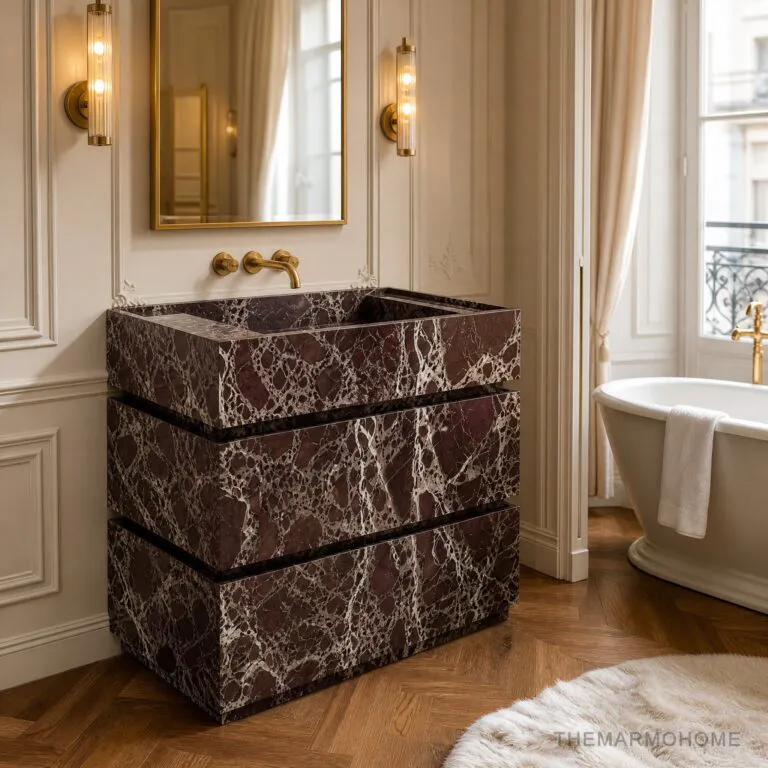
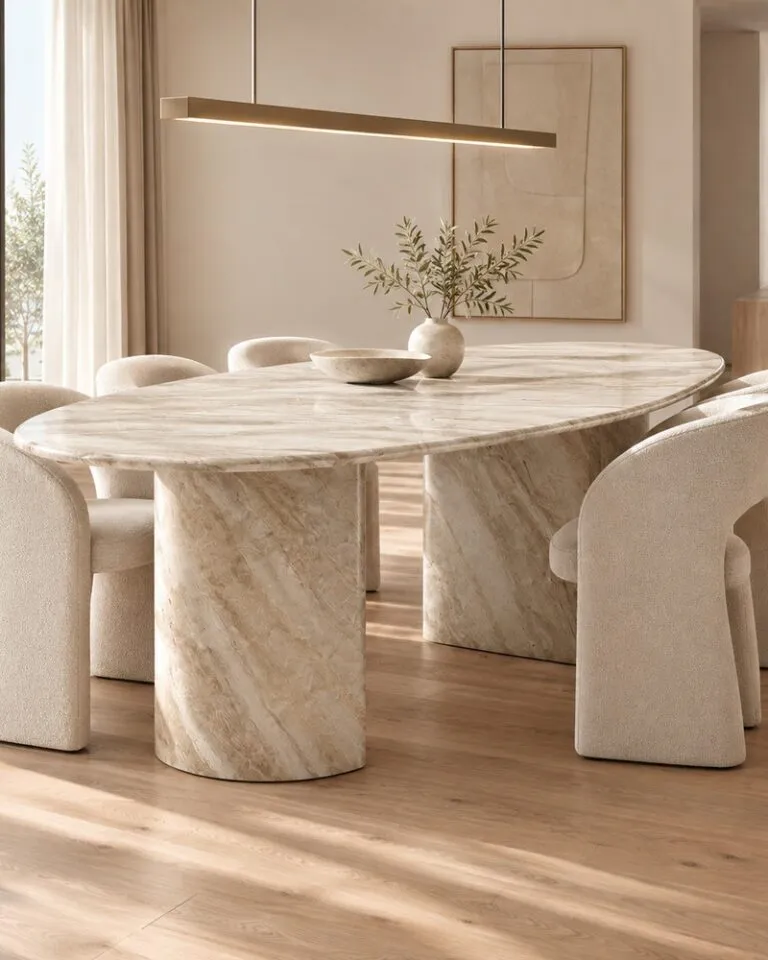
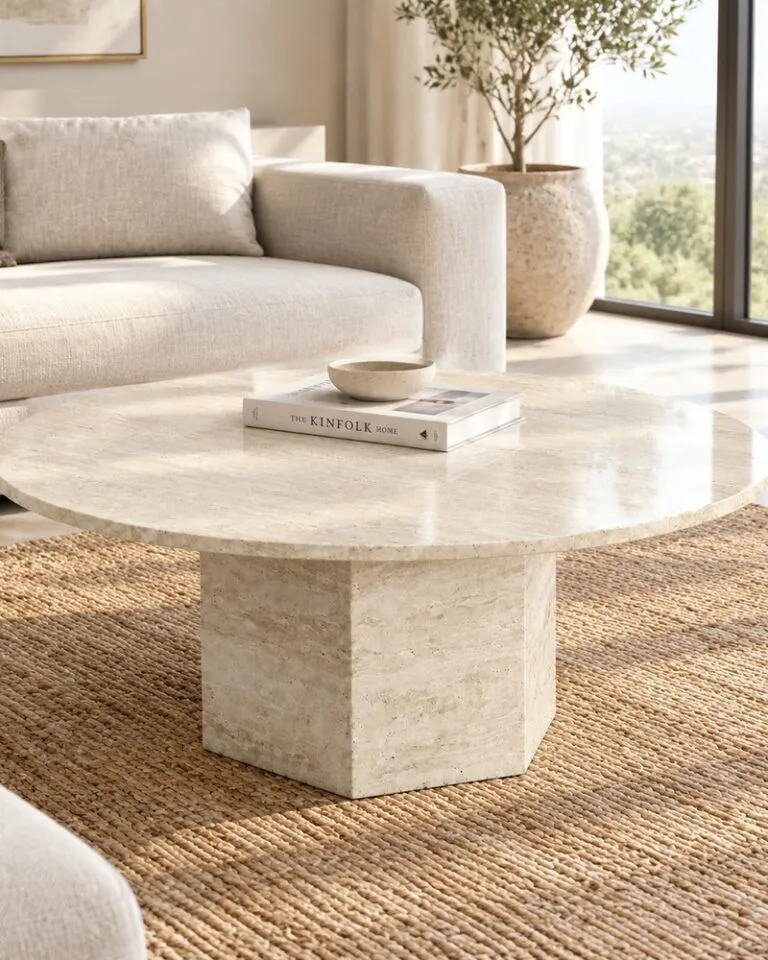
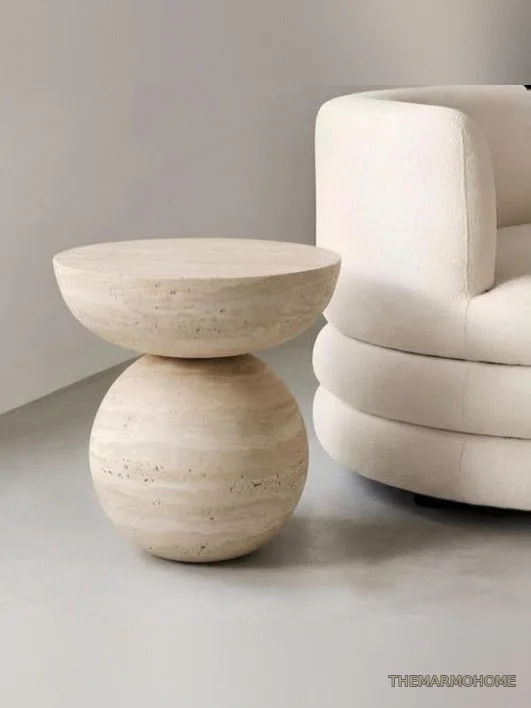


Marble Console Tables
Natural-stone console tables for hallways and entryways, finished by hand in our own factory. Construction varies by design.
-
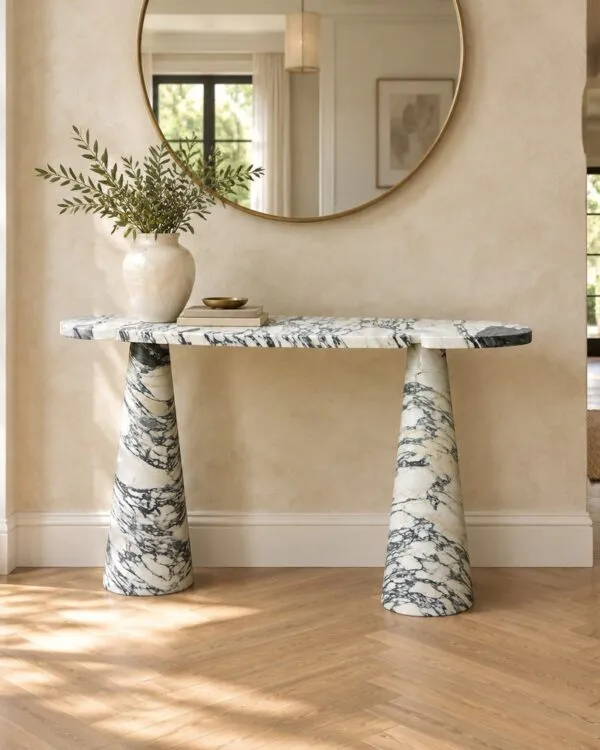
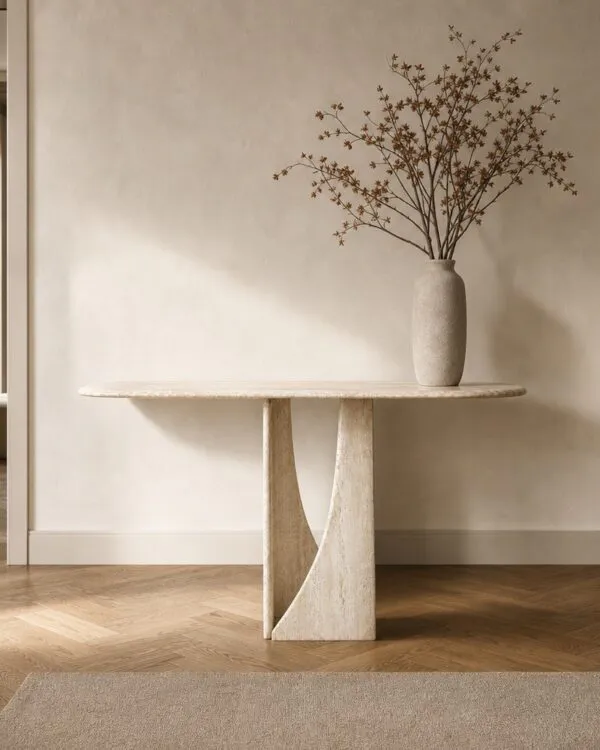
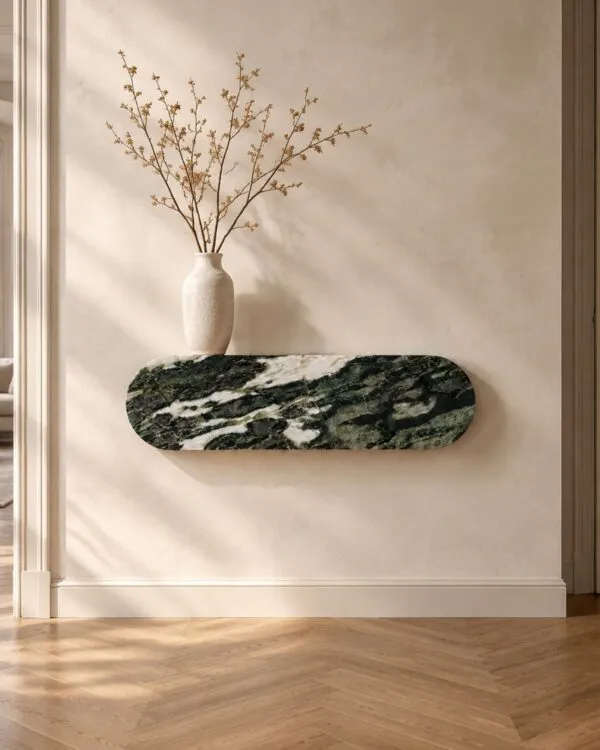
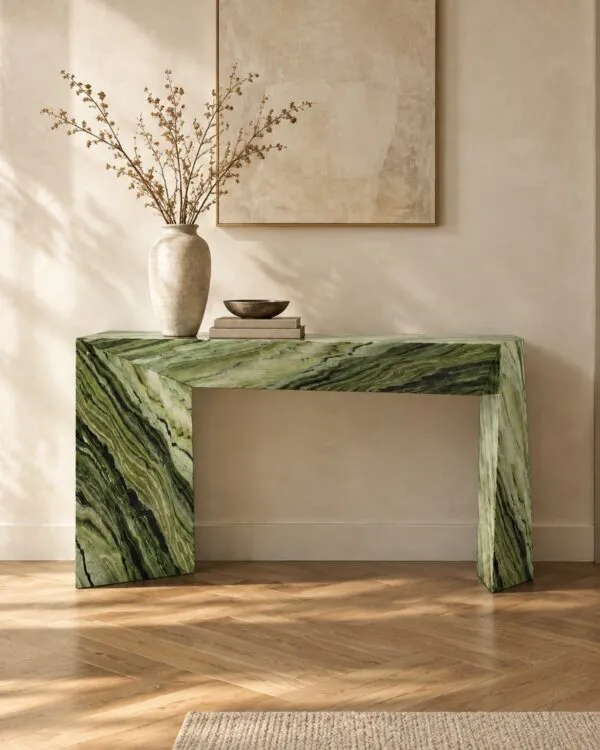
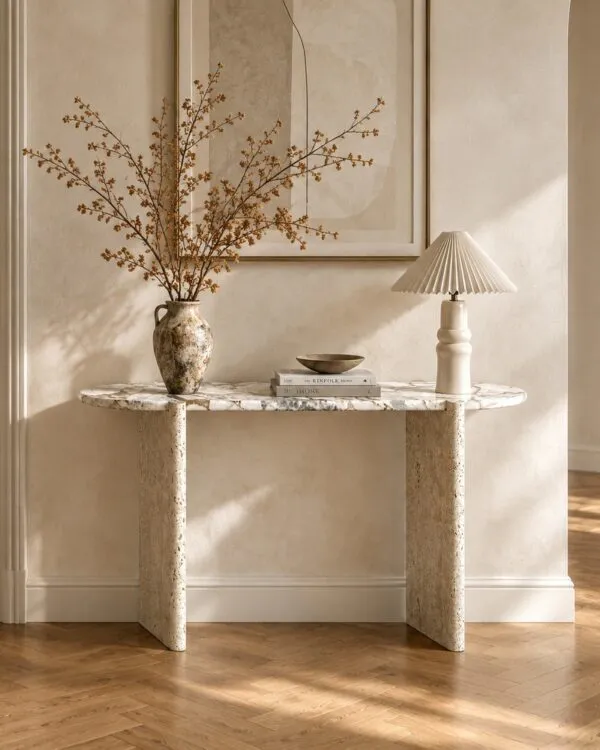
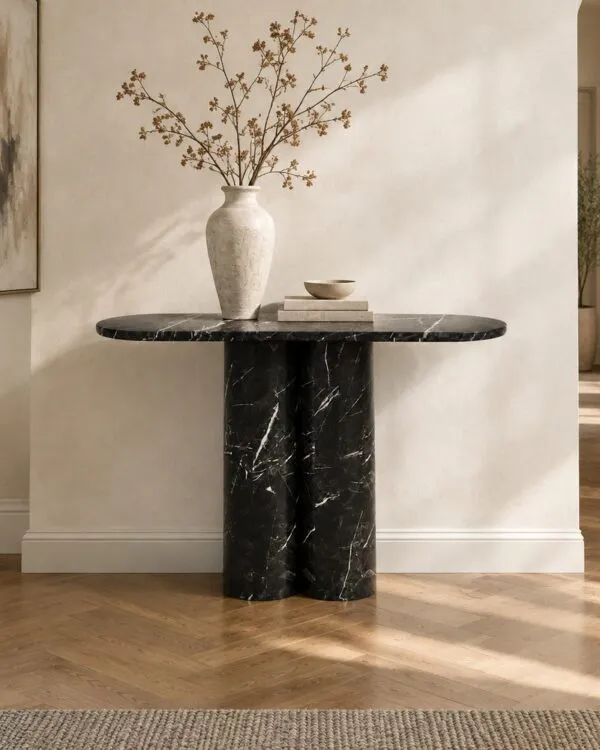
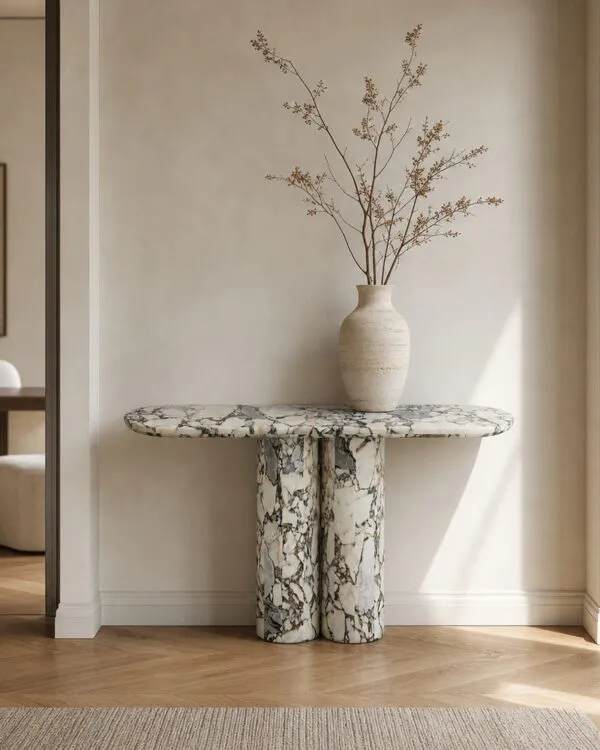
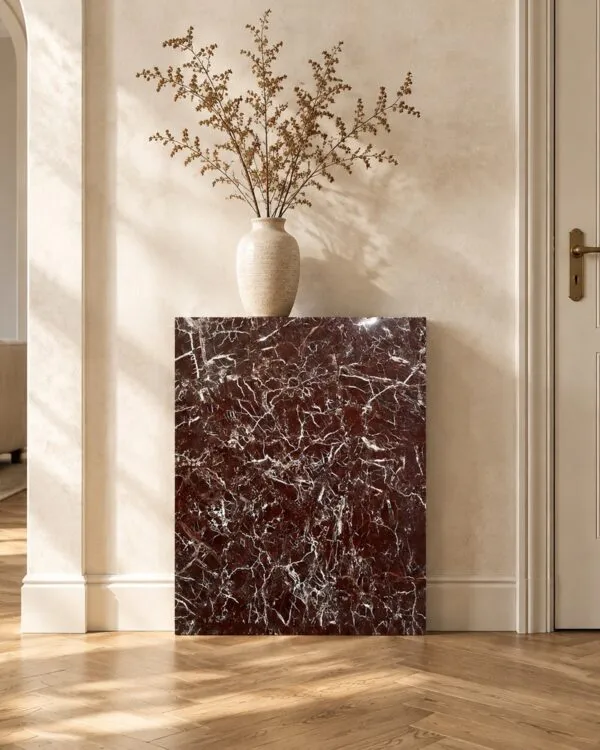
Green ForestGreen Forest Marble Console Table with Oval Shape Top and Double Cylinder Legs$2,250– $2,950
-
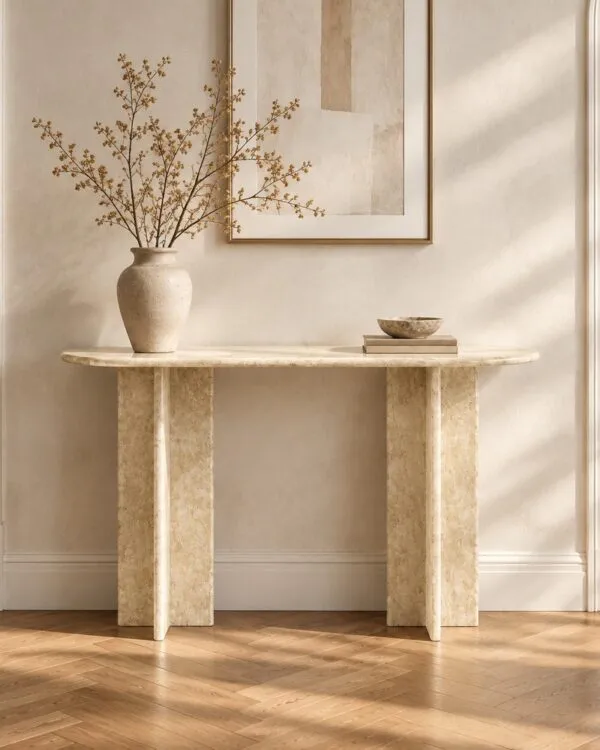
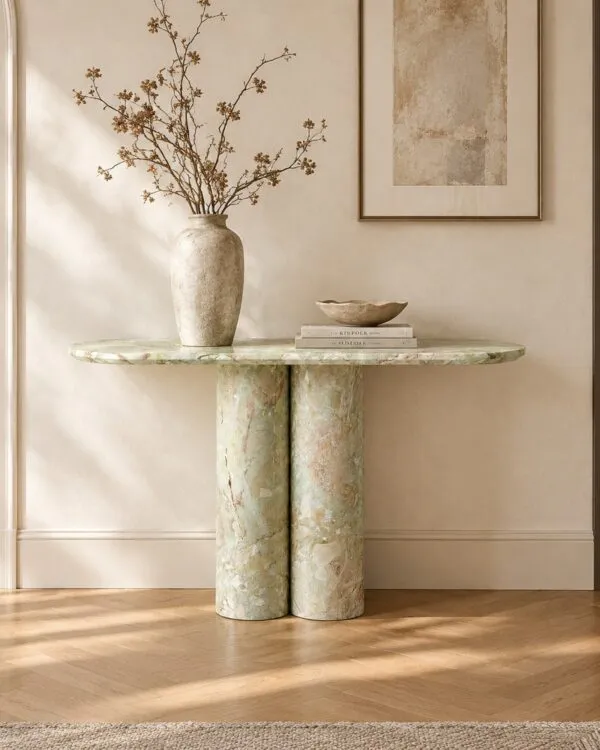
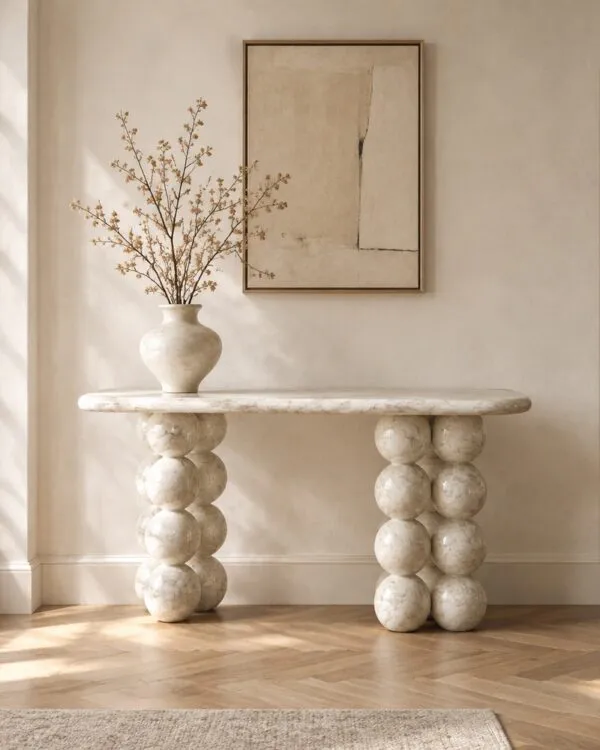
Breccia AuroraLight Green Natural Marble Double Column Oval Console Table, Luxury Entryway Accent Table for Home Decor$2,390– $3,140
-
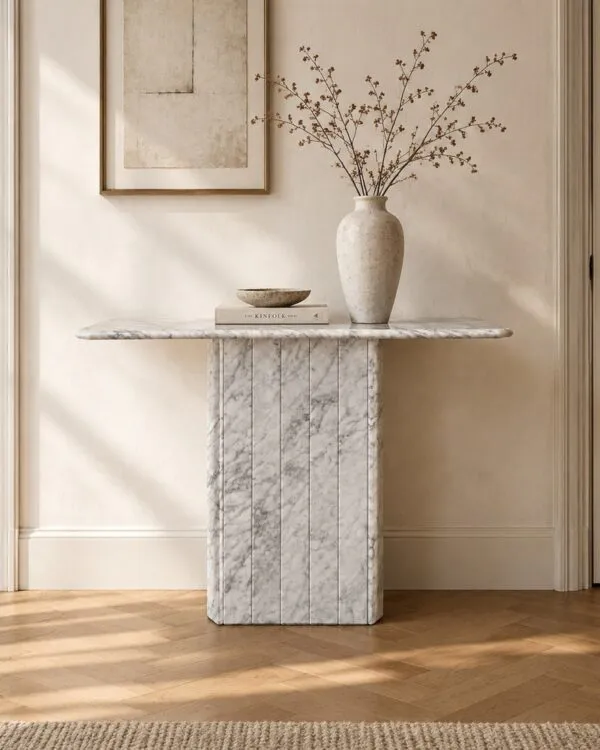
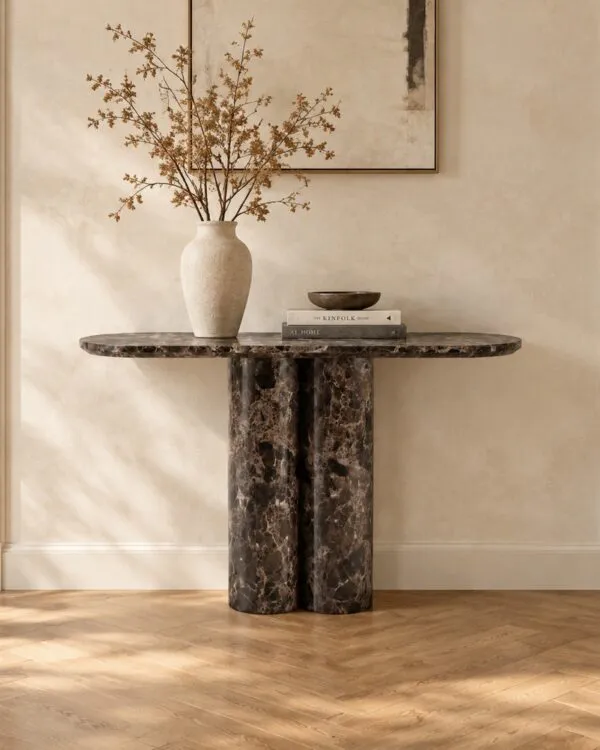
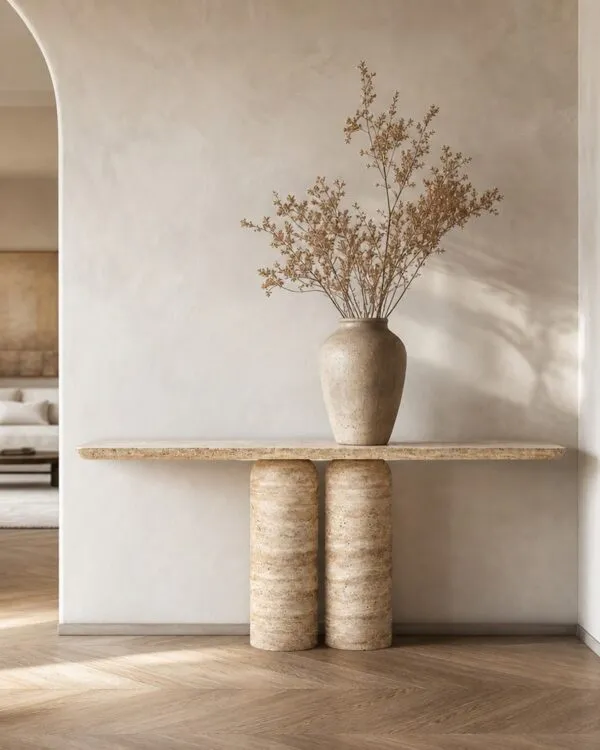
EmperadorLuxury Emperador Marble Console Table with Oval Shape Top and Double Cylinder Legs$1,870– $2,380
-
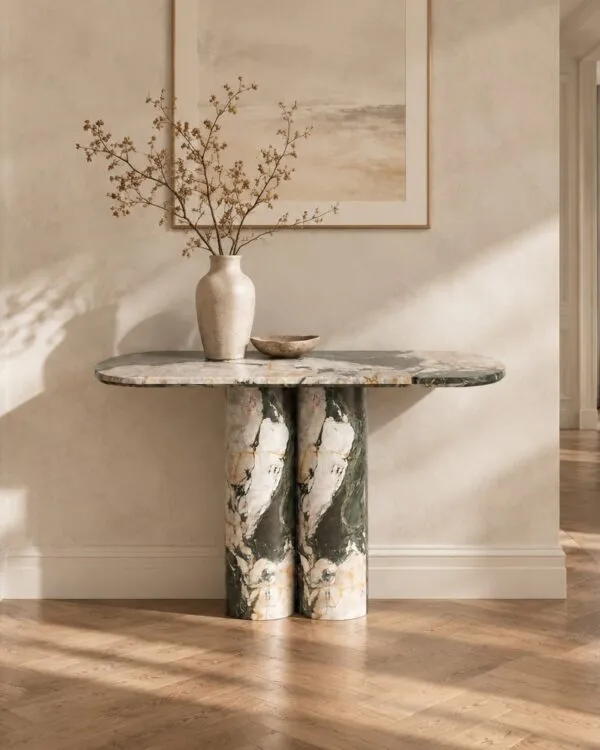
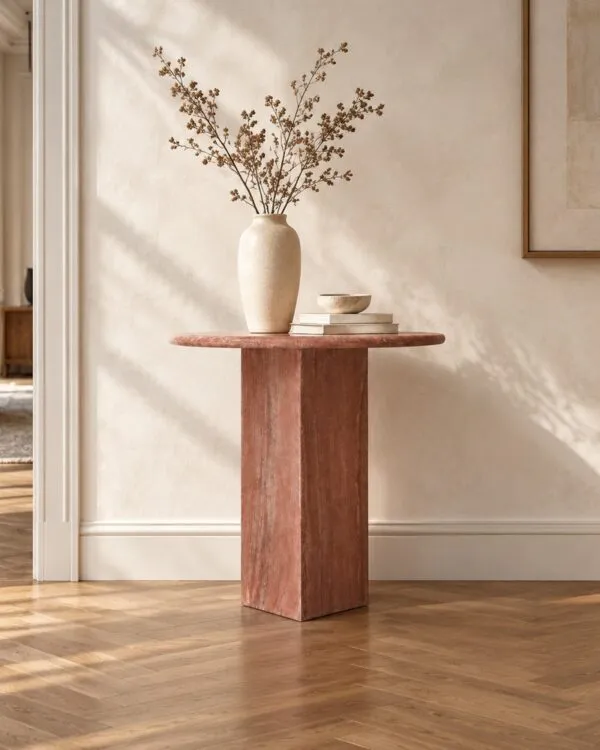
Les Quatre SaisonsLuxury Les Quatre Saisons Marble Console Table with Oval Top and Double Cylinder Legs$2,900– $3,670
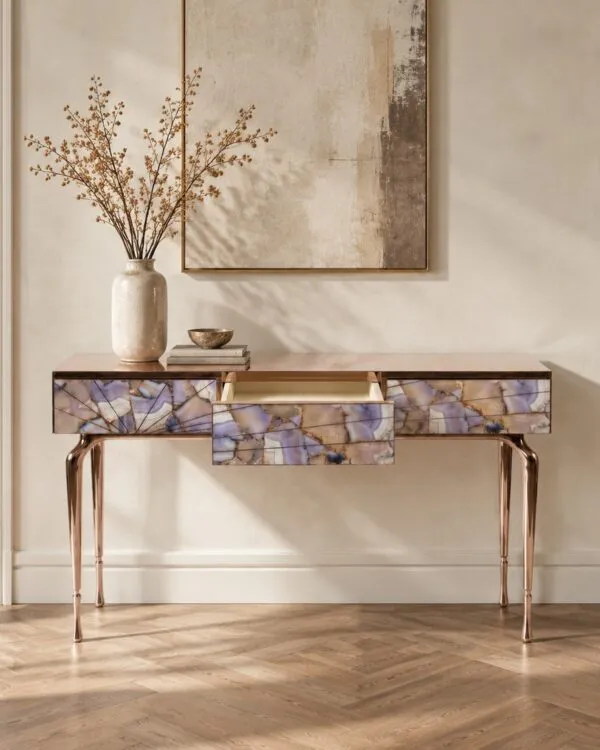
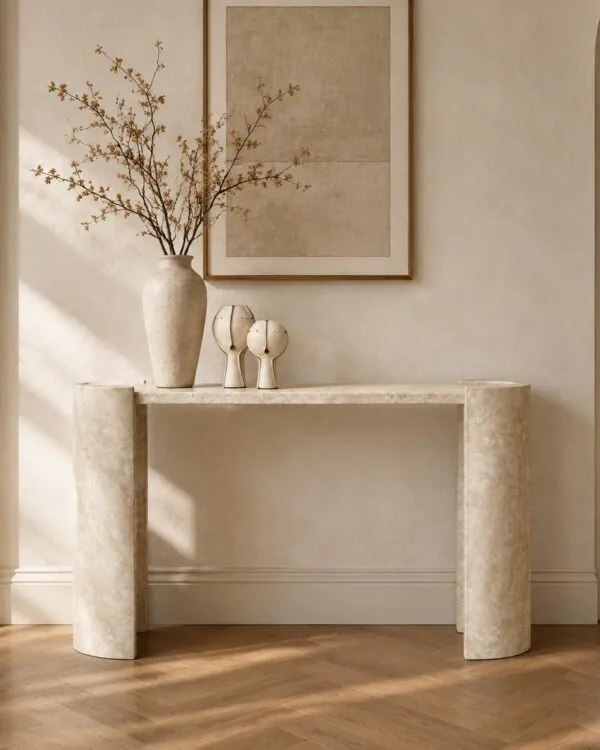
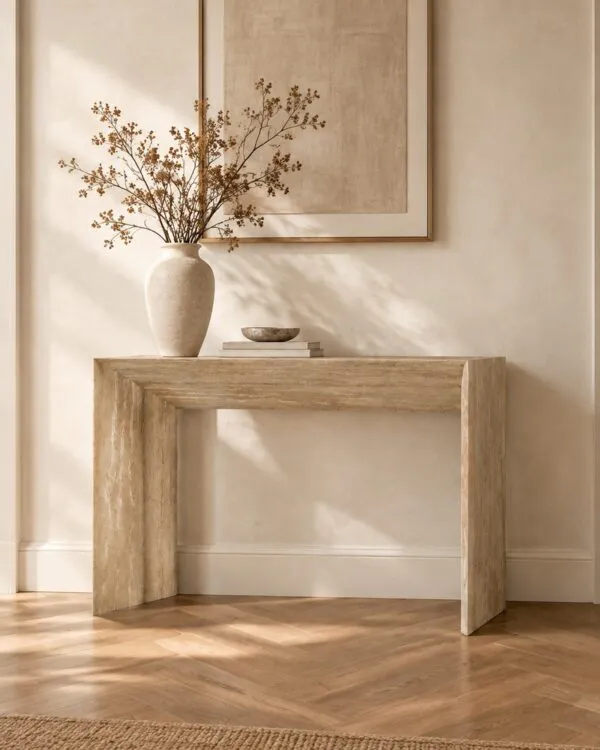
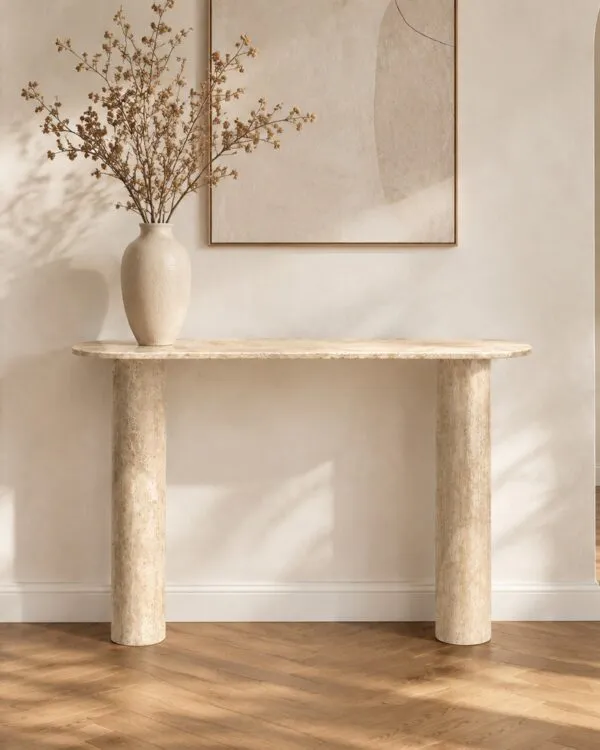
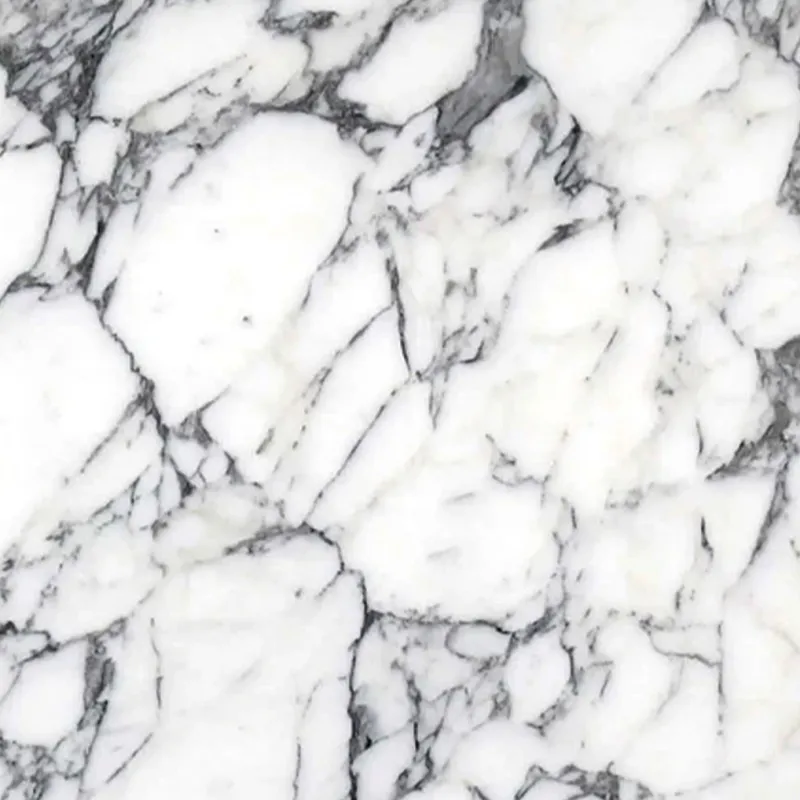
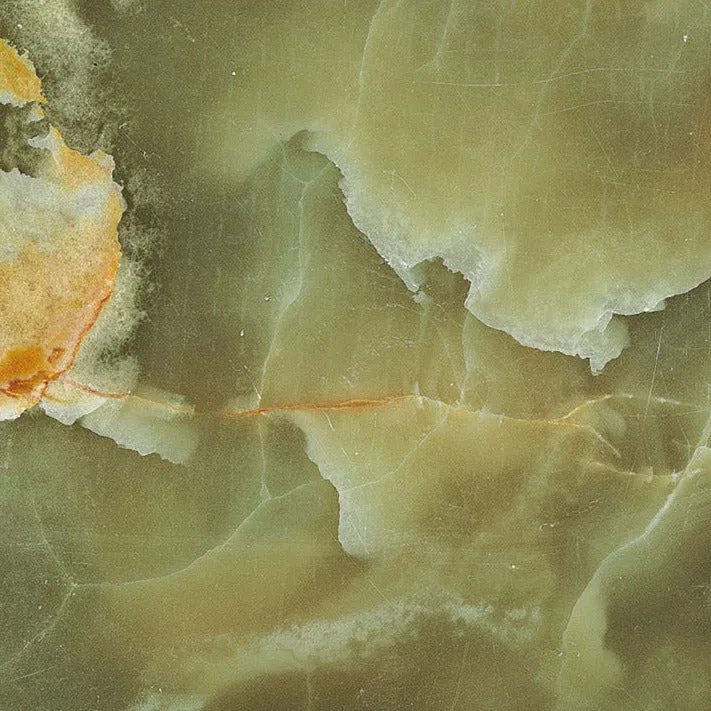
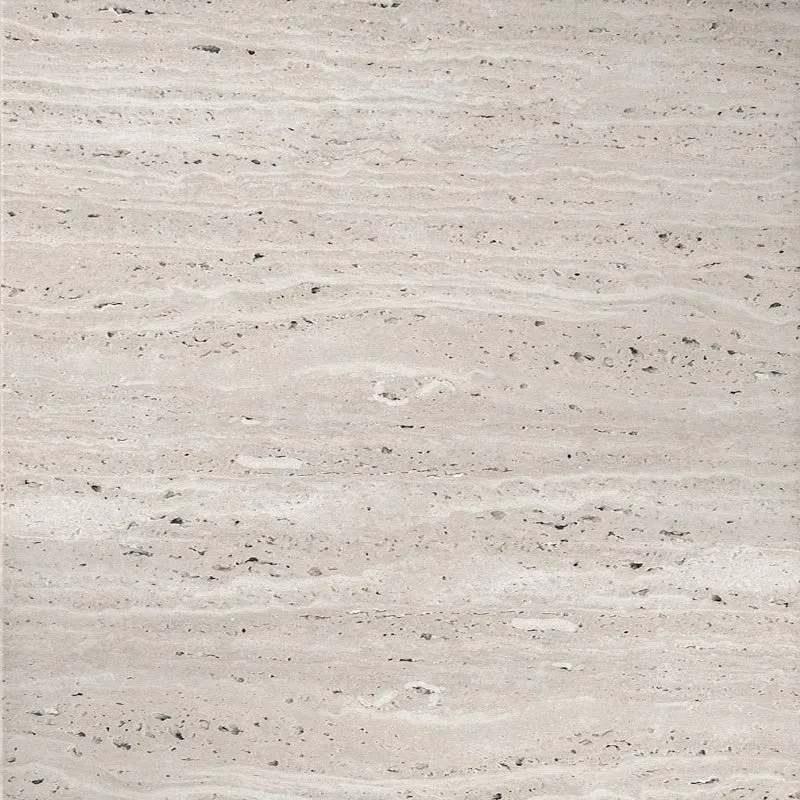
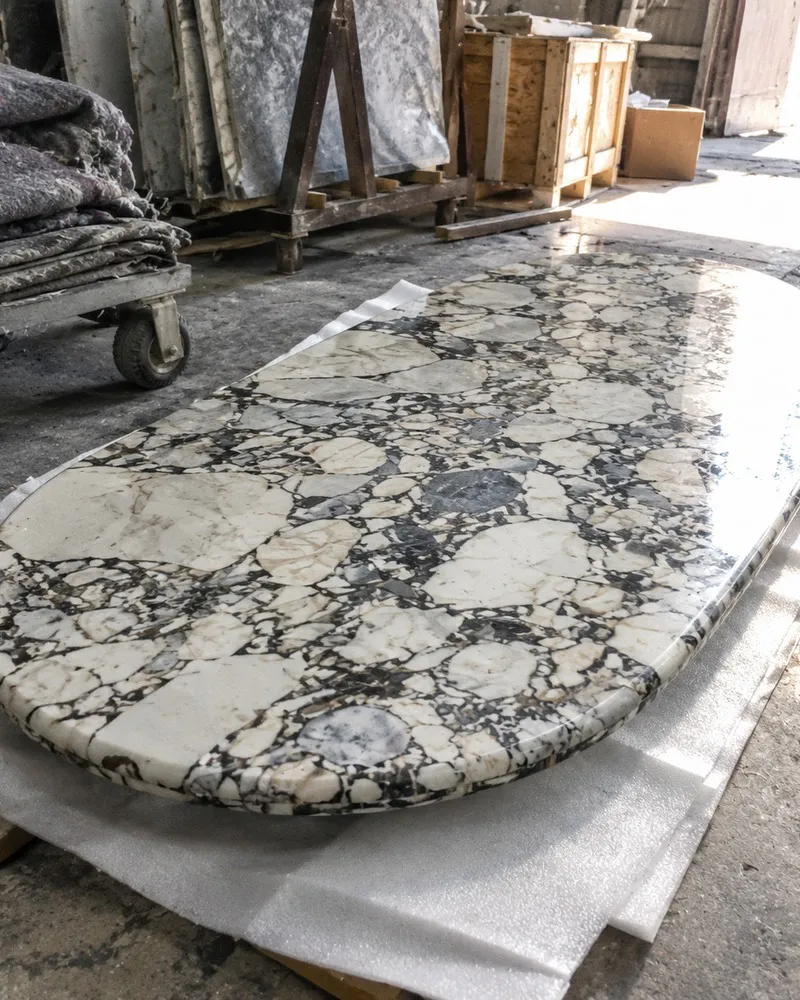
Stones used in this collection
All our stones →Buying Guide
Marble Console Tables: Entry, Hall & Living Room
A console table is the piece that makes an awkward space work — the wall beside a door, the gap behind a sofa, the stretch of hallway that would otherwise be empty. In stone it also sets the tone for everything beyond it, because it is usually the first object a visitor sees.
Where a Console Earns Its Place
- Entry and hallway. A landing place for keys, post and a lamp. This is the highest-use console in the house and the one worth choosing carefully.
- Behind a sofa. Fills the gap in an open-plan room and gives the back of the sofa a purpose, without the visual bulk of a full sideboard.
- Dining room wall. Holds serving dishes, glassware and a bottle, so the table itself stays clear.
- Bedroom or dressing area. A narrow console doubles as a vanity or a place to put a jewellery tray.
Depth and Height Decide Everything
Console depth is where most people go wrong. Anything deeper than about 40 cm starts to feel like a sideboard and eats the circulation space in a hallway; 30 to 35 cm is enough for a lamp, a tray and a bowl, and leaves you room to walk past. Height should sit between 75 and 85 cm — tall enough to be useful standing, low enough to read as furniture rather than a ledge.
Length is a balance between the wall and the object. A console that runs almost the full width of a wall looks intentional; one that stops a third short looks like it is waiting for something else. Measure the wall, then decide whether you want a near-full span or a deliberately short console with artwork above it.
Base Styles
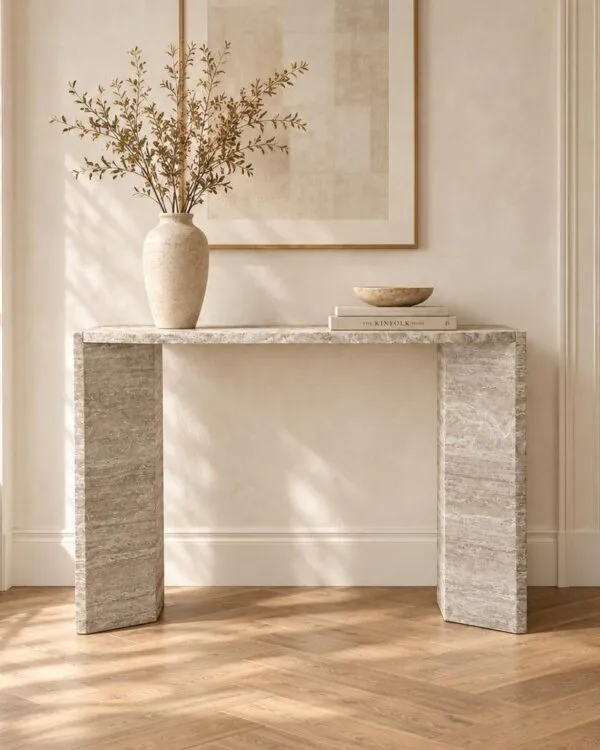
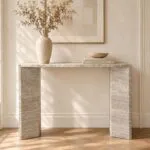
A solid plinth reads architectural and hides the floor beneath, which is useful in an entry where shoes and cables would otherwise show. A pair of slab legs is lighter visually and keeps the floor visible, making a narrow hall feel wider. Sculptural or organic bases turn the console into a piece of furniture in its own right — best used when the console stands alone rather than competing with a mirror and a bench.
Choosing the Stone
Because a console is narrow and long, the veining runs across it rather than around it — which makes strongly figured stones read as horizontal bands. Beige and silver travertine are the most versatile here: neutral, matte, and forgiving of the keys and coins that will land on them. Carrara and Arabescato bring a lighter, more formal look. Dark marbles — Nero Marquina, Emperador, Rosso Levanto — are the strongest choice for an entry, where a dark surface at hip height immediately signals a considered interior.
Practical Notes
Consoles are narrow, tall and heavy — which makes them stable but also means the base needs to be genuinely flat to sit without rocking on a tiled or timber floor. Tell us if the floor is uneven and we can advise on a levelling pad.
All pieces ship sealed. Wipe spills promptly, avoid acidic cleaners, and re-seal annually. On an entry console that collects keys regularly, a honed finish will show scratches less than a high polish.
Styling a Console Without Clutter
A console surface is narrow, which makes it easy to overfill and hard to make look right. The reliable formula is three objects: a light source (lamp or a pair of candlesticks), something living (a branch, a bowl, a plant), and something flat to break the horizontal (a stack of books, a tray, a small framed piece leaning on the wall). Anything beyond that starts to look like storage.
Leave the ends of the console bare. A surface that runs to the very edge with objects feels cramped, even when the wall around it is empty. And keep the height varied: three objects of the same height read as a row rather than a composition. If the console is in an entry and will genuinely hold keys and post, put those on a tray — it converts the useful clutter into a deliberate object.
- How deep should a console table be?
- Thirty to thirty-five centimetres is enough for a lamp, a tray and a bowl while leaving space to walk past. Anything over forty centimetres starts to behave like a sideboard.
- What height should an entry console be?
- Between 75 and 85 cm to the top — useful when standing, and visually in proportion with a mirror or artwork above it.
- Can a console table hold a heavy lamp or vase?
- Yes. Stone tops are solid and stable; the practical limit is the base footprint, not the top. Avoid very top-heavy objects on a narrow plinth.
- Do console tables need to be fixed to the wall?
- No. A stone console is heavy enough to stand safely on its own. Wall fixing is only worth considering in a household with young children who might climb.





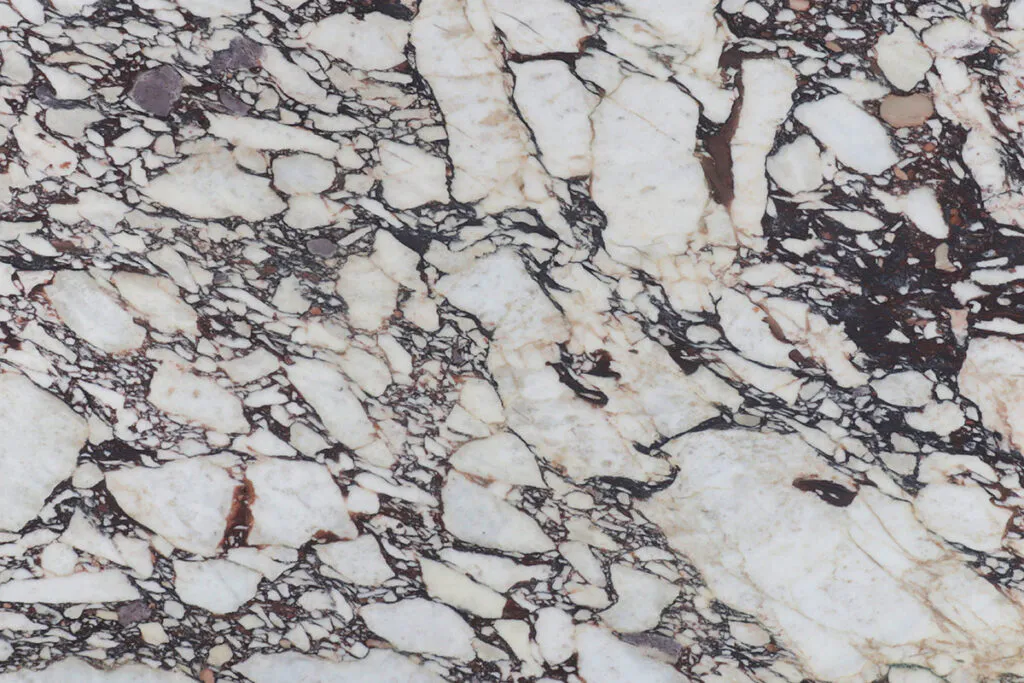
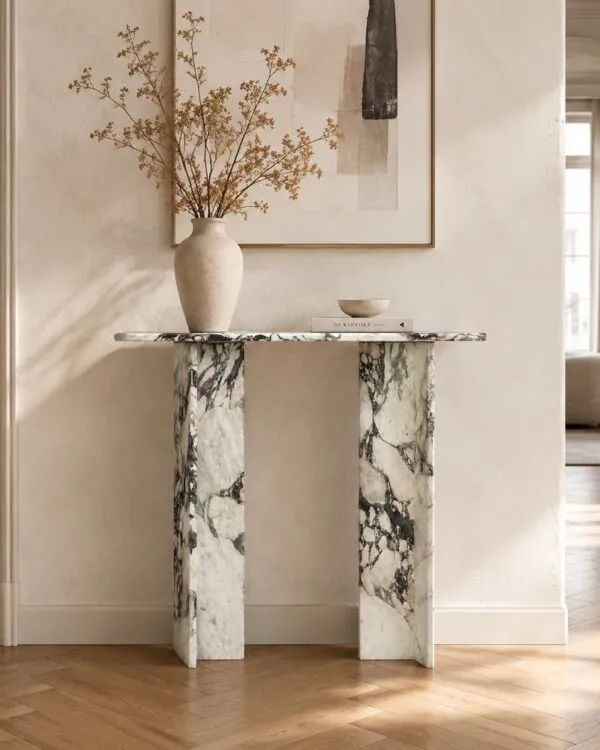
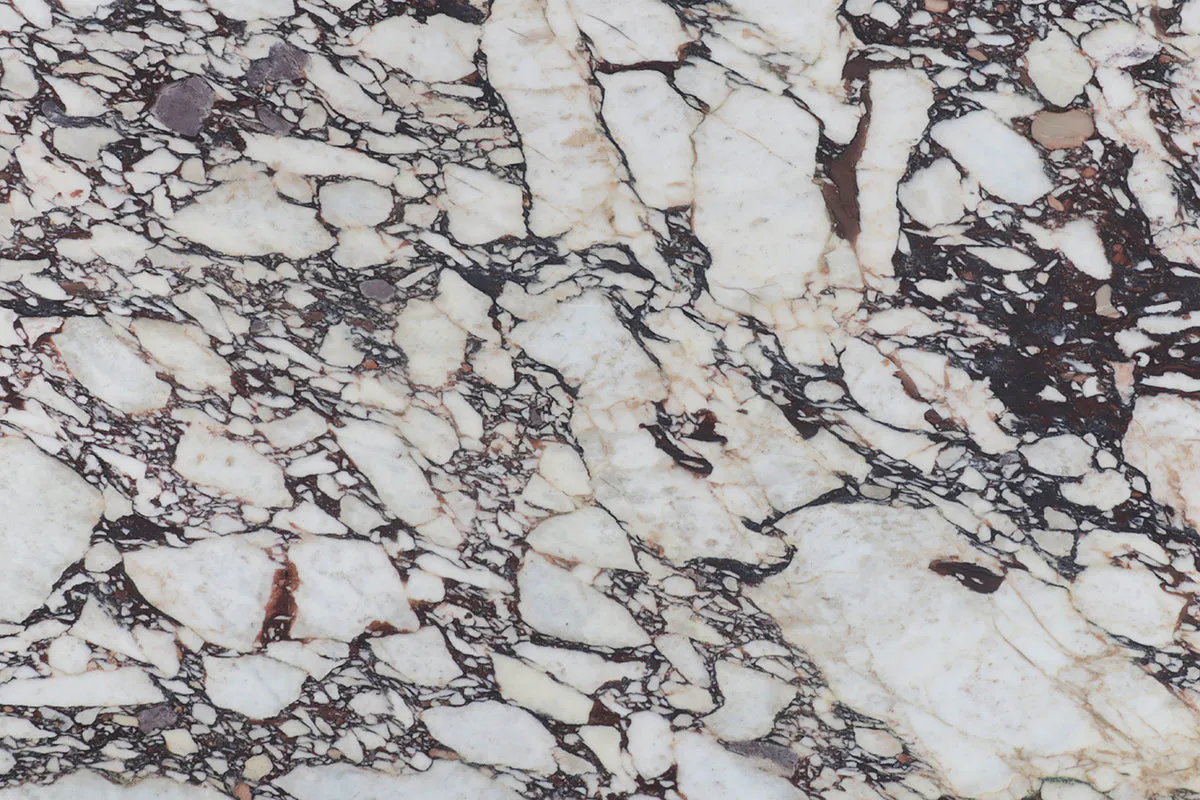 Calacatta Viola