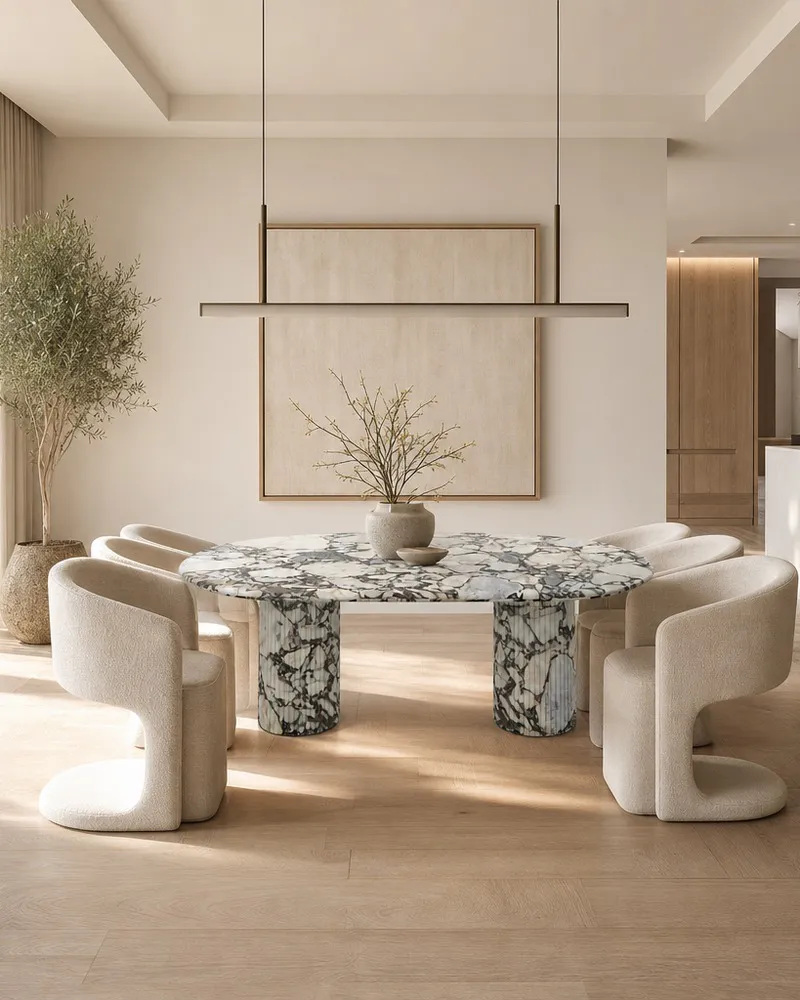
Travertine — Material
Beige Travertine Tables
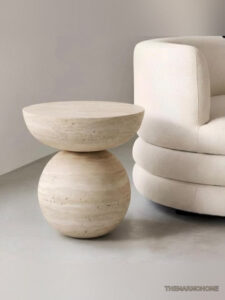
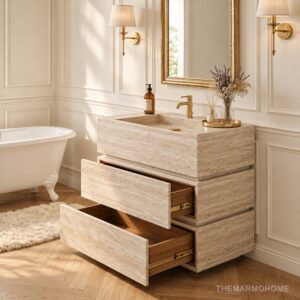
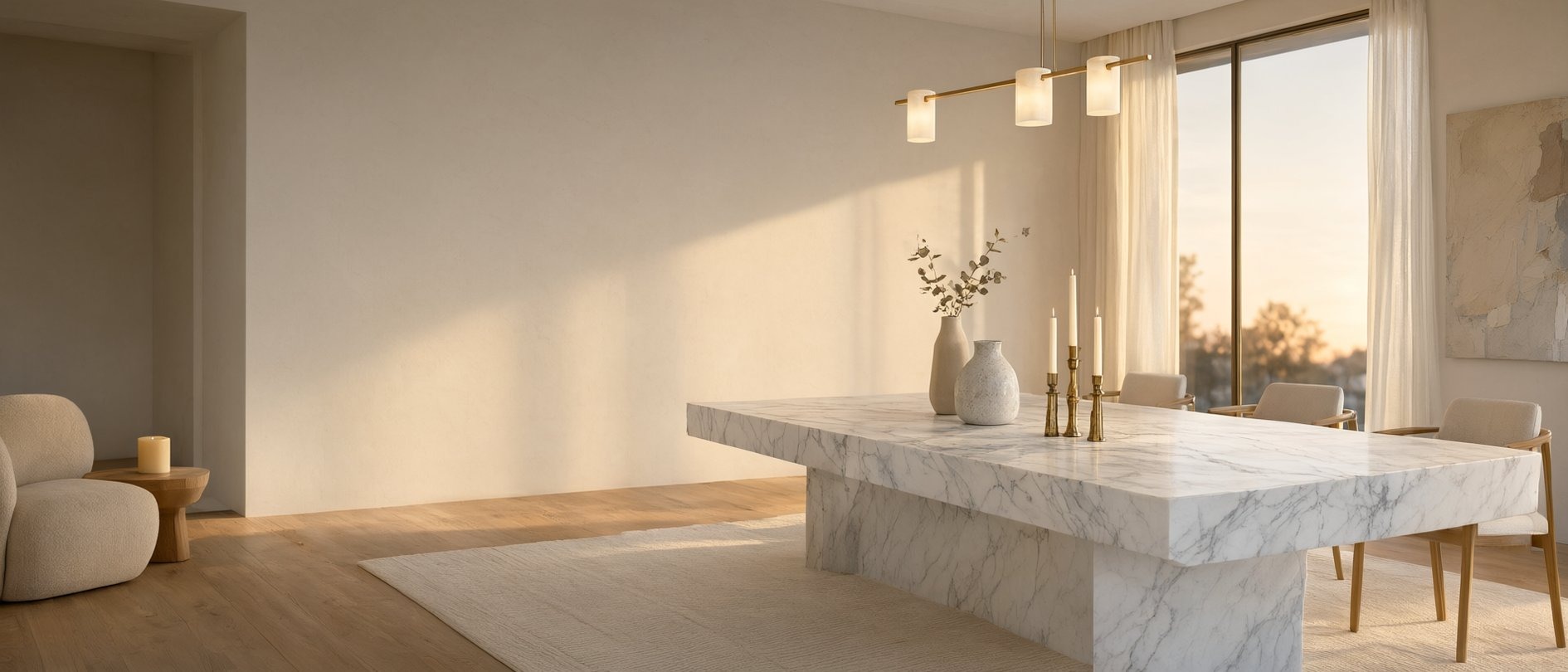
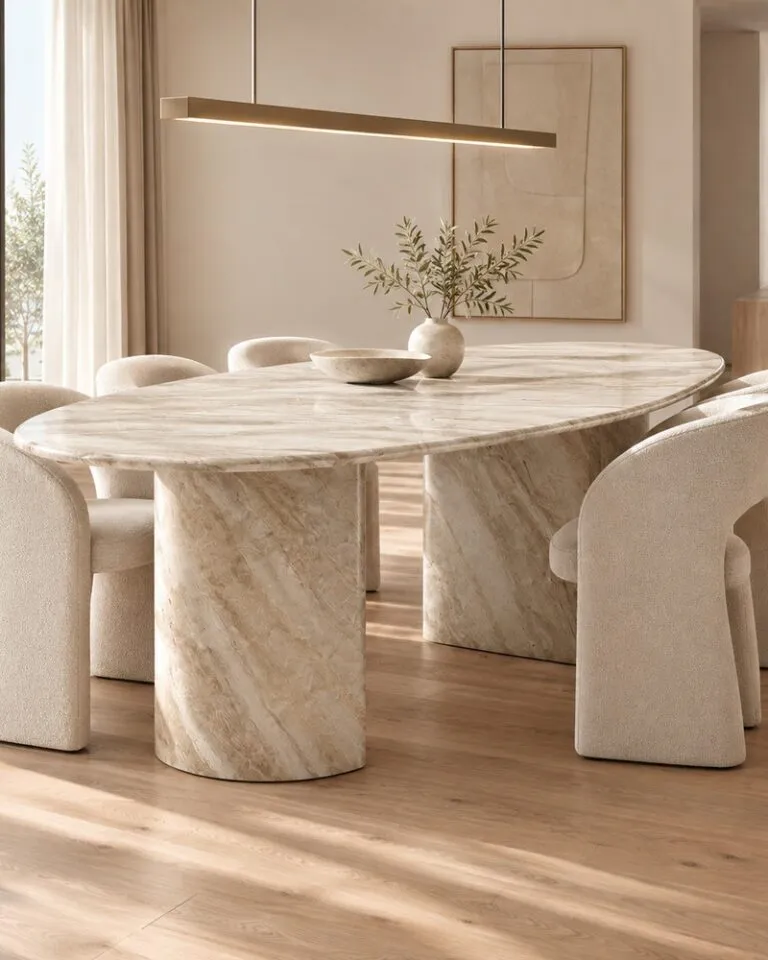
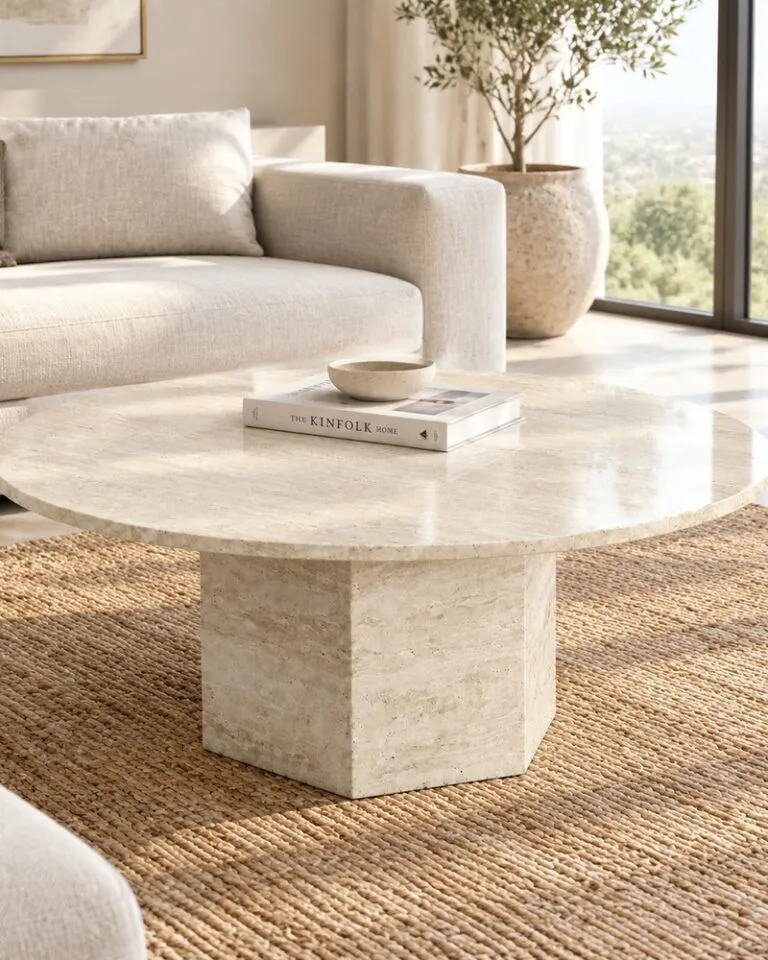
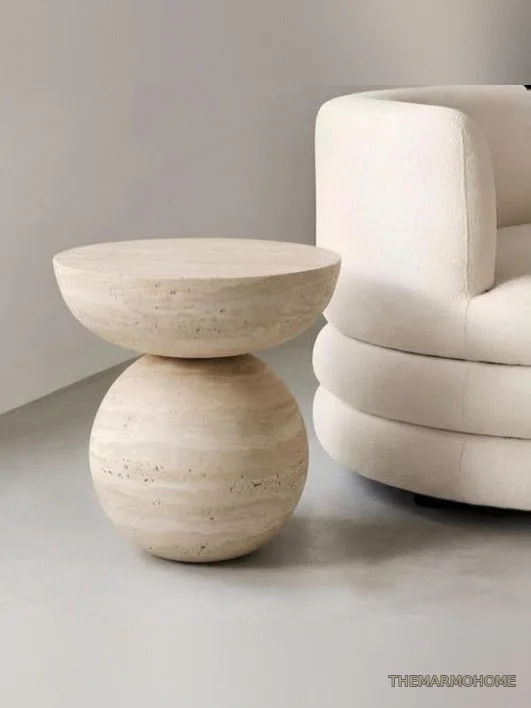
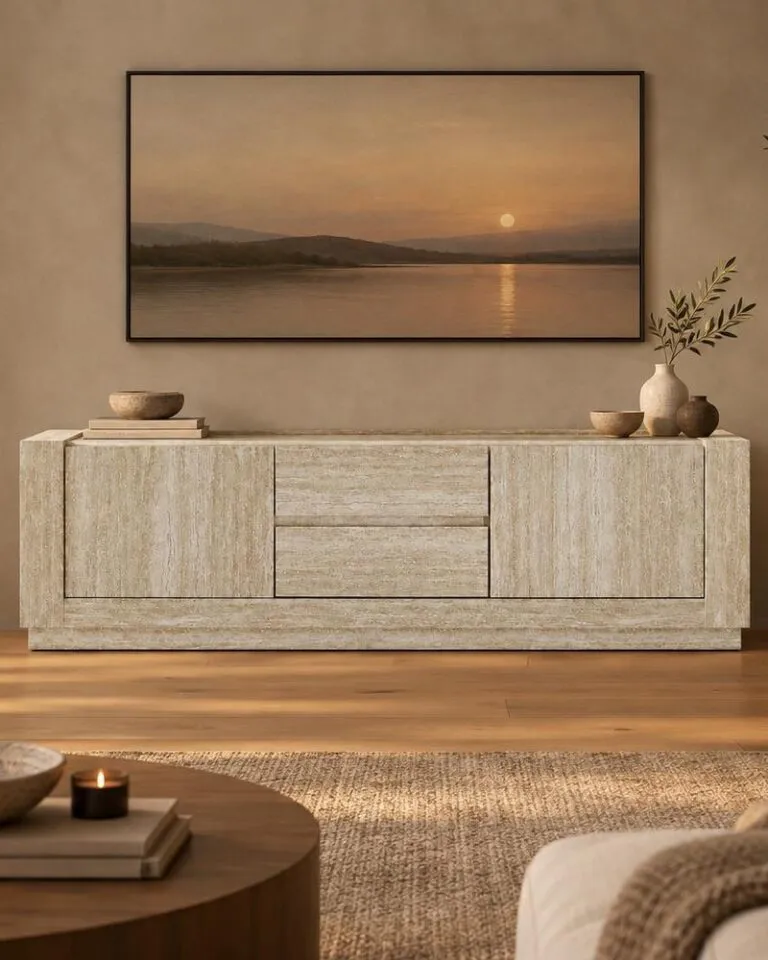
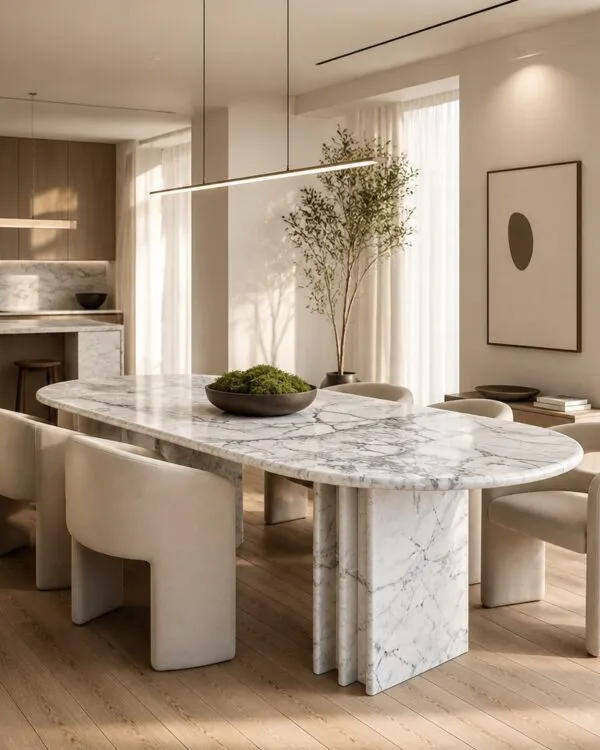
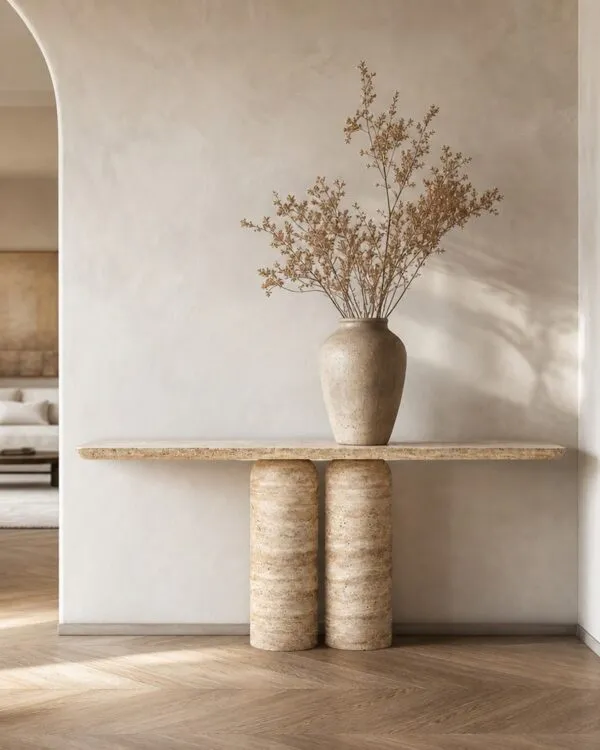
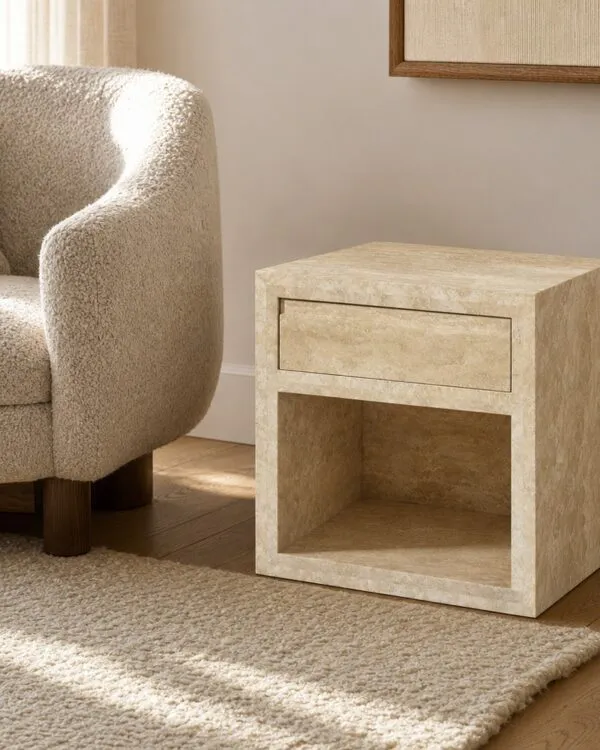
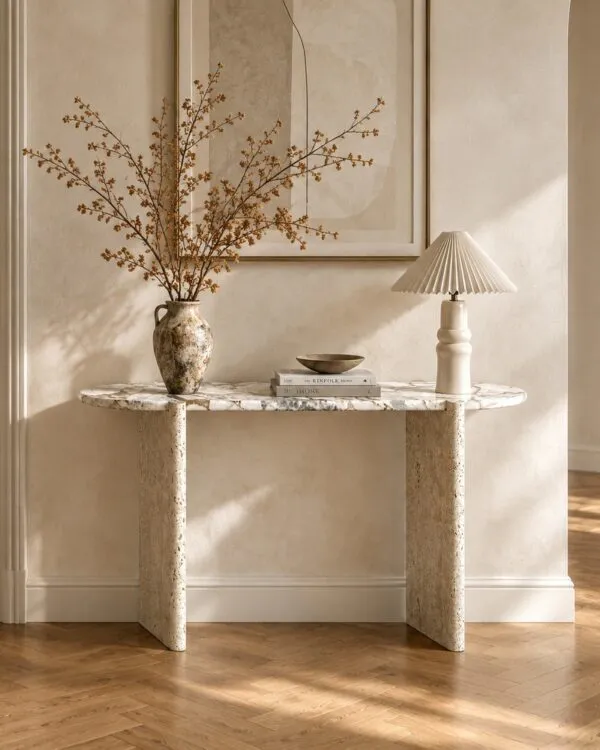
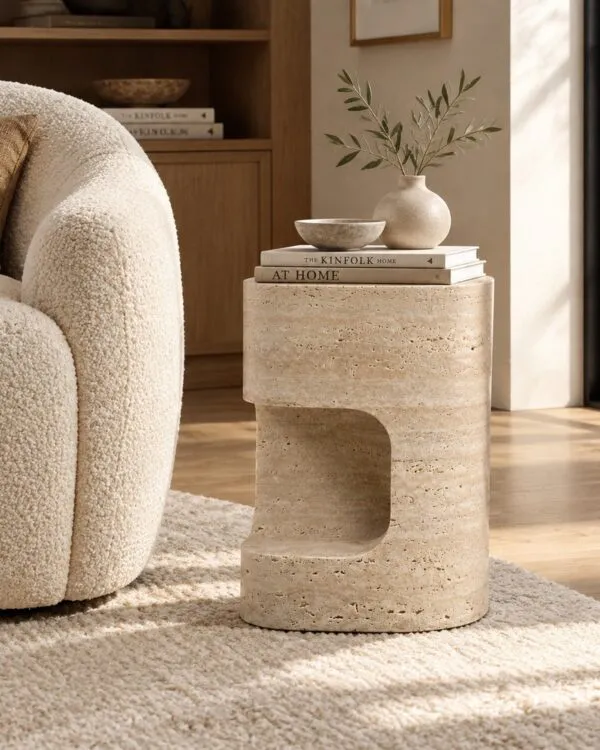
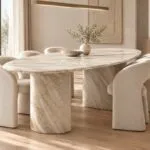
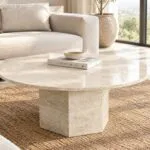
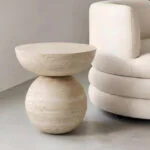
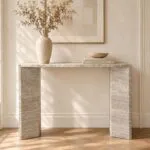
Beige travertine tables are the most versatile piece we make — coffee tables, dining tables, consoles and side tables in a warm matte stone that pairs with almost any interior. Made to order in our own factory, with stone sections, joins and bases varying by design. Sinks and bath surrounds are also available in the same stone.
- Origin
- Denizli basin — Turkey
- Finish
- Honed · filled · brushed
- Available now
- 8 finished pieces
- Supply
- Factory direct — no middlemen
Where beige travertine comes from
Travertine forms around mineral springs. Calcium carbonate precipitates out of the water and builds up in thin layers, trapping gas bubbles and plant fragments as it goes — which is why the stone has its characteristic linear banding and its small natural voids. The Denizli basin in western Turkey is the world’s most important travertine district, and the source of most beige material in the trade.
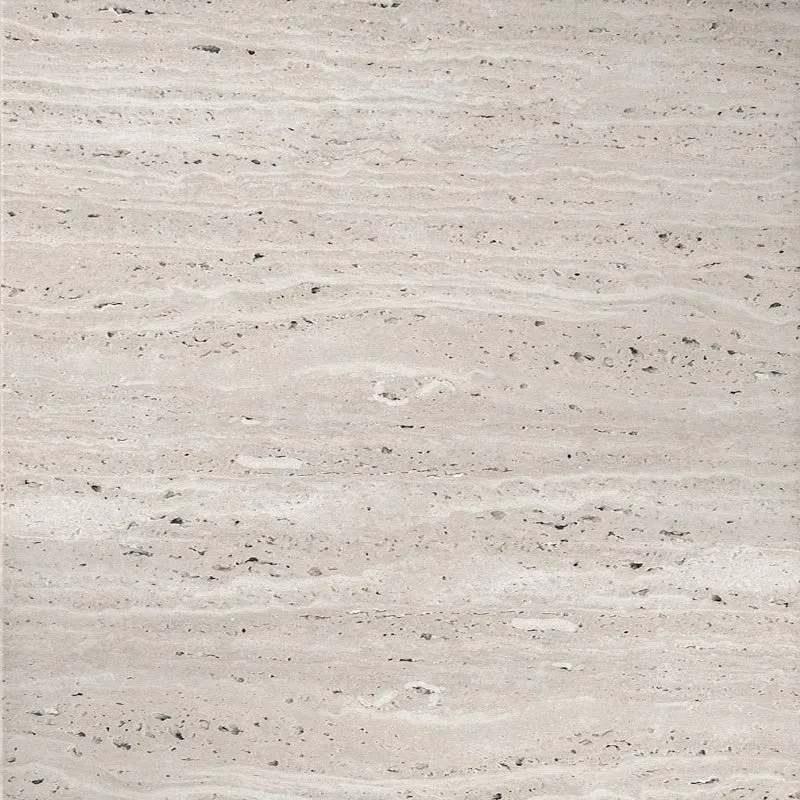
The colour comes from iron oxides and organic inclusions: pale cream where the stone is pure, warm sand and tan where the layers carry more mineral content. Blocks are cut across the bedding to show the cloud-like “cross-cut” figure, or along it to show the striped “vein-cut” face.
What the texture actually feels like
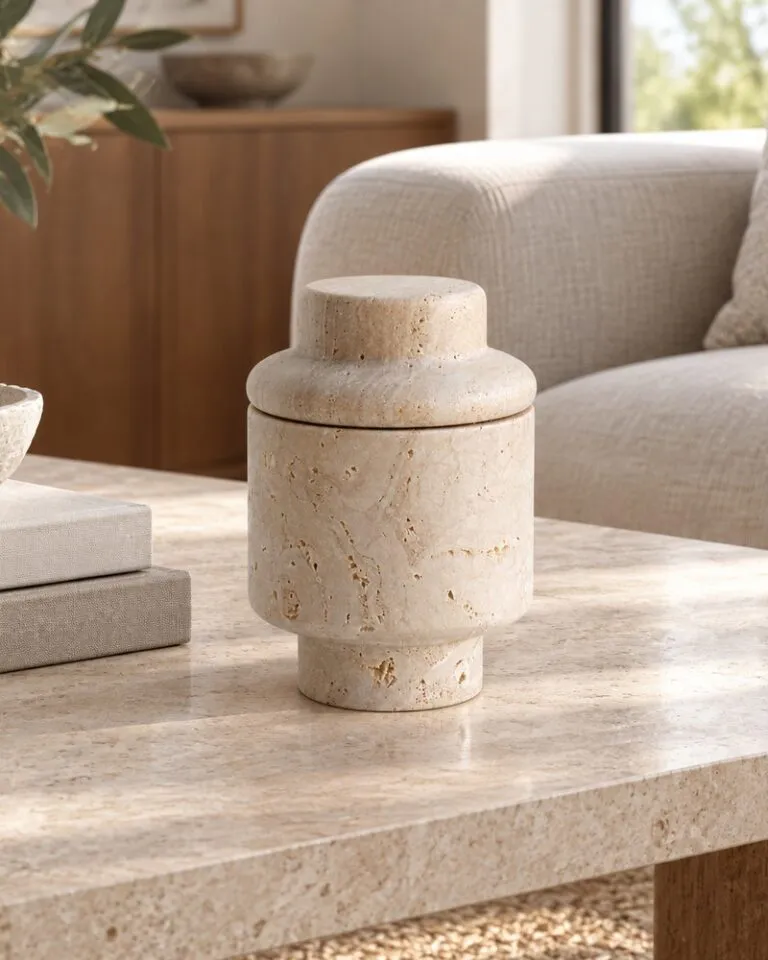
Travertine is a matte stone. Even polished, it never reaches the mirror shine of marble — it has a soft, almost waxy sheen. Honed and filled, the surface is smooth to the touch with the banding visible as tone rather than as relief; brushed and unfilled, you feel the pits and the layering directly.
That matte quality is why it works so well in contemporary interiors: it absorbs light instead of reflecting it, so a travertine table reads as warm mass rather than as a bright surface. Beige in particular is the easiest stone to pair — it sits with oak, bouclé, rattan, terracotta and olive without any effort, and it never looks cold.
Colour range
- Pale sand
- Beige
- Warm tan
- Deeper vein
Sampled from current production. Natural stone varies by block — the slab on your piece is photographed before cutting.
Where beige travertine works best
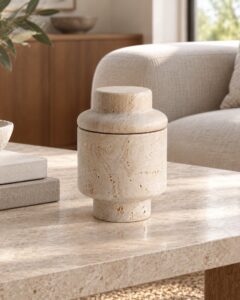
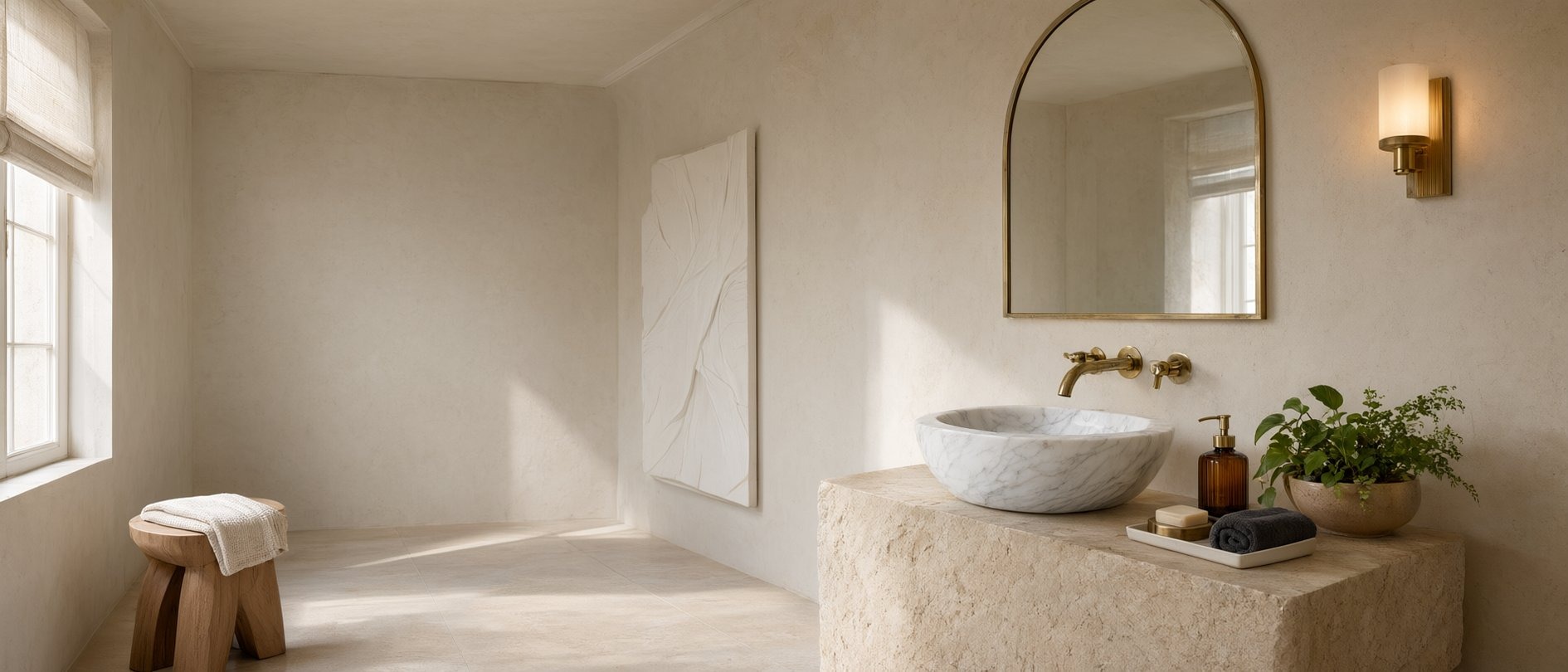
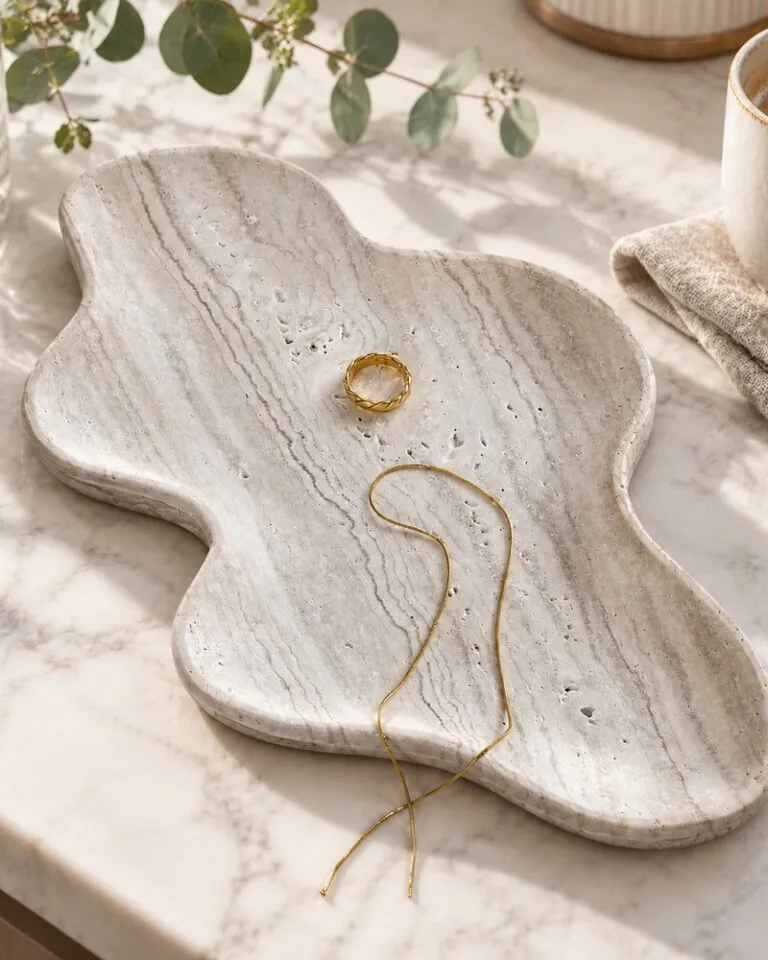
It is the most versatile material we carry. Coffee tables, dining tables, console tables, side tables, lamps, trays, bathroom sinks and stone bath surrounds all work in beige travertine — and it is the one stone that manages to look right in both a minimalist apartment and a rustic stone house.
Because the tone is neutral and the texture is the interest, it also suits large pieces: a long dining table in travertine does not become visually loud the way a heavily veined marble would. Filled and honed is the practical choice for tables; unfilled and brushed is better for trays and objects where texture is the point.
Living with travertine
Travertine is porous by nature — the voids are part of the material. Filled surfaces ship sealed; re-seal annually, and more often in a bathroom. Clean with pH-neutral soap and water; avoid acids, which attack the calcium carbonate, and avoid harsh abrasives on honed surfaces.
Wipe spills promptly, especially oil and wine, which can settle into unfilled pits. On unfilled surfaces, a soft brush helps lift dust out of the texture. Never use a steam cleaner — heat and moisture together drive dirt deeper into the stone.
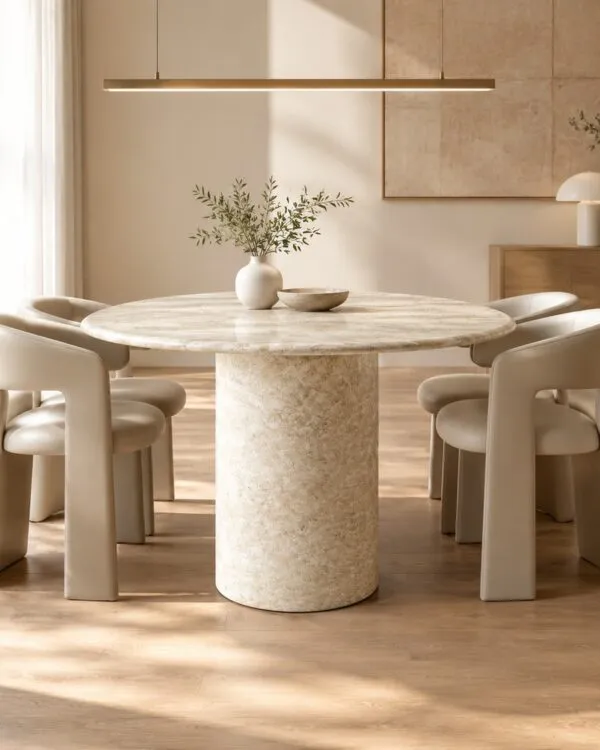
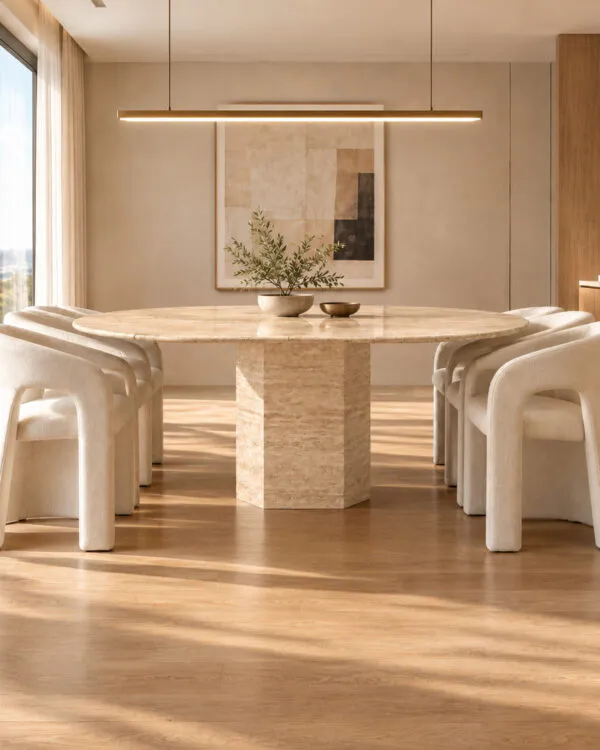
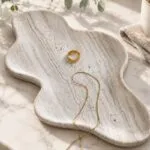
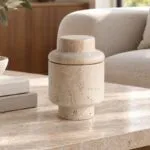
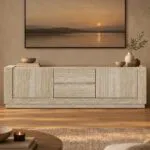
Made in Beige Travertine
Available now in Beige Travertine
See all Travertine pieces →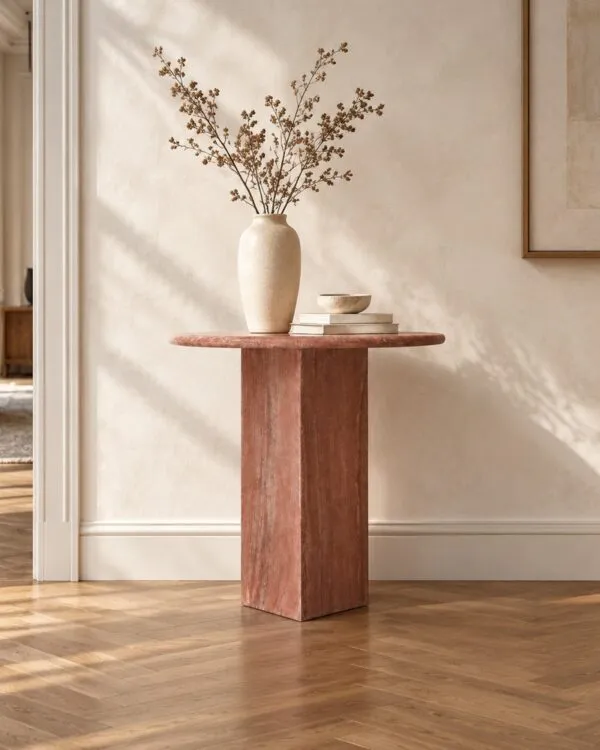
Beige Travertine — questions we get asked
- Is travertine better than marble for a table?
- It depends on use. Travertine is warmer and matte and hides everyday marks well; marble is denser with a glossier surface. Both are calcium stones and both need pH-neutral cleaning and annual sealing.
- Should travertine be filled or unfilled?
- Filled and honed is smoother and easier to clean, which suits tables and vanities. Unfilled and brushed keeps the pits and texture visible, which suits trays, objects and feature walls.
- Does travertine stain?
- Sealed travertine resists everyday spills, but it is porous. Wipe wine and oil promptly and re-seal annually — unfilled surfaces need more attention than filled ones.
- Why does travertine have holes?
- The voids are gas bubbles and plant fragments trapped as the stone formed around mineral springs. They are a natural feature of the material, not a defect.
Need a size or a shape that isn’t listed?
We cut from our own stock, so a custom size, edge profile or finish in Beige Travertine is a normal order rather than an exception. Send us the dimensions and we will quote within 48 hours.

 Calacatta Viola