Marble — Material
Emperador Marble
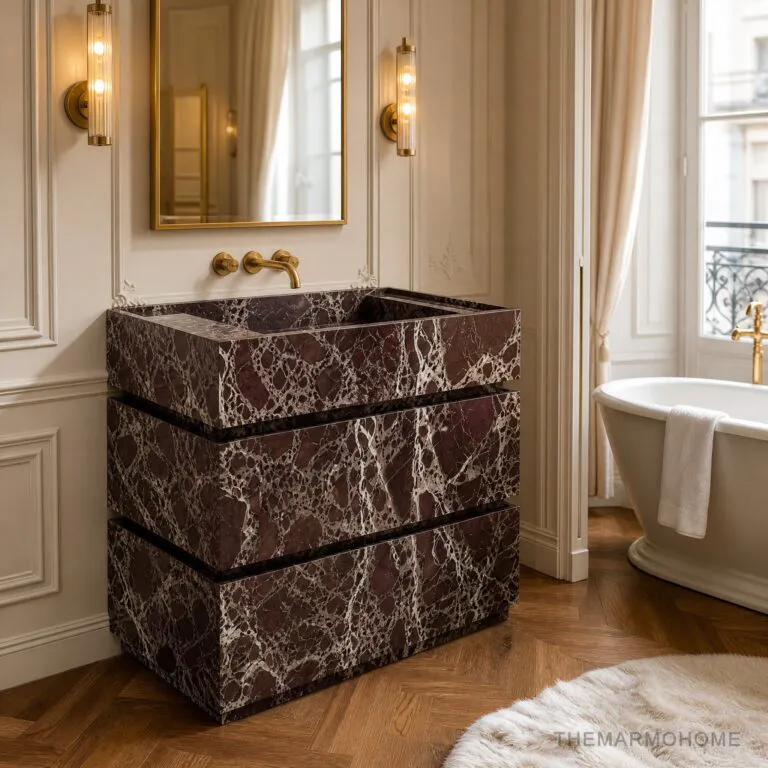
Emperador is a deep chocolate-brown marble veined in cream and pale beige — the warm counterpart to black marble. It brings weight and richness to a room without the coldness of black, and it is the stone that makes brass look its best.
- Origin
- Spain and Turkey
- Finish
- Polished · honed · brushed
- Available now
- 5 finished pieces
- Supply
- Factory direct — no middlemen
Where Emperador comes from
Emperador is the trade name for a family of brown fossil-bearing marbles quarried in Spain and Turkey. The “Dark” grade — the classic Emperador — comes from northern Spain; lighter “Light” and “Medium” grades come mainly from Turkish quarries in the Afyon region.
The colour comes from bituminous and iron-rich material dispersed through the limestone, and the stone often contains fossil fragments and fine white calcite veins. The darker the grade, the less veining is visible; the lighter grades show more cream and beige detail.
How brown marble behaves
Dark Emperador reads as a very deep brown, almost black in shadow, with cream veining that appears and disappears depending on the light. It is warmer than Nero Marquina and considerably softer in contrast, so it sits more easily in rooms built on wood and natural textiles.
This is a material that flatters brass, bronze and copper more than any other stone, which makes it a natural pairing for aged metal fittings. Against cream plaster and pale oak it reads rich rather than heavy; against white it becomes very strong, so use it where you want a definite dark accent rather than as a background.
Colour range
- Dark chocolate
- Emperador brown
- Milk chocolate
- Cream vein
Sampled from current production. Natural stone varies by block — the slab on your piece is photographed before cutting.
What Emperador suits
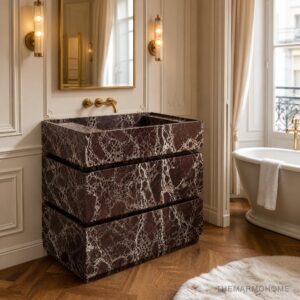
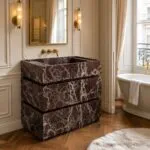
Coffee tables, consoles and side tables show it best — low, dark pieces that anchor a warm room. In bathrooms it makes a distinctive sink or vanity top, particularly with bronze or brass fittings; in a study or entry a dark Emperador console is almost a classic.
It also works well for trays, lamp bases and desk objects, where a small amount of dark brown adds depth to a neutral palette. Very large Emperador surfaces can become visually heavy, so we generally recommend it for pieces rather than for full wall cladding.
Living with Emperador
Ship sealed; re-seal annually. pH-neutral soap and water only, and wipe dry afterwards — on dark polished stone, water marks are the most visible defect. Keep acids away: they etch the calcite veins first, which shows as dull white patches.
Dust with a dry cloth before wet-wiping. Because the stone is dark, oil-based marks are less visible than on white marble but can still darken the surface, so wipe cooking oil and dressings promptly.
Made in Emperador
Available now in Emperador
See all Marble pieces →-
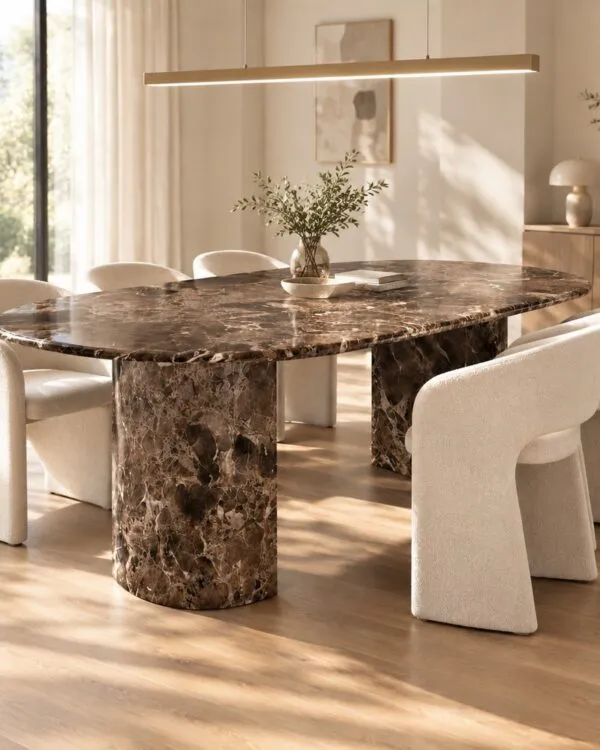
EmperadorEmperador Marble Oval Dining Table with Double D-Shaped Legs | Luxury Natural Stone Dining Furniture$3,310– $4,870
-
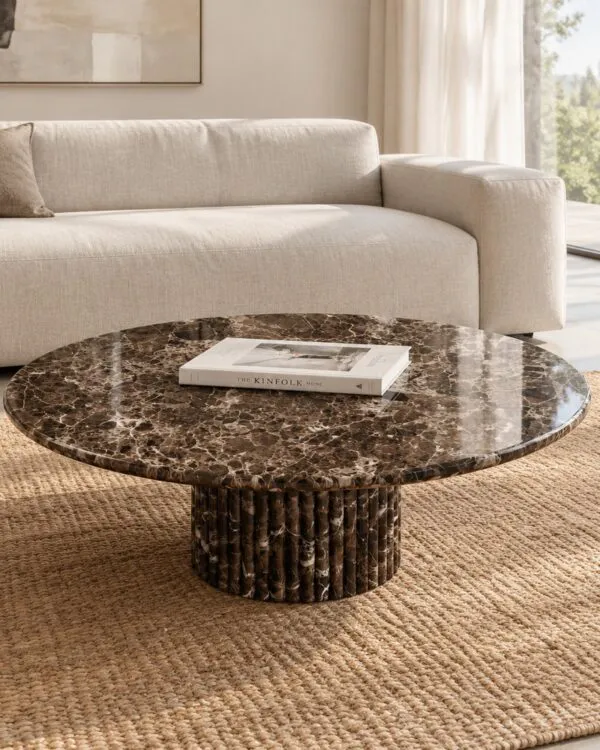
EmperadorEmperador Marble Round Coffee Table with Sculptural Petal Base | Luxury Natural Stone Center Table$1,390– $1,740
-
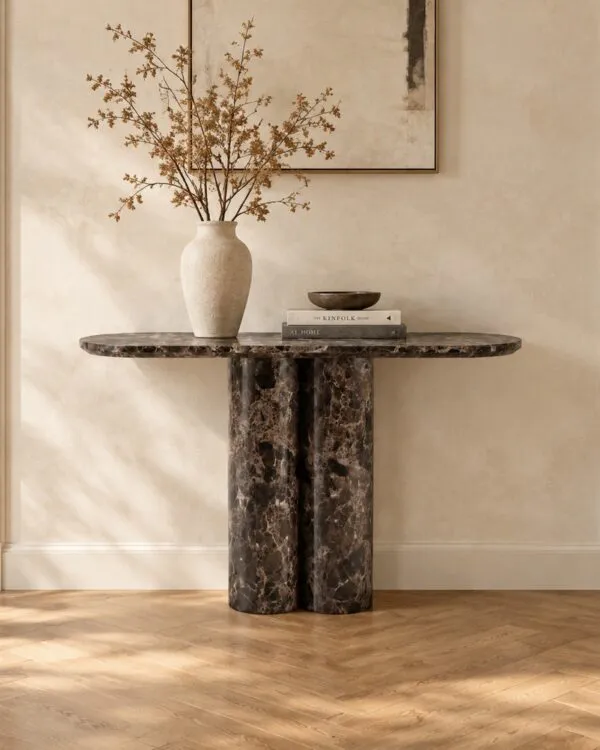
EmperadorLuxury Emperador Marble Console Table with Oval Shape Top and Double Cylinder Legs$1,870– $2,380
-
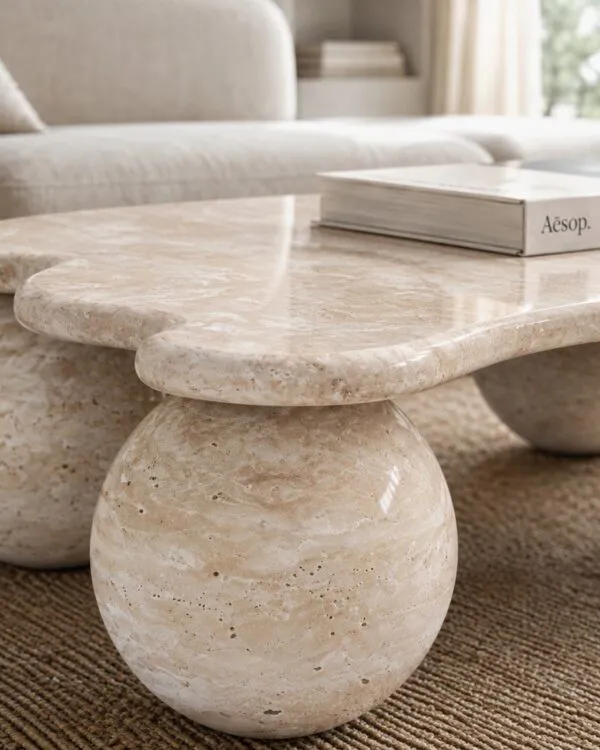
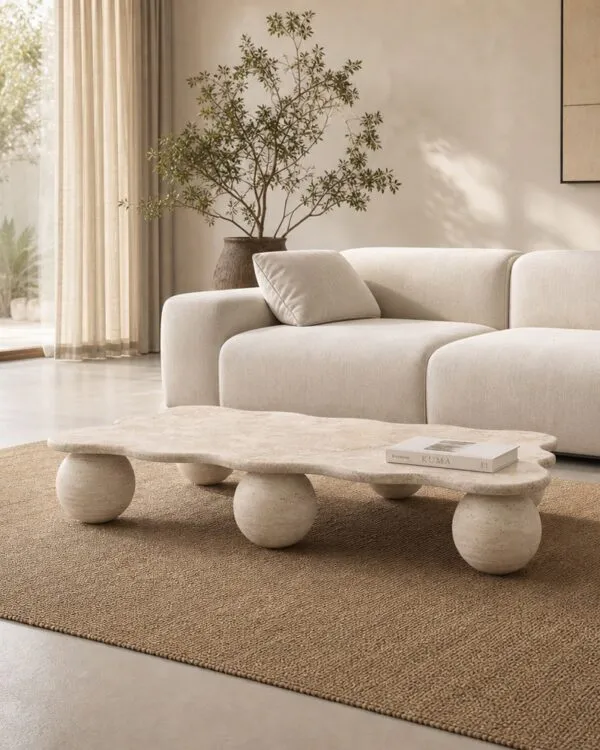
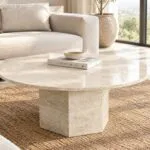
Beige TravertineRectangular Marble Coffee Table – Sculptural Stone Coffee Table (170 cm)$3,910– $5,570
Emperador — questions we get asked
- Is Emperador marble or granite?
- Marble. Emperador is a fossil-bearing brown limestone that has been metamorphosed, and it is worked and sealed like marble.
- What is the difference between Emperador Dark and Light?
- Dark Emperador comes mainly from Spain and is a deep chocolate brown with cream veining. Light and Medium grades come largely from Turkey and are warmer, with more visible fossil detail.
- Does Emperador look black indoors?
- In low light it reads almost black. In daylight, and especially next to brass or oak, the brown becomes clearly visible.
- Can Emperador be used in a bathroom?
- Yes, for sink bowls and vanity tops. Re-seal annually and keep acidic bathroom cleaners off the surface.
Need a size or a shape that isn’t listed?
We cut from our own stock, so a custom size, edge profile or finish in Emperador is a normal order rather than an exception. Send us the dimensions and we will quote within 48 hours.



 Calacatta Viola