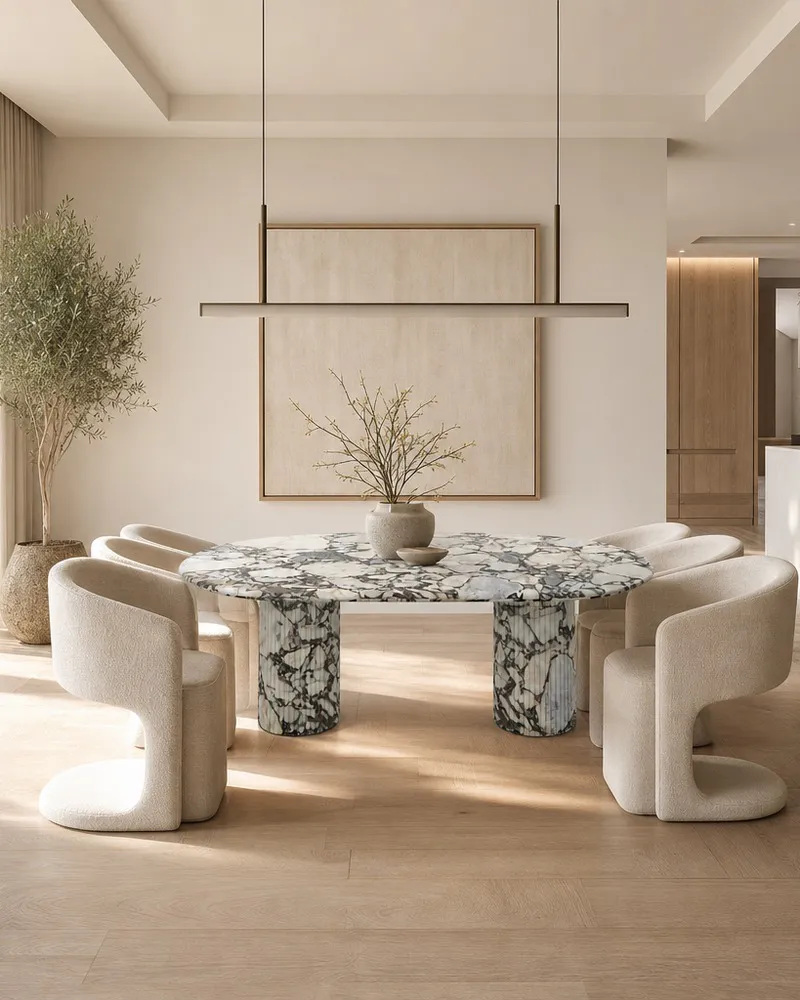
How to Choose a Stone Coffee Table (The 2026 Buying Guide)
Every stone furniture buyer asks the same three questions in the first ten minutes: which material, what size, and will it fit through the door. This guide answers them in the order you actually need them.
A stone coffee table is the one piece in a living room that has to survive everything: a hot mug, a wet glass, a child climbing on it. The slab, the size, the edge and the finish each decide something different, and the order you decide them in matters more than the budget.
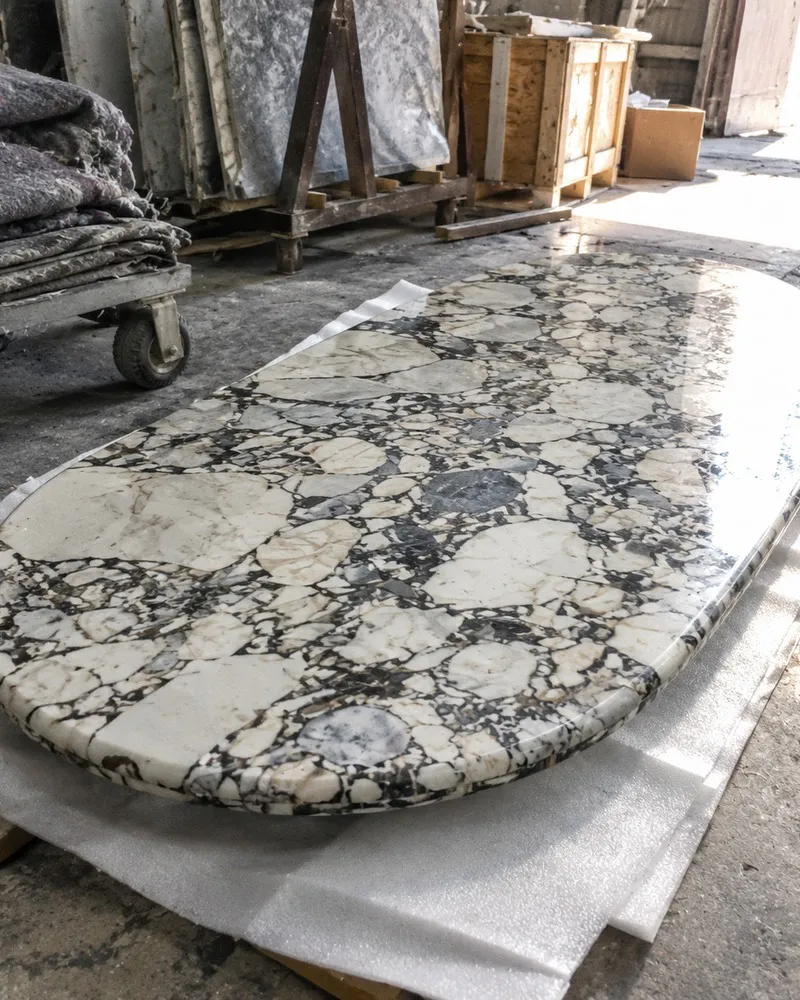
We cut every top from a single board in our own factory, so the stone in the photo is the stone that ships. No veneers, no middlemen — send us the room dimensions and we photograph the slab before it is cut.
1. Start with the slab, not the shape
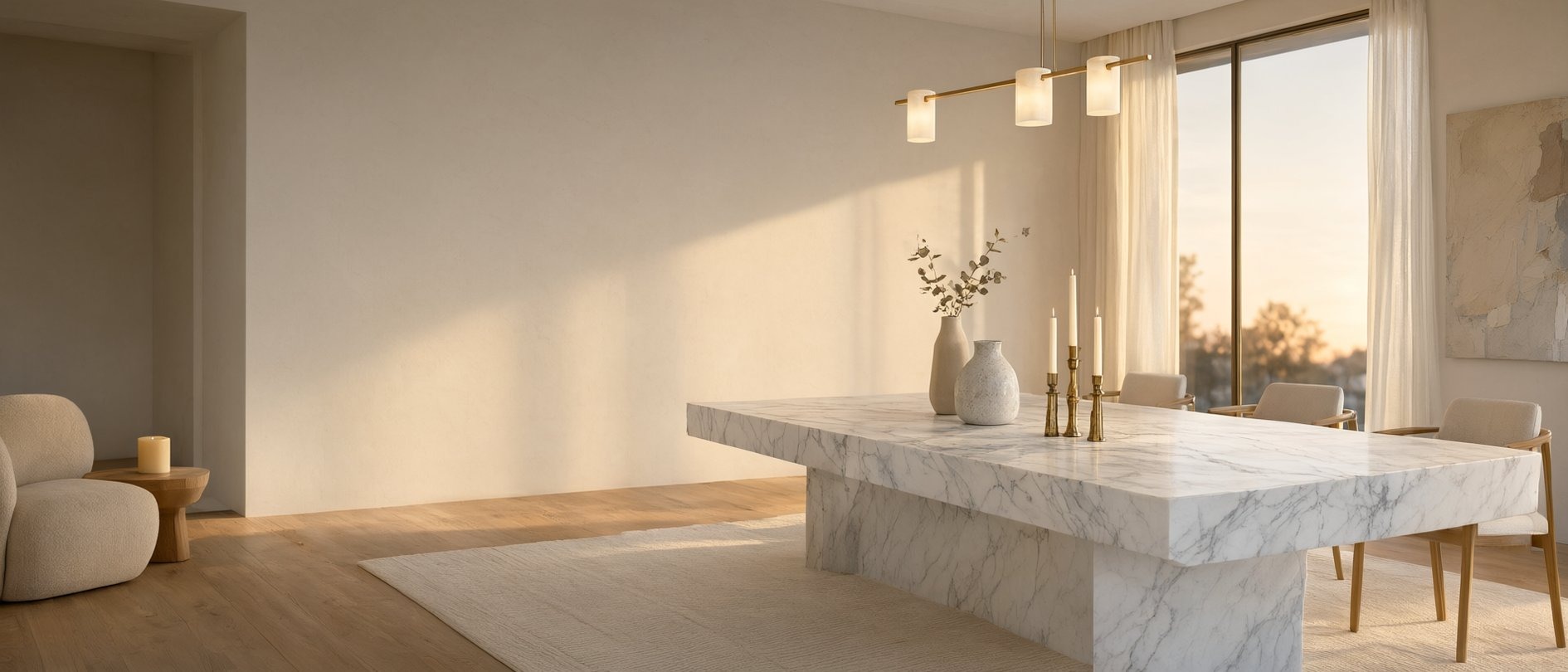
The slab picks the table, so we start in the yard, not in a catalogue. A coffee table top is one of the few pieces where the whole board is visible at once — no doors, no drawer fronts breaking it up — which means every mark on that board is on display. When we pull stone for a 105 cm top we lay the template on the slab first, and we reject any board whose fissure or resin line falls inside the 105 × 60 cm footprint. A hairline crack that nobody would notice on a 240 cm dining table becomes the first thing you see on a coffee table, because the eye has nowhere else to go.

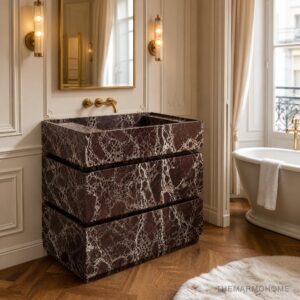
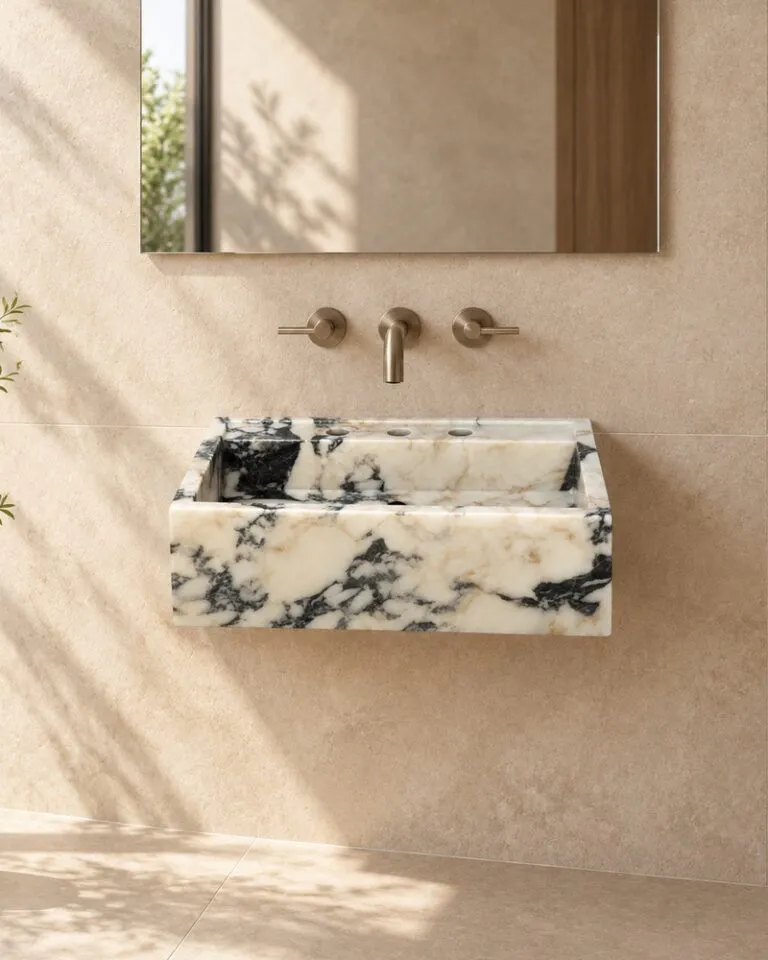
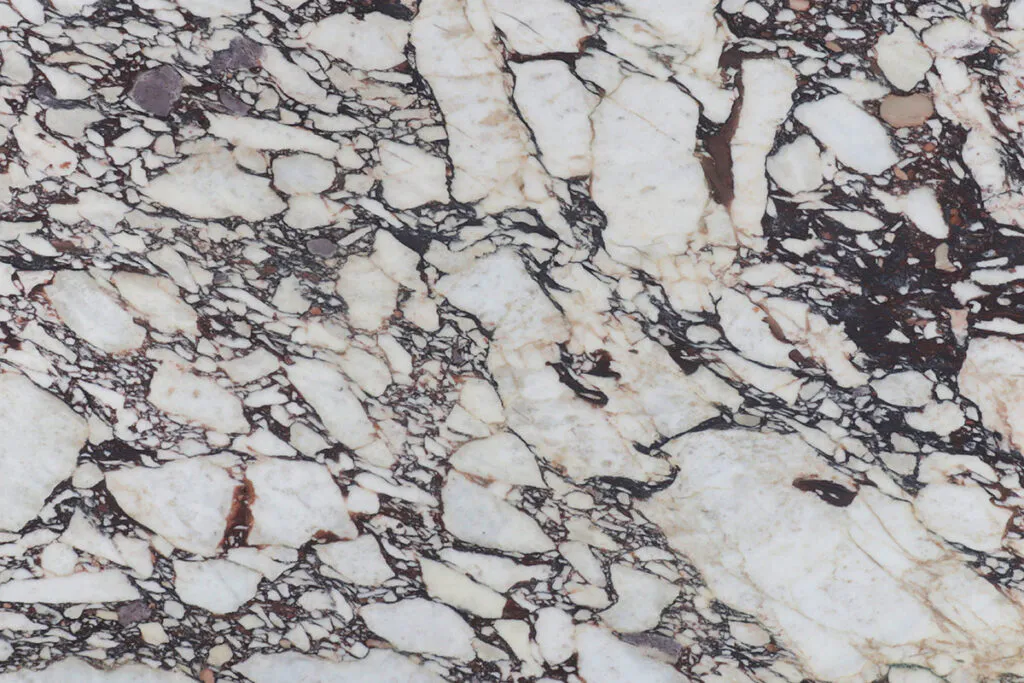
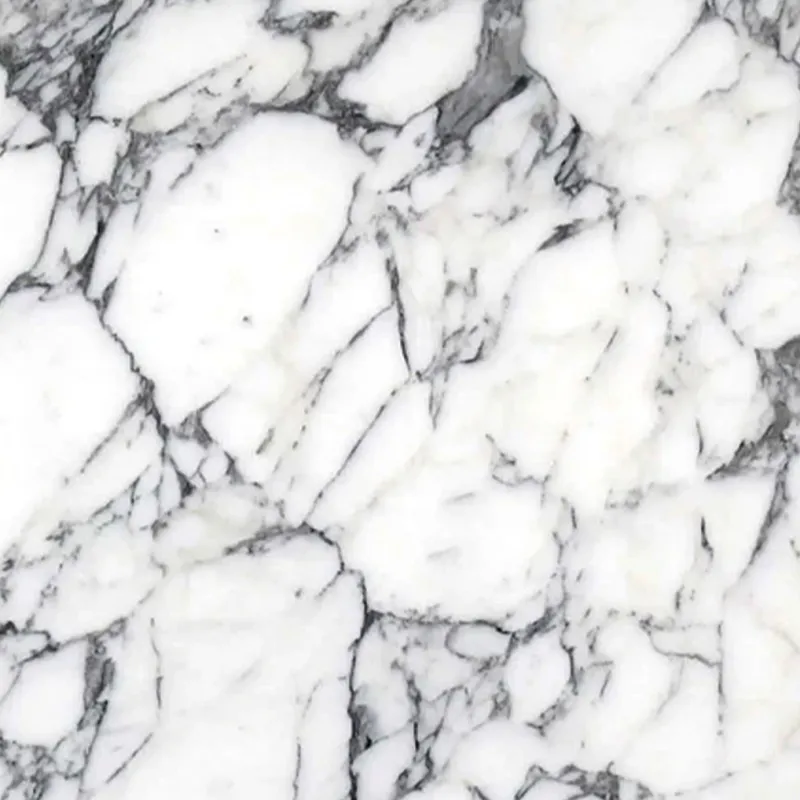
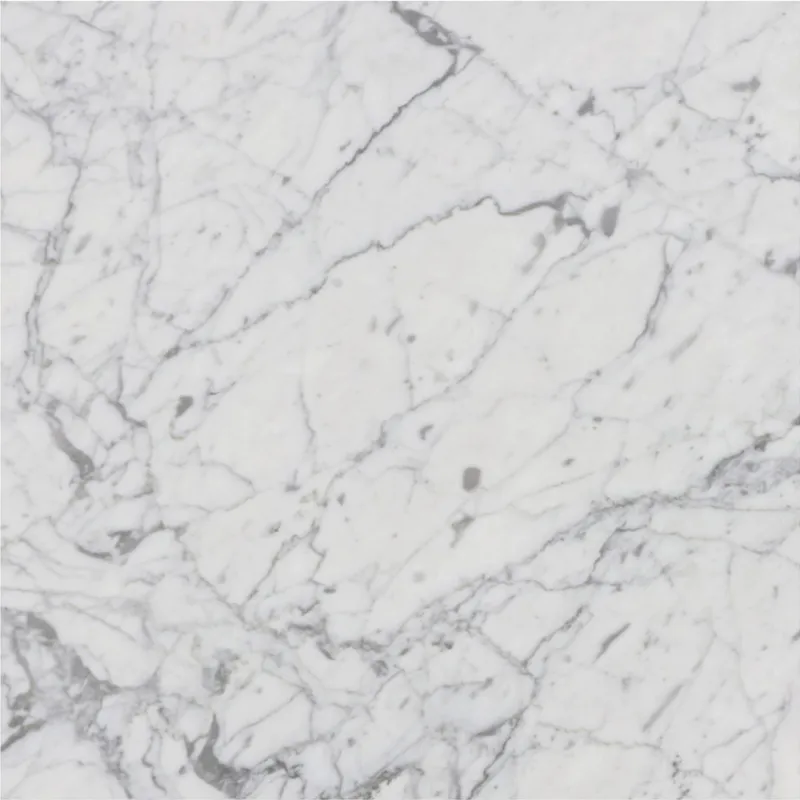
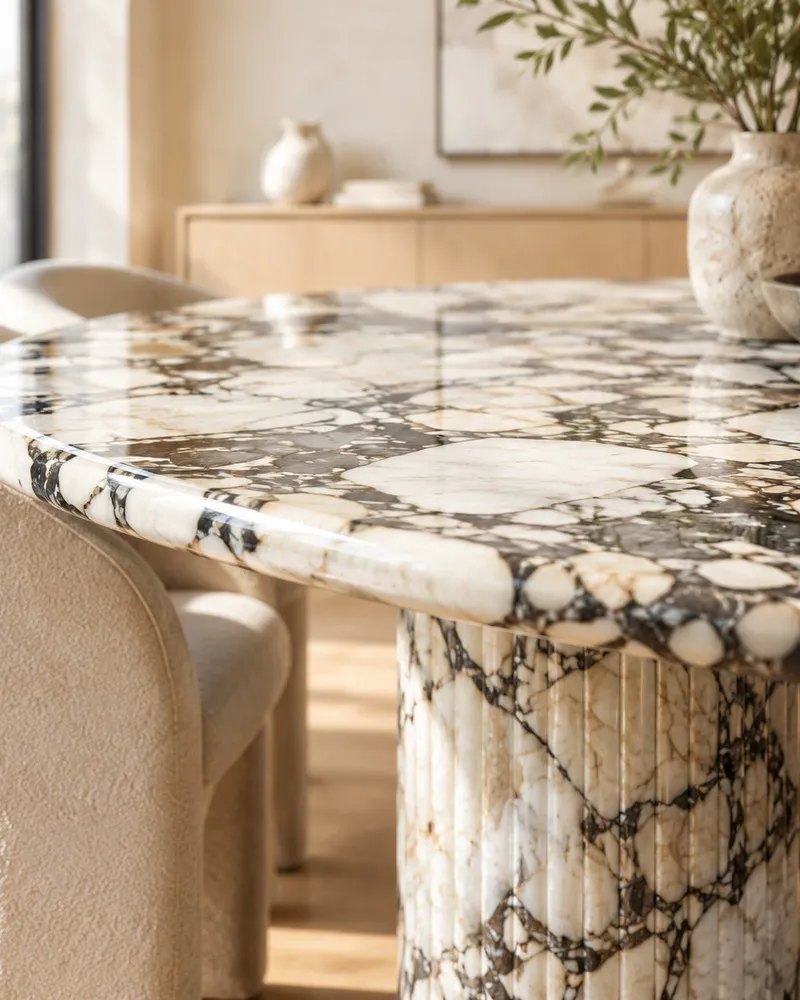
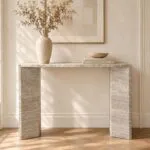
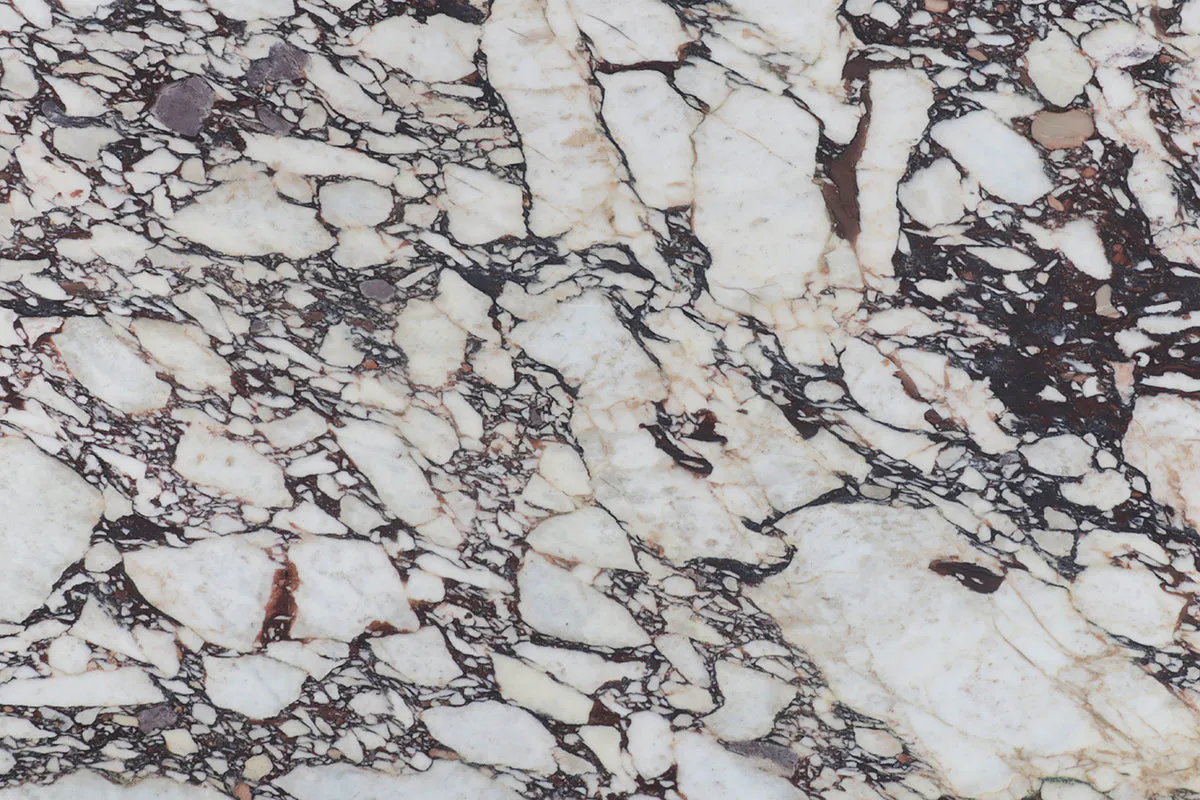
Three stones cover most of what leaves the factory, and the prices tell you what you are paying for. Carrara is the quiet, cheapest option — our Carrara rectangle plinth table is $680. The Arabescato rectangle plinth table runs $870 and gives you grey movement that reads as drawing rather than decoration. Calacatta Viola starts at $1,060 for the rectangle plinth and reaches $1,420 polished, and what you pay for is the vein: purple-grey, wide, and genuinely unpredictable from board to board. Across the whole range the median is $1,550 and most pieces we ship land between $1,200 and $1,900. A solid stone coffee table advertised at $400 is not solid stone — at that price it is a veneer on a composite core, and the edge will tell you within a year.

Vein direction is the thing buyers never ask about and always notice afterwards. A single board runs its veins one way, so on a rectangular top the pattern reads either along the length or across it. We cut so the veins run parallel to the long edge, because that is the line your eye follows when you walk into a room. Book-matching two consecutive boards into a mirrored butterfly looks spectacular in a showroom and behaves badly on a table: it puts a seam down the middle, and a seam on a coffee table collects crumbs and catches a cloth every time you wipe it. For tables we recommend one board. Keep the book-match for a wall panel, where nobody puts a cup down.

2. Get the size and proportion right
Sizing is arithmetic, not taste. Measure the sofa, not the room: the table should run about two-thirds of the sofa length. A 180 cm sofa wants a 105–120 cm top, a 220 cm sofa wants 140–150 cm, and below 180 cm you should go round, because a rectangle shorter than half the sofa looks stranded in front of it. Height is the number people get wrong most often. A standard seat is 40–43 cm from the floor, and the table top should sit level with it or up to 5 cm above — so 38–45 cm finished height. We have built tables at 50 cm because a customer measured their old coffee table instead of their sofa, and what you get is a surface you have to reach up to every time you put a glass down.

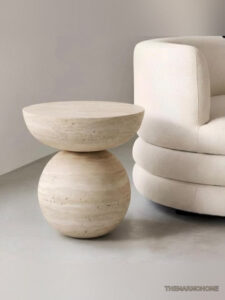
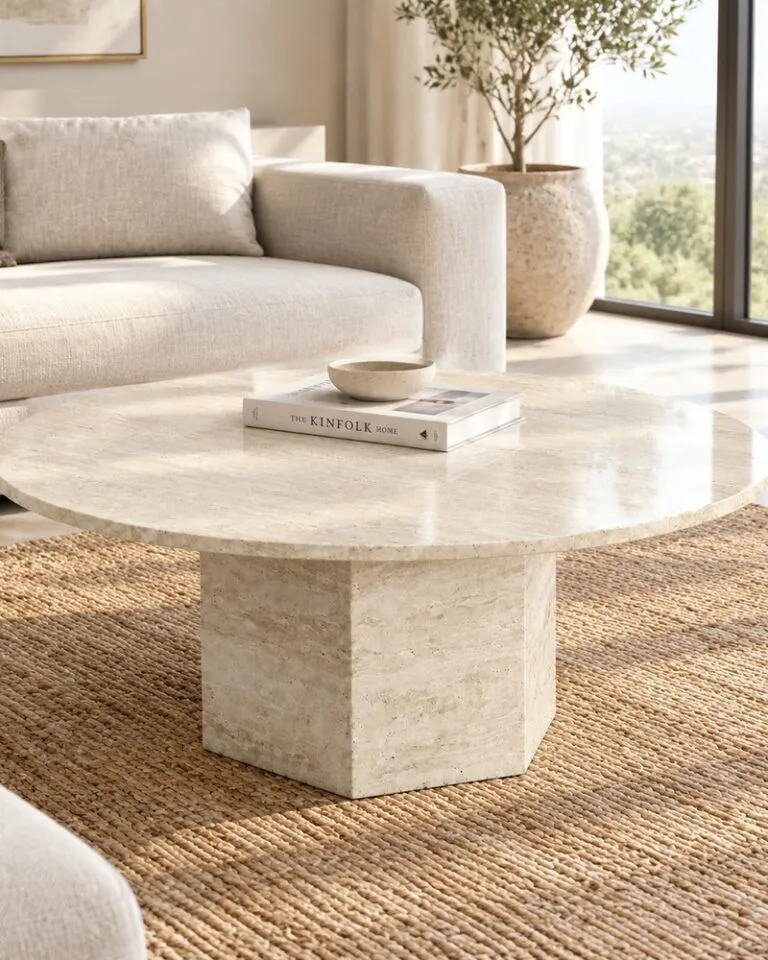
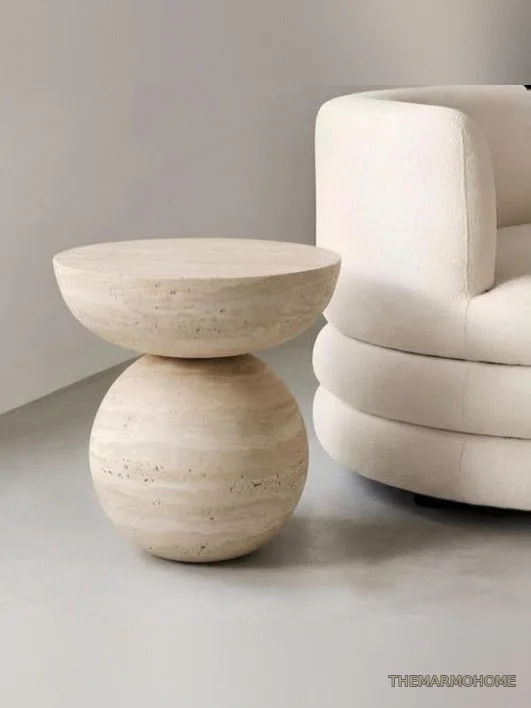
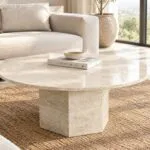
Round or rectangular comes down to traffic, not style. A round top has no corners to clip and no wrong side, so it survives a room people walk through; the beige travertine block round table is $3,230, and the cheaper way into the same idea is the travertine cycle round at $1,840. A rectangle gives more usable surface for the same footprint and lines up with a long sofa — the 105 cm rectangular table is $3,070 and the 170 cm sculptural version is $3,910. The honest rule: sofa against a wall with a corridor in front of it, go round; table floating in an open plan, go rectangular and let it mirror the sofa. What you should not do is buy a round table for a 240 cm sofa — it will look like a side table that got ambitious.

Thickness is where cheap tables expose themselves, and the numbers are not subtle. We cut tops at 20 mm, 30 mm and 40–50 mm. At 20 mm a slab spanning 105 cm visibly dips when you press the middle, and the edge looks thin beside a 4 cm sofa arm — it reads as a tile on legs. 30 mm is the sensible default. Above 40 mm it becomes a weight decision as much as a look: a 105 × 60 cm marble top at 40 mm weighs about 68 kg before the base, and every extra 10 mm adds roughly 17 kg. Overhang follows the same logic. We will not cantilever more than 150 mm of unsupported stone past the base, because that is exactly where a top snaps when someone perches on the edge at a party.

3. Edge and finish: the details that date a table
Edge profile is the cheapest decision you make and the one you touch every day. A square edge is sharp and modern, and it chips at the corner the first time a vacuum cleaner hits it. A 3 mm chamfer takes the burr off without changing the silhouette — that is what we cut by default on every table. A 10 mm bullnose or a full roundover is kinder to shins and hides small chips, which is why we push it for households with toddlers. Avoid the deep ogee and the stepped mouldings that showrooms love: on a coffee table they collect dust in the groove, and every one of those grooves is a thin section that breaks off the first time the piece is moved.

Finish changes maintenance more than any other choice. Polish gives you depth and reflection, and shows every fingerprint and water ring until you wipe it. Honed — matte, sanded, light scattering instead of reflecting — swallows marks into the texture, and it hides the pale dull patch left by an acid etch, which a polished top cannot. Most of the tables we cut now leave honed, and the reason is practical rather than fashionable. Neither finish is acid proof. Sealing fills the microscopic pores and buys you time to reach for a cloth, but a lemon wedge left overnight will still dull the surface. If the table is where wine and children live, take honed and keep coasters on it.

4. Base, weight and delivery
The base decides whether the stone looks like it floats or sits. A closed plinth spreads load across its whole footprint and reads calm; four legs concentrate 70 kg on four small points and will dent a softwood floor. We set a 6 mm shadow gap under the plinth so the top appears to hover, and we hold the plinth back 40–60 mm from the edge. Less than 40 mm and the stone looks like it is overhanging a box; more than 60 mm and the unsupported overhang starts to flex under a hand. On the block-base Arabescato square table at $3,000 you can read the whole logic in one object: no visible frame, no joinery, just mass sitting on mass.

Before you order, walk the route the table will actually take. A 105 cm top goes through an 80 cm door at an angle; a 170 cm one does not, and no amount of packing solves a stairwell. We crate tops in timber with foam blocks at the corners and strap them to a pallet, and we photograph the slab before it is boxed, so you know what left the factory. Freight is door to door and insured, and orders over $3,000 ship free. If the crate arrives with a crushed corner, photograph it before you sign for it — that photo is the difference between a claim and an argument.

5. What we would pick
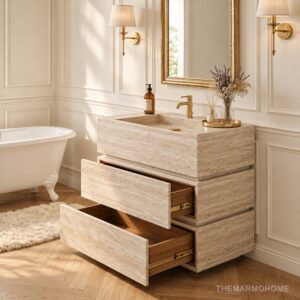
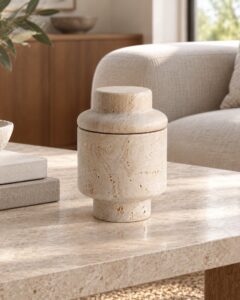
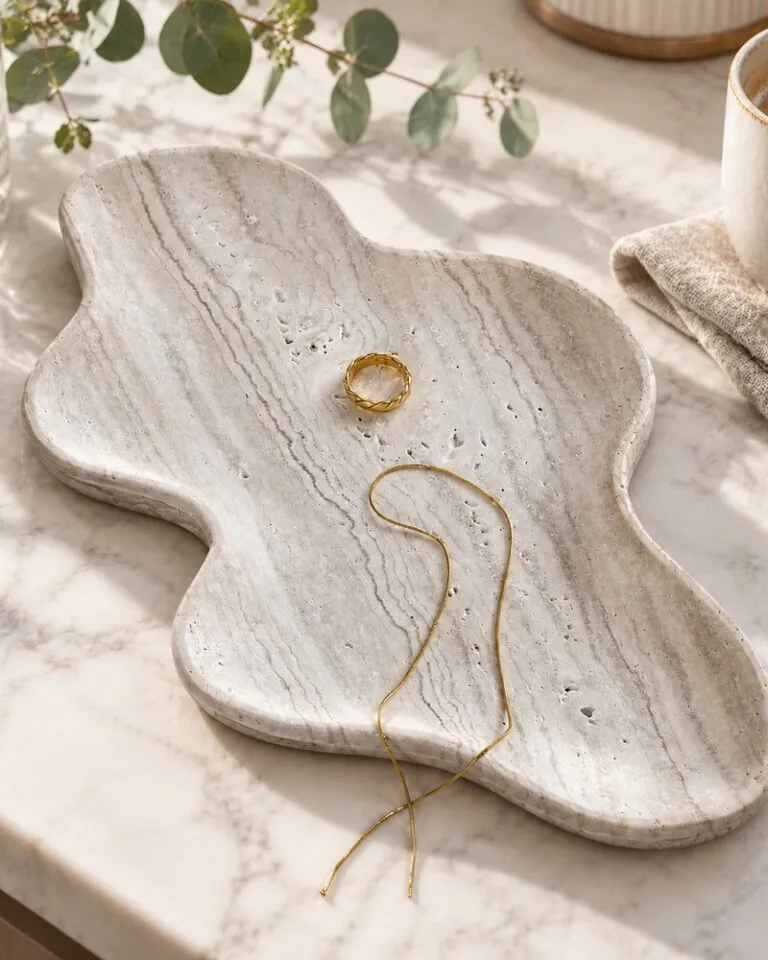
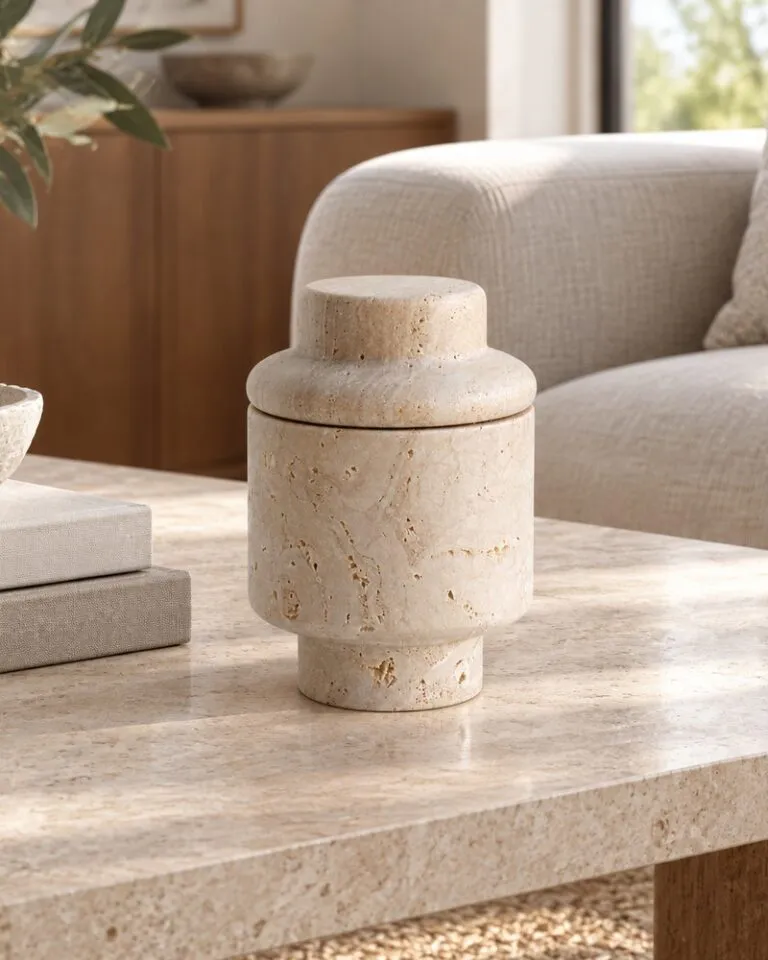
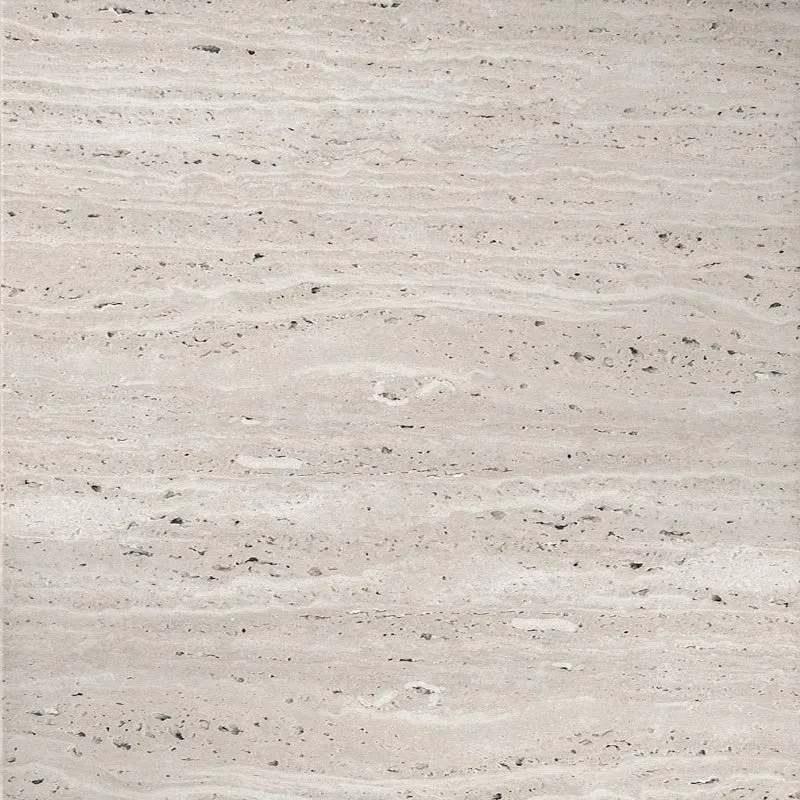
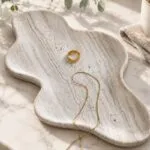
Three shortcuts, based on what actually leaves the factory. If the room is calm and the budget is tight, the Carrara rectangle plinth at $680 — quiet stone, no drama, easy to live with. If the room needs one strong object, Calacatta Viola, and the matte organic egg at $1,620 is the version that does not fight the rest of the furniture. If there are children in the house, honed beige travertine on a plinth at $1,230, because travertine’s texture hides the fine scratches that show up on polished marble within a year. And whatever you choose, keep the offcuts: we cut trays from them, and a tray in the same stone is the cheapest way to make a room look like it was considered rather than assembled.

Frequently asked
Is a marble coffee table practical for daily use? Yes, with two habits: coasters and a wipe. A honed finish swallows most marks, and sealing once a year slows staining. What it will not survive is acid left sitting on it.
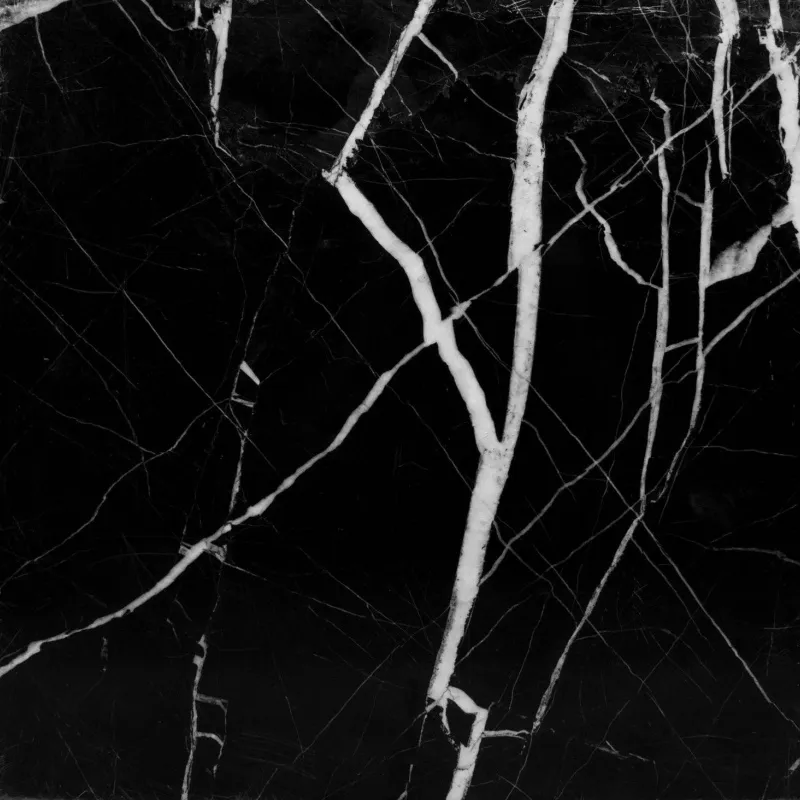
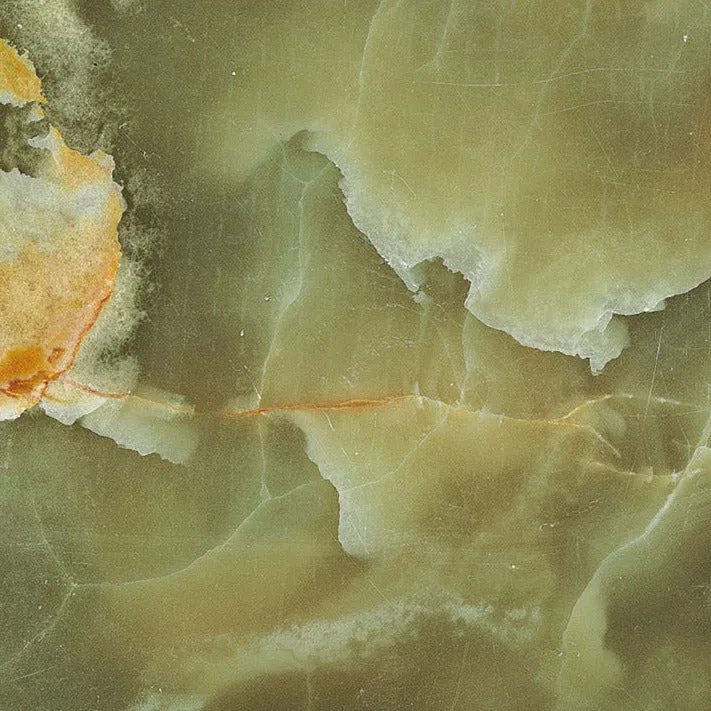
Which stone is best for a coffee table? Honed Carrara or beige travertine for a busy room. Calacatta Viola or Arabescato if the table is the feature. Green onyx only where it will not sit in direct sun.
How thick should a marble coffee table top be? 30 mm is the sensible default. 20 mm dips across a 105 cm span and reads thin at the edge; 40 mm and above is about 68 kg of stone before the base.
How much does a stone coffee table weigh? A 105 by 60 cm marble top at 40 mm is roughly 68 kg, and each extra 10 mm adds about 17 kg. Check the route in before you check the price.
Related guides
All our tables are made to order from a single slab in our own factory — tell us the stone and the size, and we will send slab photos before we cut. Shipping is insured and door to door; orders over $3,000 ship free.

 Calacatta Viola