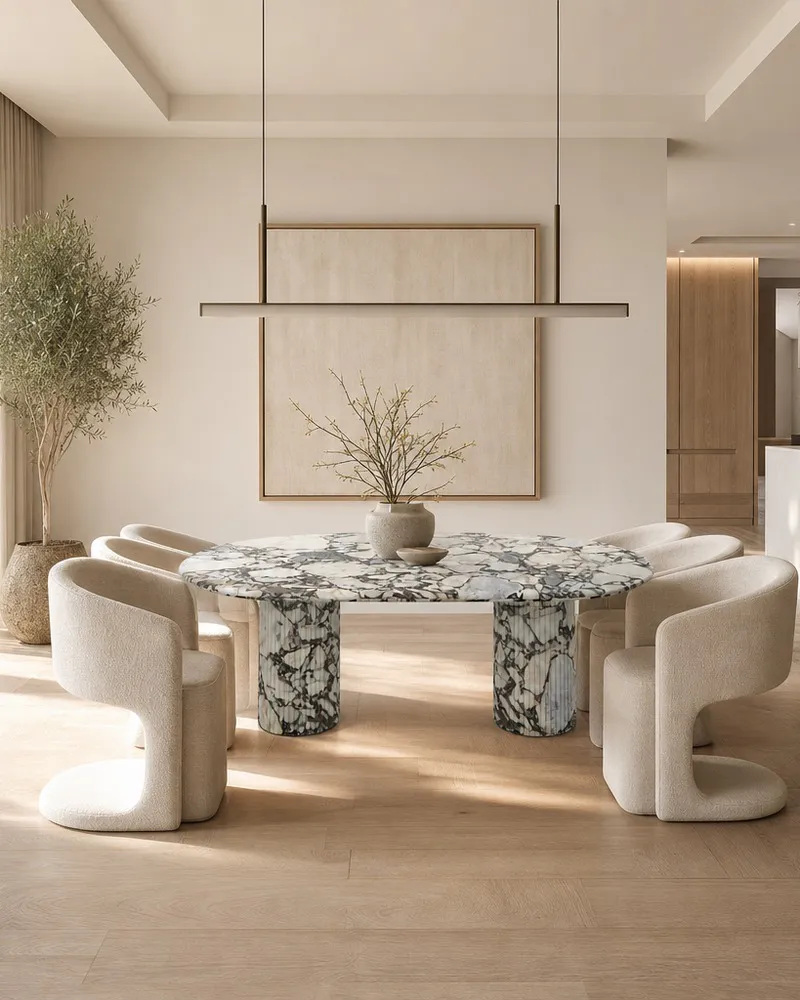
Marble Dining Table Buying Guide: Size, Base and Stone
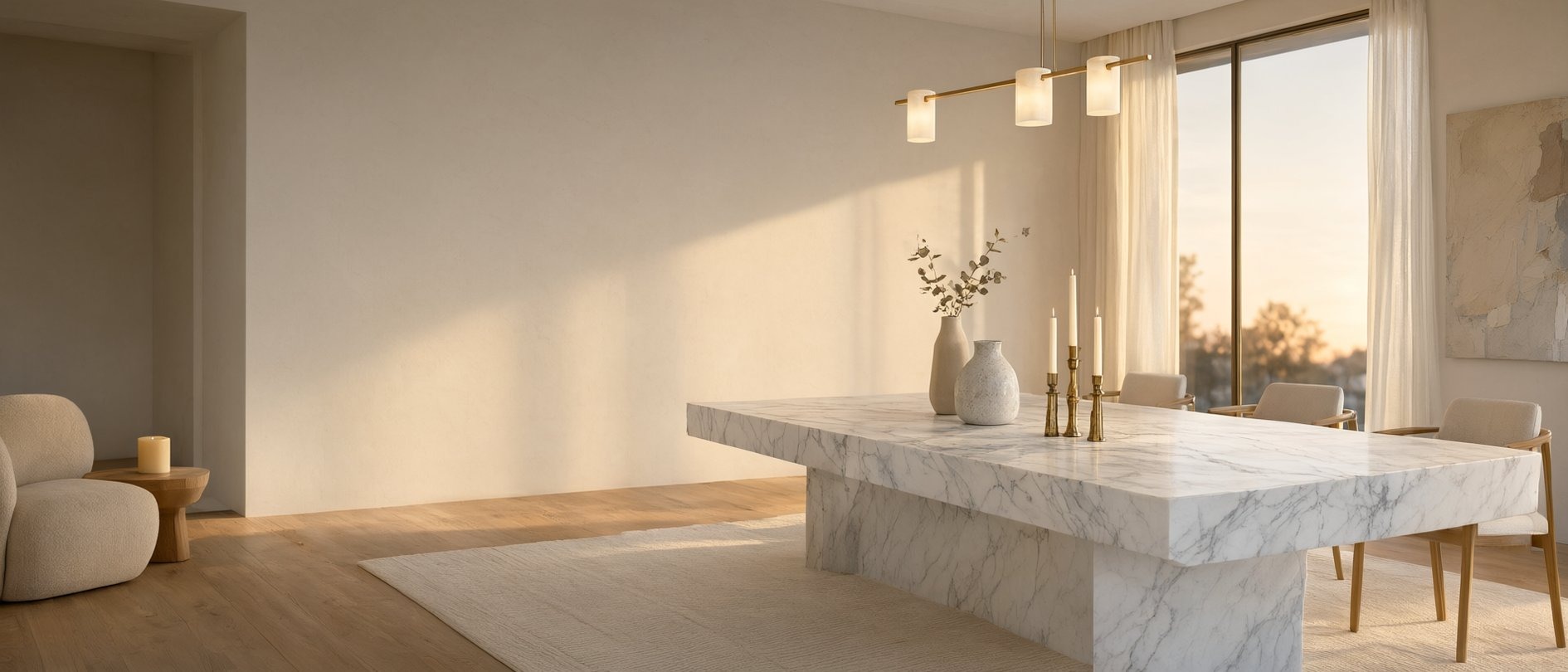
A dining table is the only stone object in a house that gets loaded every day, and almost every buying mistake is made in the same order: stone first, shape second, size last. Reverse it. Size and seating set the slab, the slab sets the base, and the base decides whether anyone can actually sit at the ends.
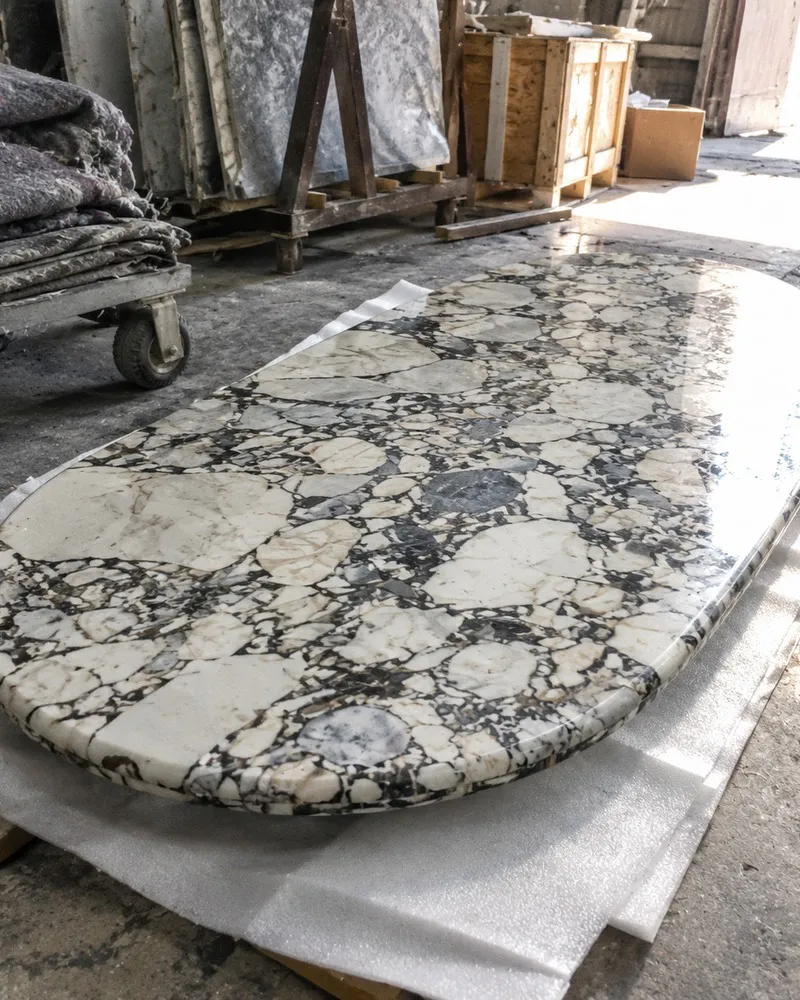
We cut and assemble every table in our own factory from a single board, so the stone in the photograph is the stone that ships. No veneers, no middlemen. Send us your five room measurements and we will photograph the slab before it is cut.
Start with the slab, not the base
A dining table is the one piece of stone furniture in a house that takes a load every day: plates, a hot dish, someone leaning on the edge with both elbows. That is why the slab comes before the base. A 200 × 100 cm top at 30 mm is 0.06 m³ of stone, about 162 kg before anything sits on it; at 40 mm it is 216 kg, at 50 mm 270 kg. The base has to carry that plus 100 kg of tableware without deflecting, and the floor has to carry both. A 350 kg table is unremarkable on a concrete slab and marginal on timber joists over a basement, which is why we ask what is underneath before we quote a size.
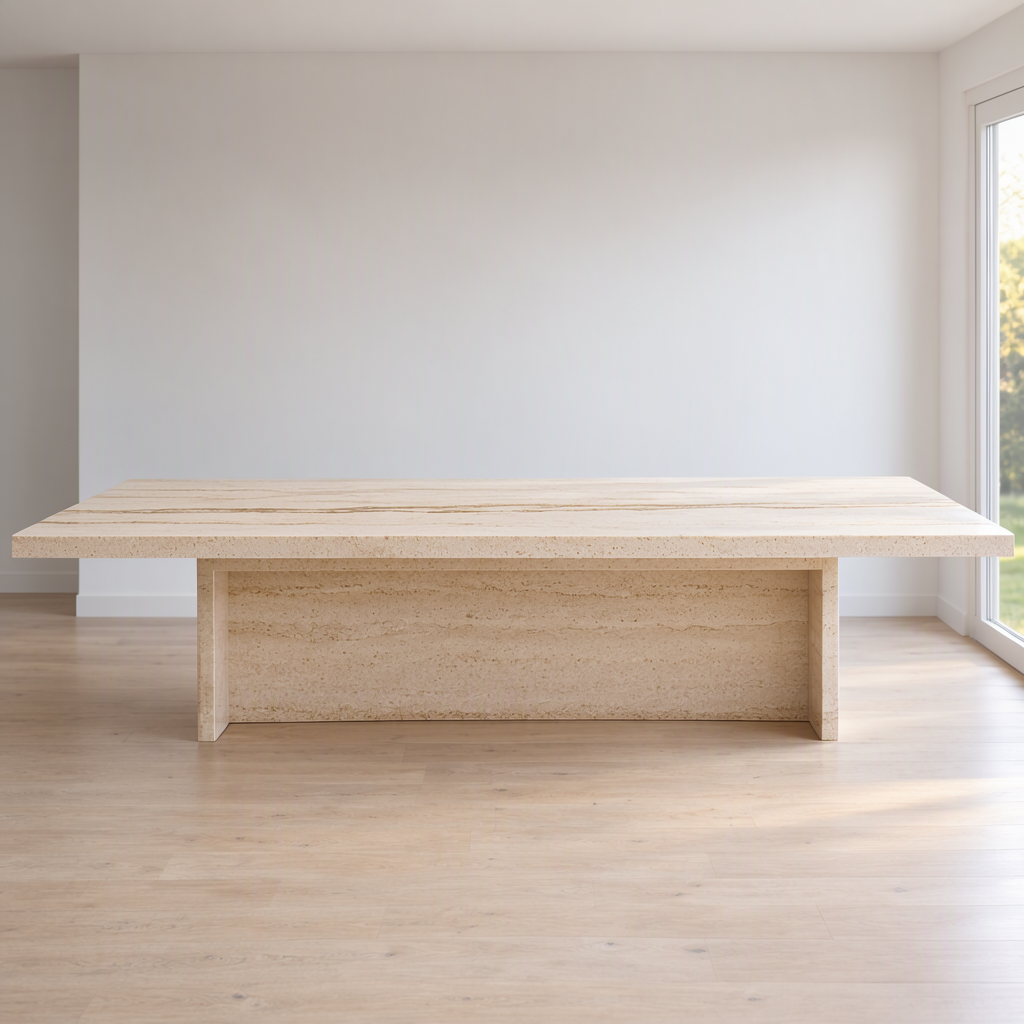
Thickness is also the cheapest way to change how a table reads, and the most common place to be short-changed. A 30 mm top with a 3 mm arris looks light; 40 mm with a 10 mm chamfer looks like a workbench; 50 mm reads as a monument and overwhelms any room under 20 m². Our default is 30 mm up to 200 cm and 40 mm beyond that, because a long thin slab visibly moves when you press the middle of it. Ask for the thickness in millimetres and put a tape on the edge when it arrives. A 240 cm top that measures 20 mm will show a dip you can feel with a palm within two years, and no amount of bracing under it hides that from a guest.
How many people actually fit
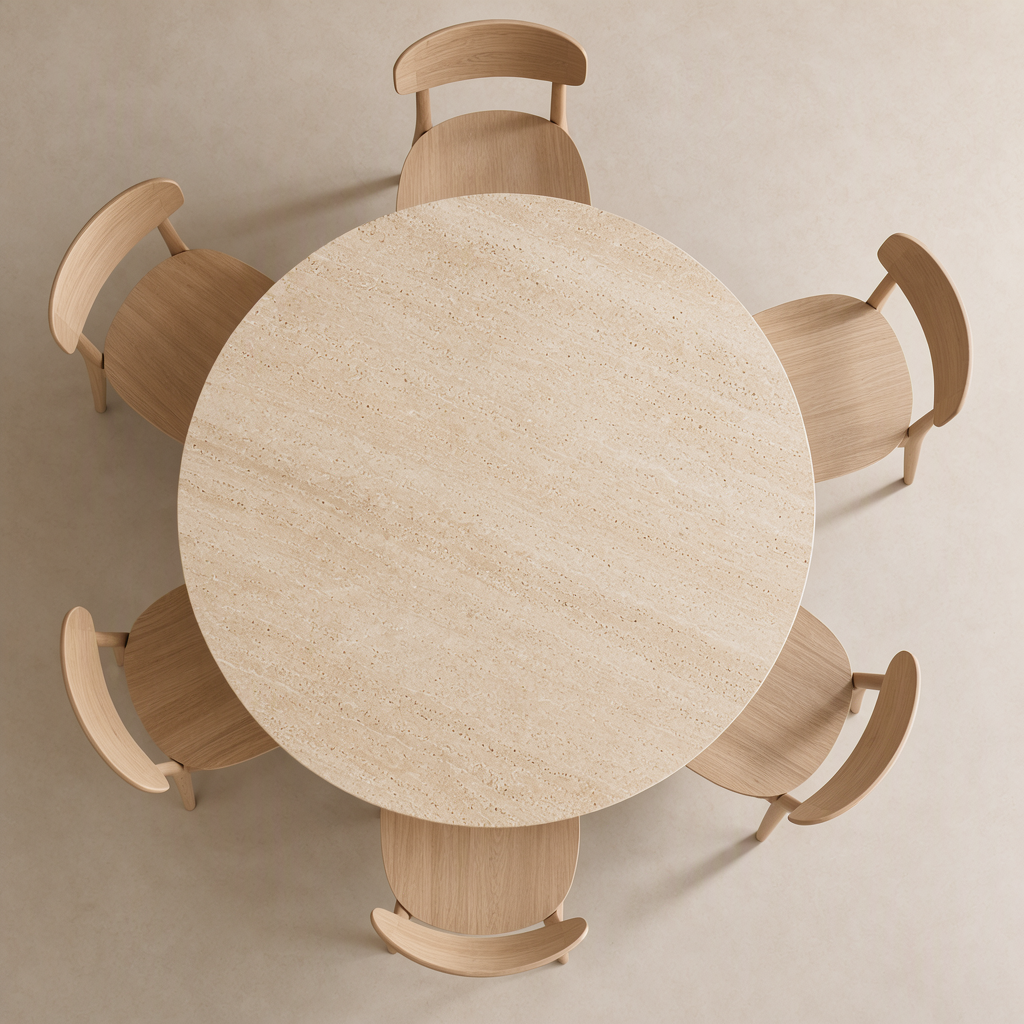
Seating is arithmetic, not taste. Give each person 60 cm of edge and they eat comfortably; 65 to 70 cm and they stop fighting over elbows; below 55 cm two adults will knock glasses. A 120 cm round has 377 cm of edge, which sounds like six seats and is really four once each chair needs a 50 cm wide body. A 140 cm round is the smallest table that seats six without negotiation. A 180 × 90 cm rectangle seats six, three per long side at 60 cm each, and a 200 × 100 cm seats eight. Listings routinely quote one more seat than the table delivers. Count chairs, not centimetres of perimeter.
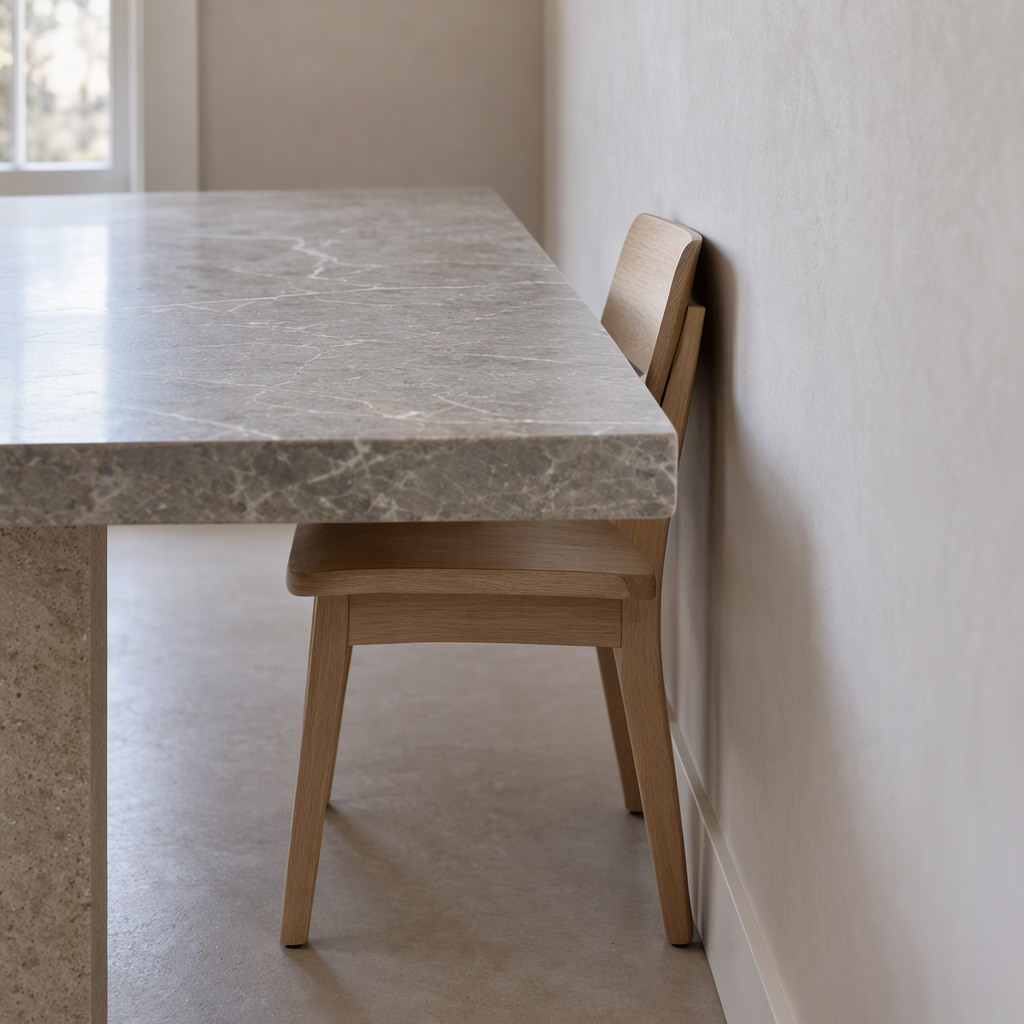
Hosting pushes people toward oversized tables and it is usually the wrong fix. A table for eight that lives with four people spends the year as a shelf. If you host six times a year, buy for four and add a leaf or two stools at the ends. Depth matters as much as length: in a 3 m wide room a 100 cm deep table leaves 100 cm per side, which is the exact minimum for pulling a chair out. Put a wall on one side and you are down to people sitting sideways with one leg out. Measure from the table edge to the nearest wall or sofa back, never to the middle of the room.
Legroom is where cheap tables fail
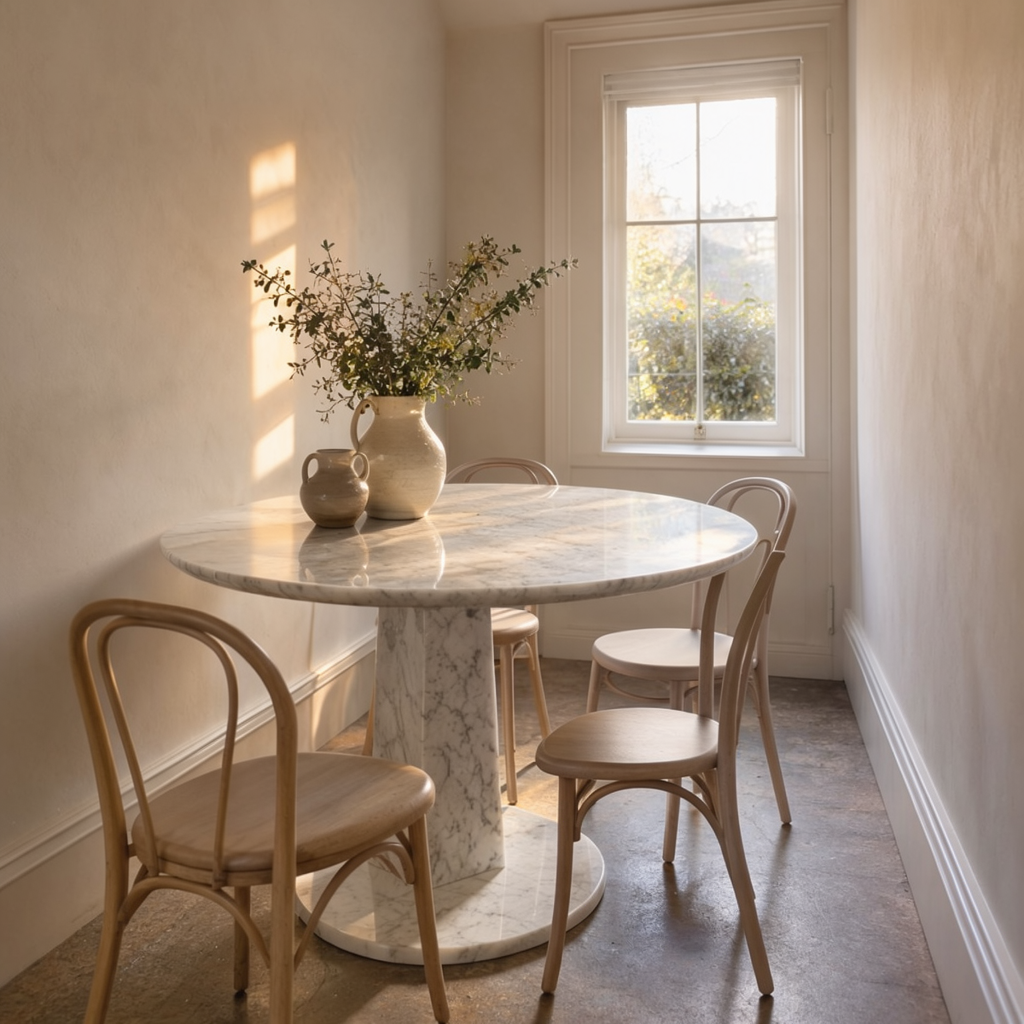
Top height is standard, 73 to 76 cm, and the number that ruins tables is what sits under it. Knees need 60 cm of clear width per seat and about 65 cm of clear height from floor to underside. A pedestal with a 50 cm column under a 140 cm round leaves 45 cm of knee space at the four cardinal seats and almost none at 45 degrees, which is why six people at a pedestal table always sit in the same four places. Four legs give you a leg exactly where the corner guest wants their feet. Neither is better in the abstract: a pedestal suits a table you walk around, four legs suit one pushed into a corner.
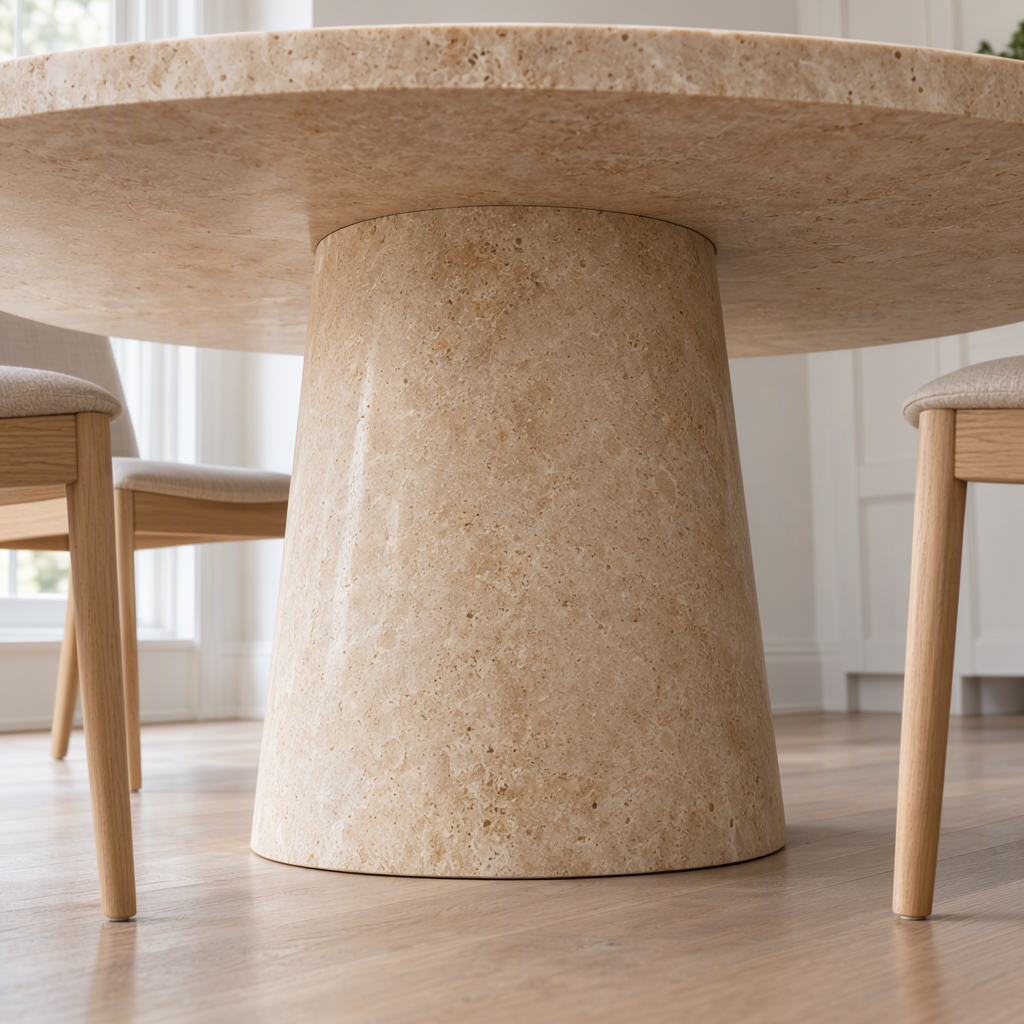
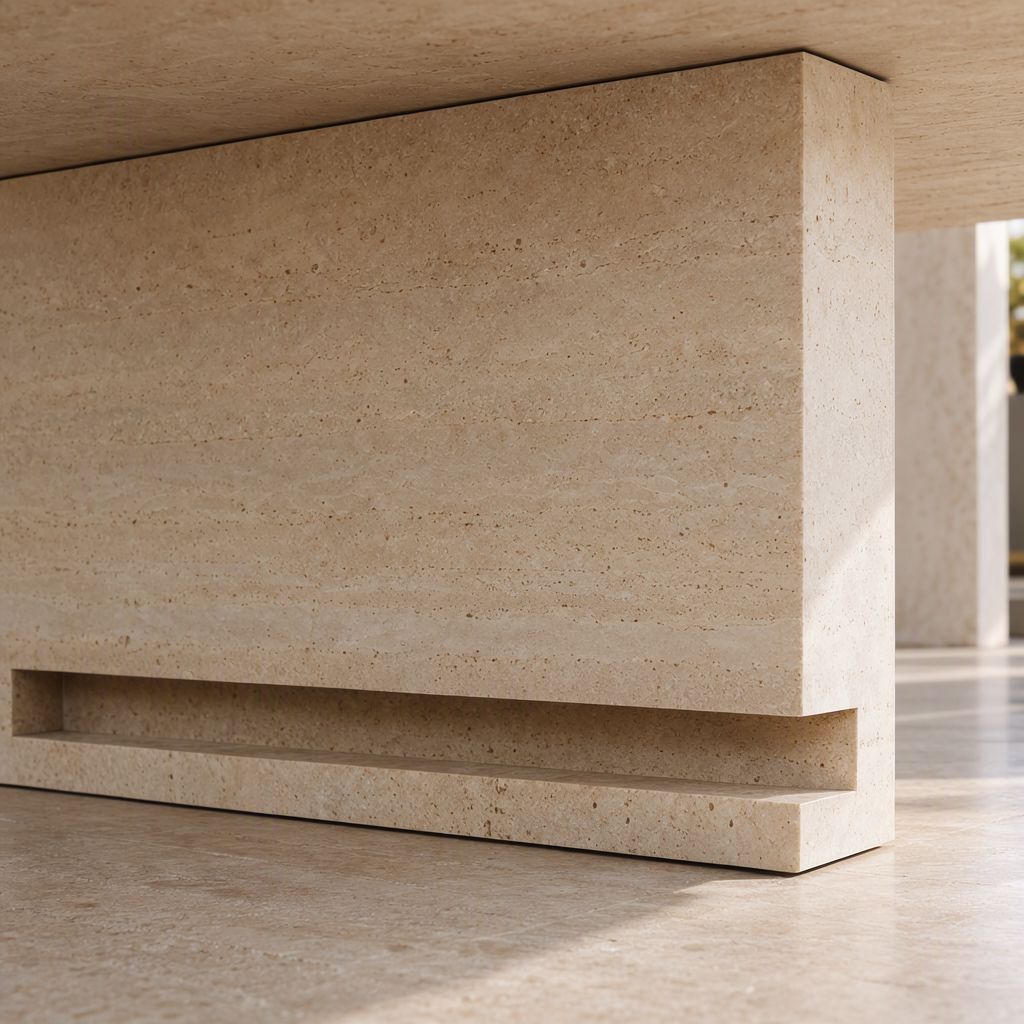
Block and plinth bases are the opposite failure: they look calm and they eat your toes. A plinth set back 30 cm from the edge on a 100 cm deep table leaves 20 cm of foot room, which disappears once someone wears boots. We hold plinths back 150 to 200 mm on dining tables and cut a 100 mm toe recess, so the base still reads as one mass from standing height but your feet have somewhere to go when you sit at the end. On our natural beige travertine rectangle dining table at $3,000, that recess is the reason a 200 cm block table is usable at both ends as well as along the sides.
Round, oval or rectangular
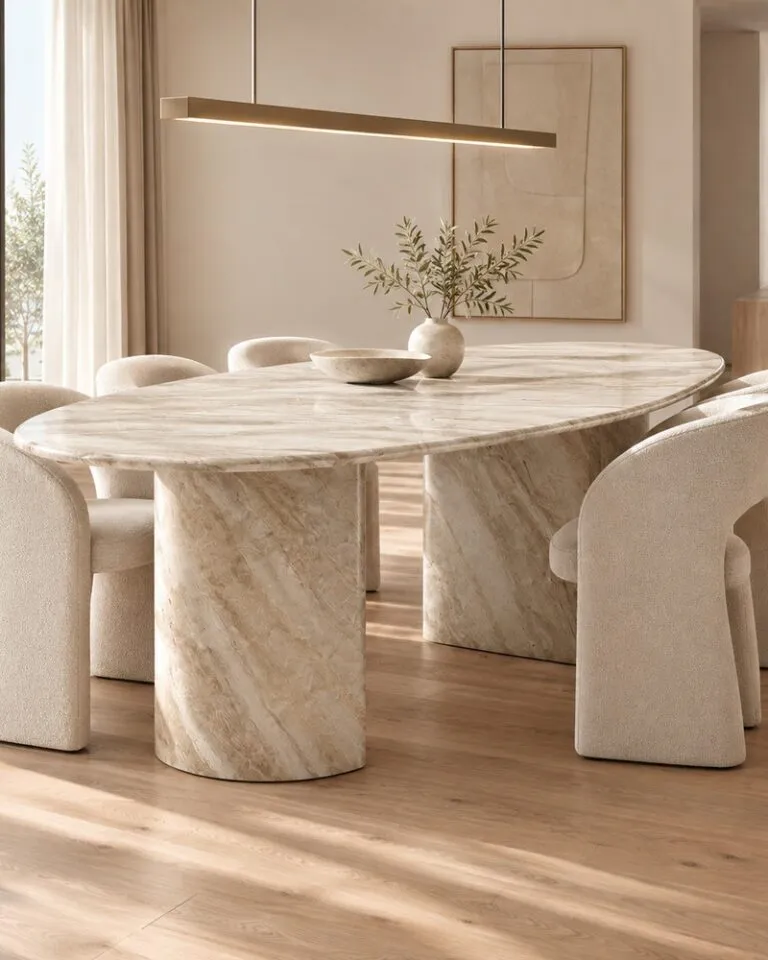
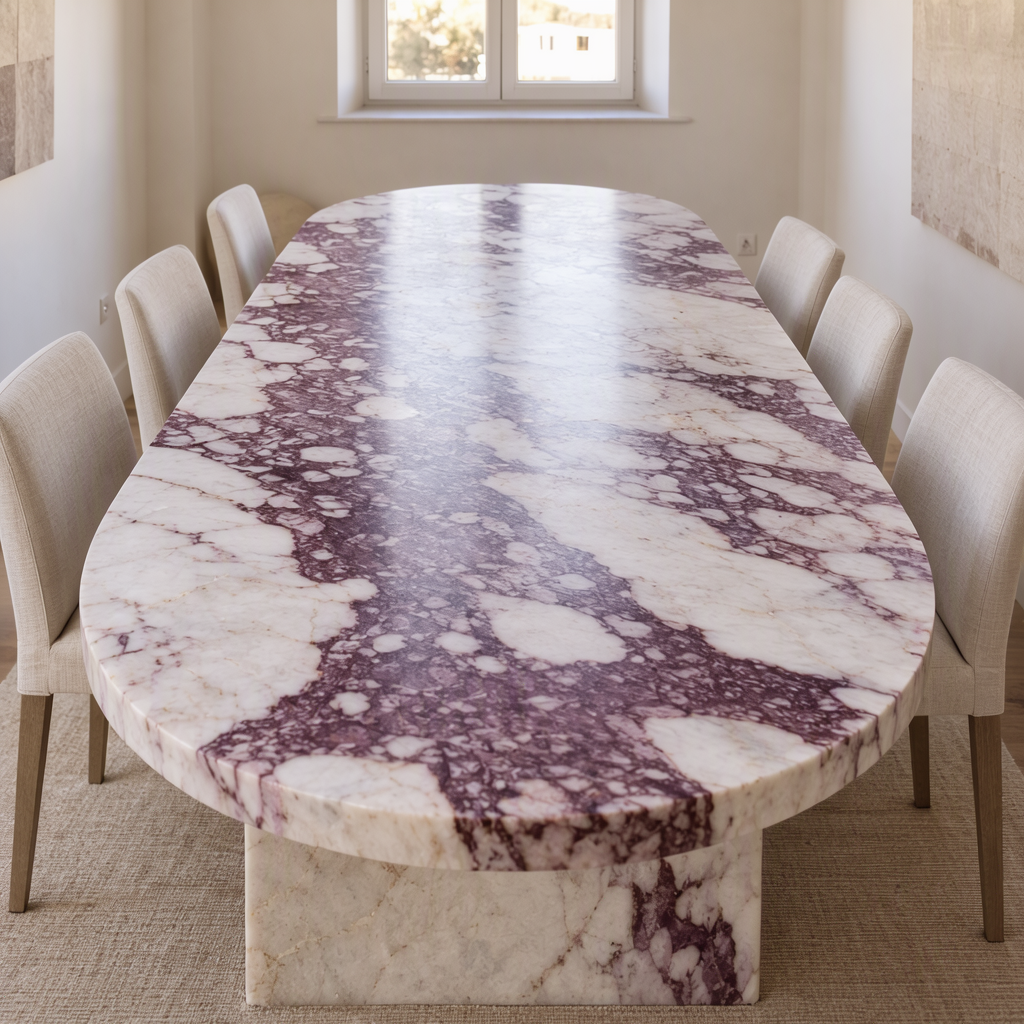
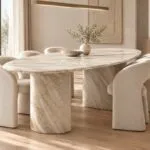
Shape is a traffic decision before it is a style one. Behind a pulled-out chair you need 90 cm; to walk past a seated person you need 100 cm. A round table wastes the corners of a square room but never puts a point in a walkway, which is what matters in a 3 m dining nook. An oval is the answer for a long narrow room: it keeps 200 cm of length and rounds the ends so nobody walks into a corner. A rectangle is the most efficient use of a rectangular room, but past 240 cm it starts to read as a conference table and the far end becomes storage. Start from the shape of the room, then narrow the Marble Dining Tables collection by length and depth, not by photograph. Ask for a plan drawing with the base footprint marked on it before you commit. A base that is wide at the floor gives back with one hand the chair room you gained by choosing an oval. The drawing costs nothing, and it is the only way to see whether four chairs fit comfortably or six only in theory.
Edge, thickness and finish
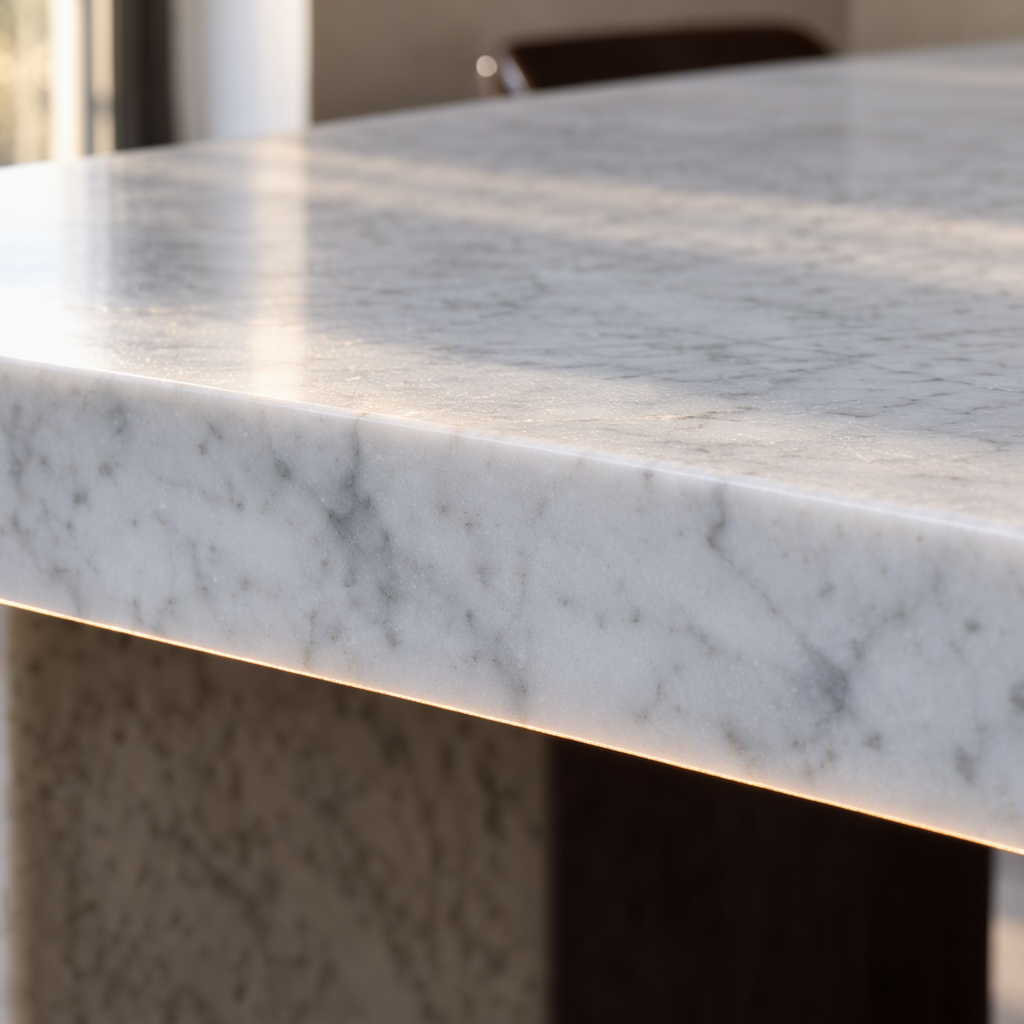
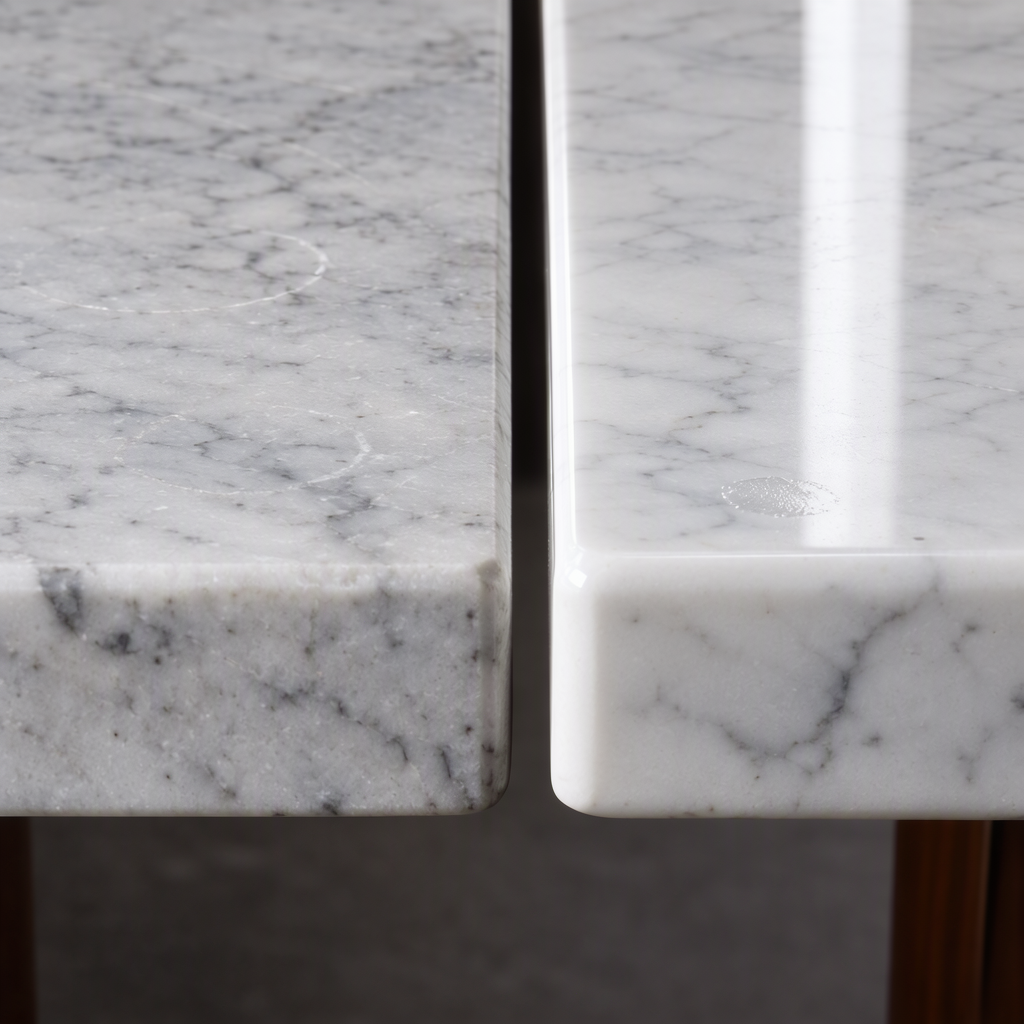
Edge profile is the detail people notice last and feel first. A square edge with a 2 mm arris is the crispest and chips first; a 10 mm chamfer survives a chair back pushed into it; a bullnose reads traditional and collects dust in the cove. Finish matters more than most buyers expect. On honed stone a wine drip etches a dull spot that scatters light the same way as the rest of the surface and is nearly invisible; on polished stone the same drip becomes a grey cloud you cannot clean off, only re-polish. If the table will be used for dinner rather than looked at, specify honed. Polished marble is for a table that gets photographed and then covered with a runner. One more thing nobody quotes: chamfer width decides how the edge catches light. A 10 mm chamfer on a honed top throws a soft grey line down the full length, which reads as thickness even when the slab is 30 mm. That is why we finish most dining tops at 10 mm rather than 2 mm, though the sharper arris photographs better.
What it costs, stone by stone
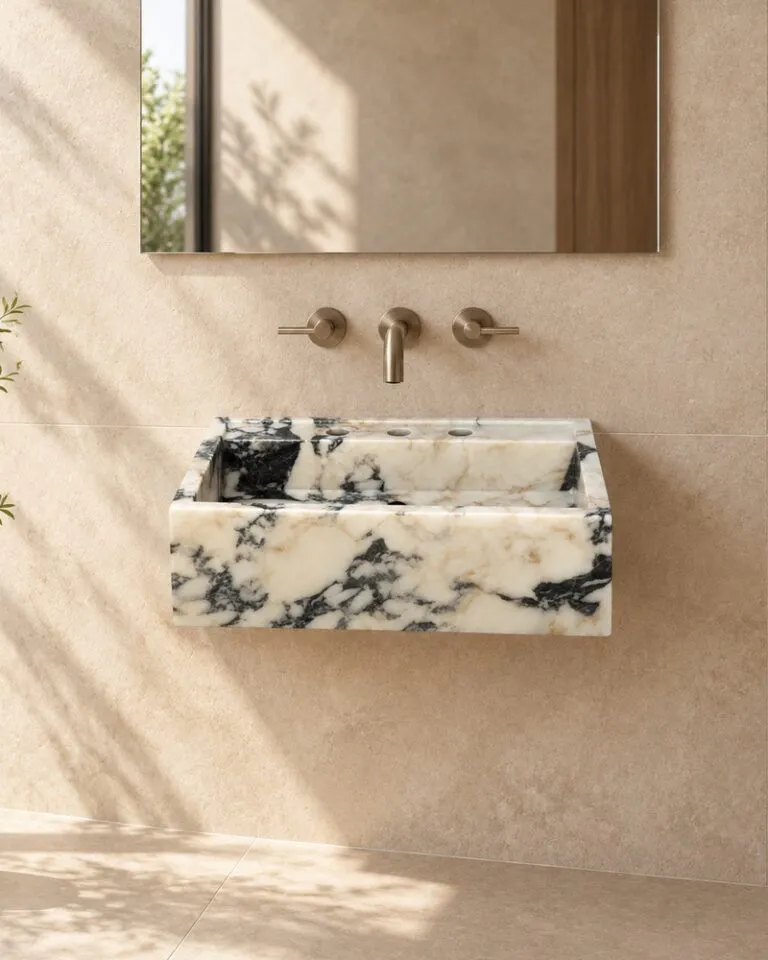
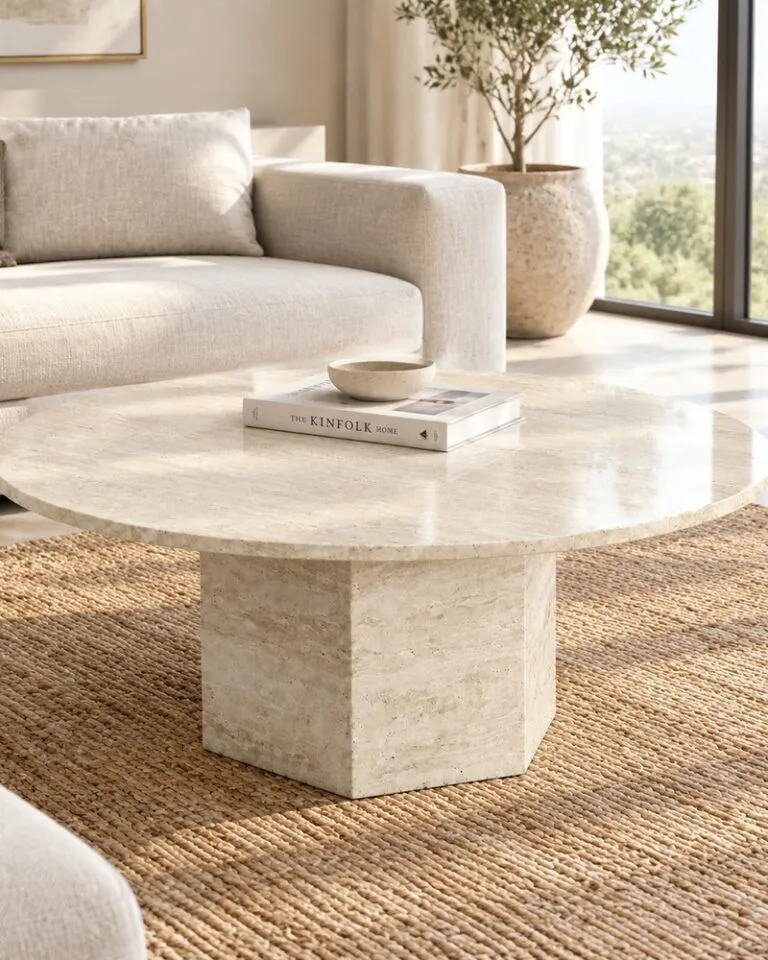
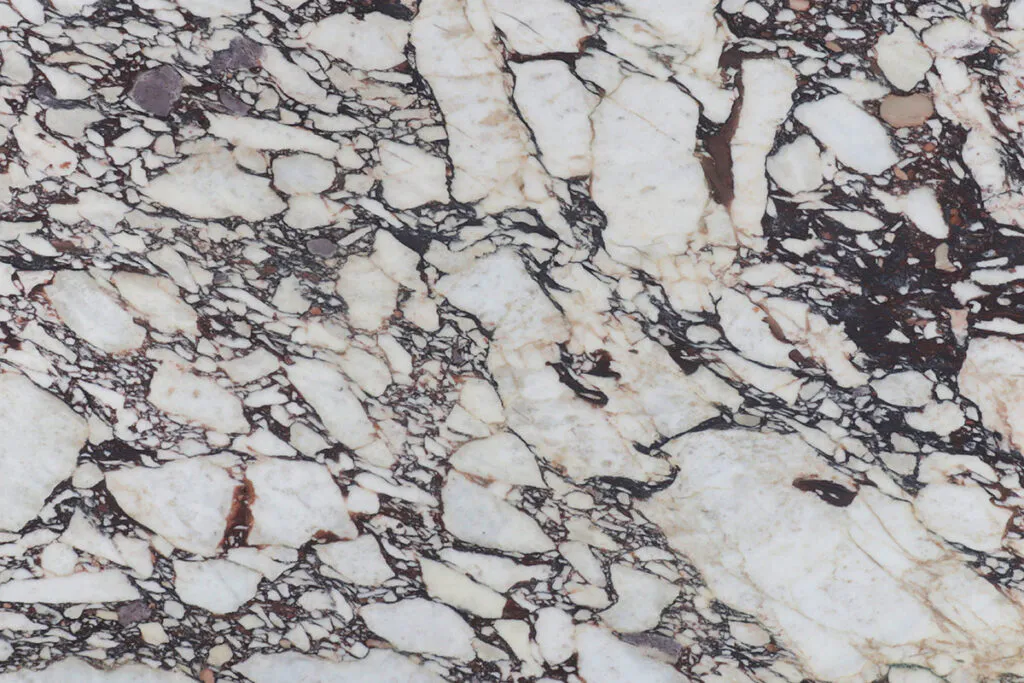
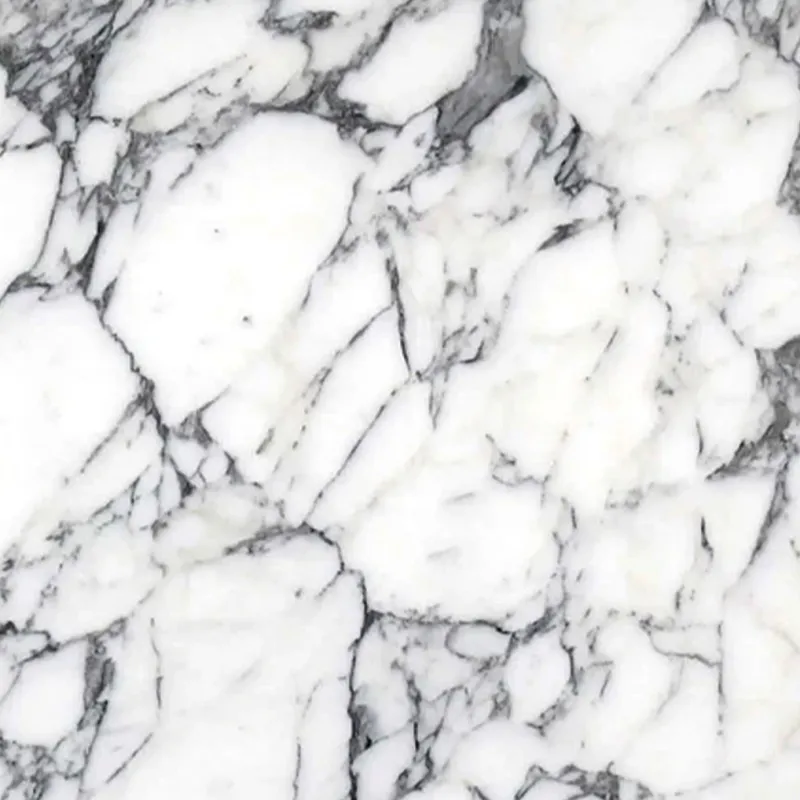
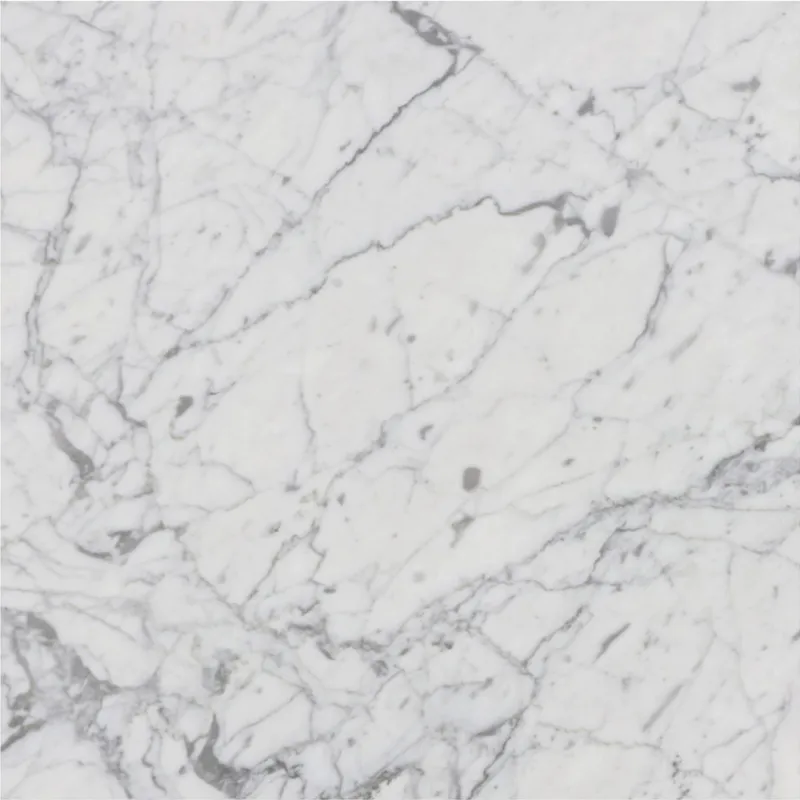
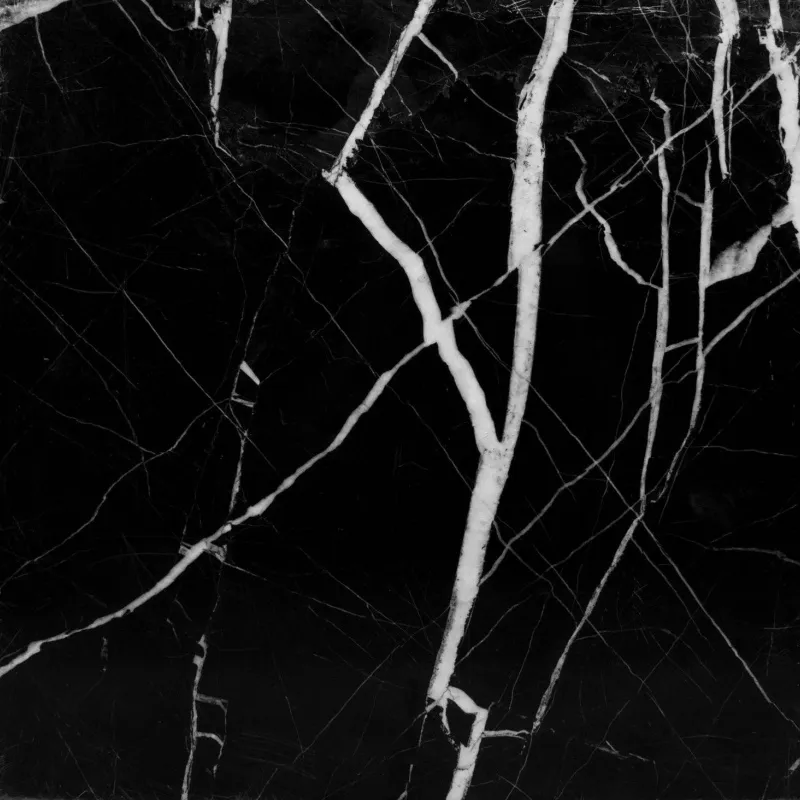
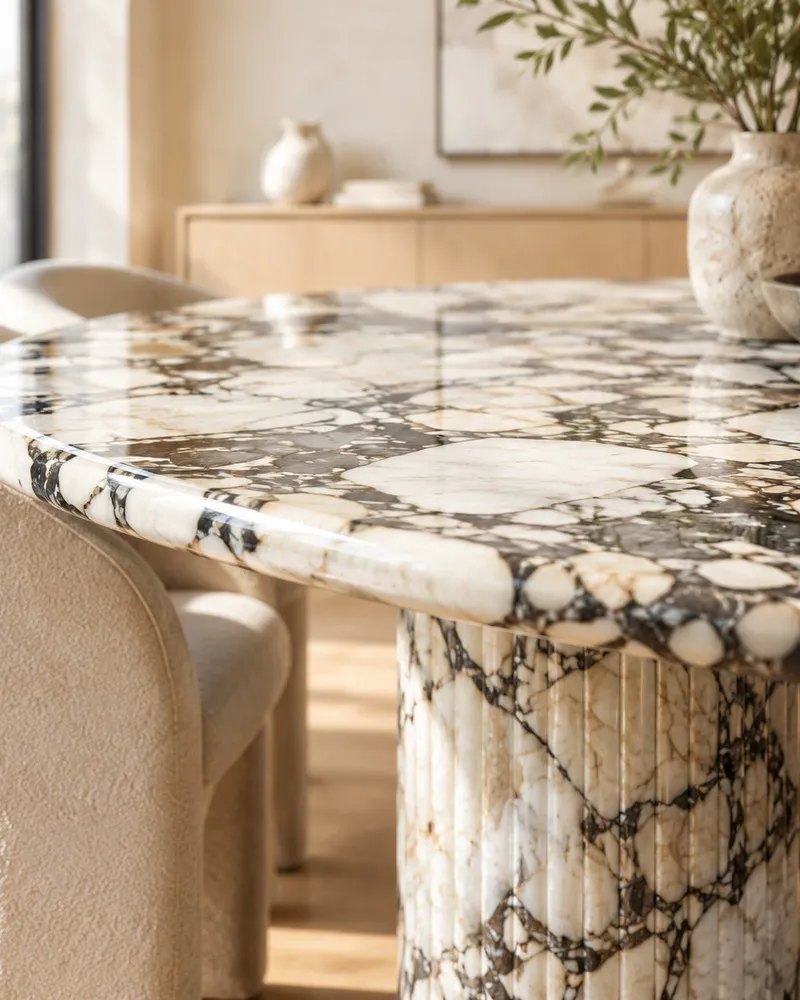
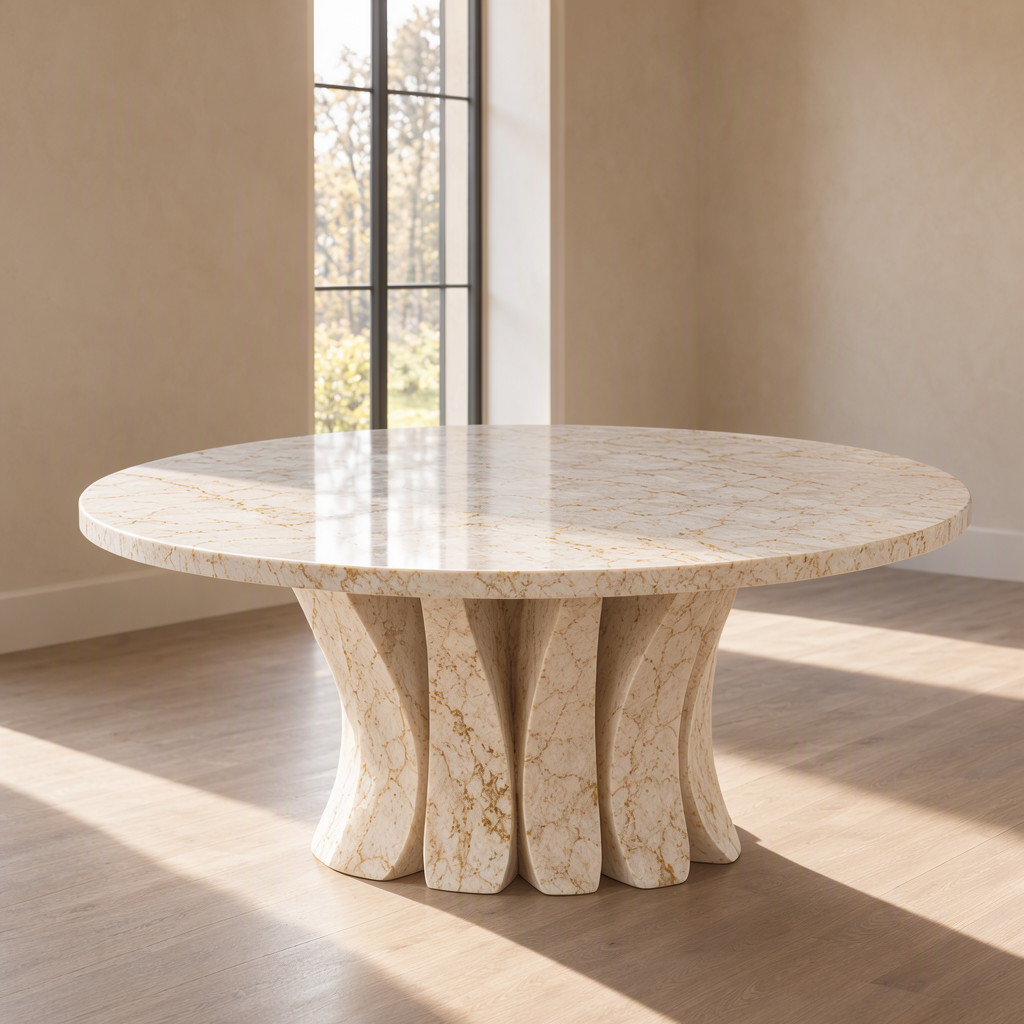
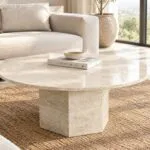
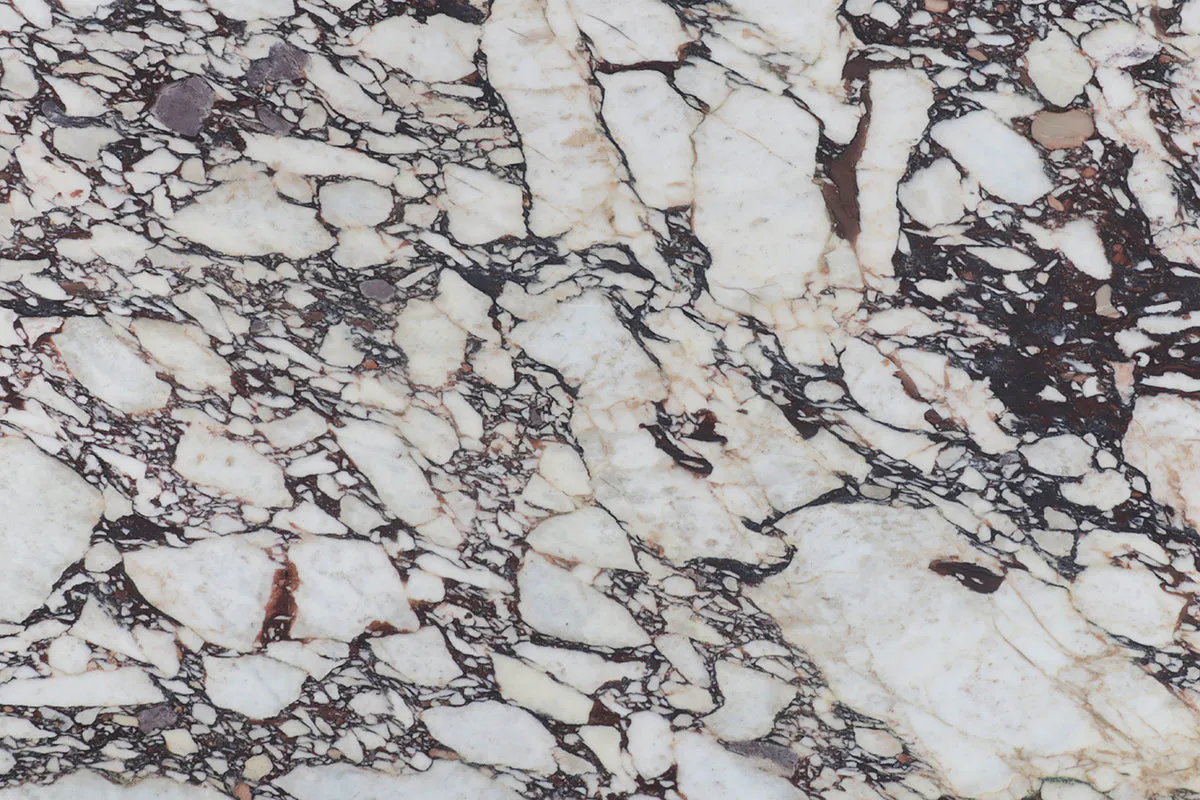
Prices in this category run $1,620 to $6,590 with a median of $3,000, and the spread is stone and base labour rather than size. The cheapest way in is a compact round on a hexagon base: round Nero Marquina dining table with hexagon base at $1,620, round beige travertine dining table with hexagon base at $1,760, or round white Carrara marble dining table with hexagon base at $1,870. An oval tulip base in Carrara is $2,390. The Calacatta Viola round dining table is $3,480, Taj Mahal with a petal base is $4,550, and the Les Quatre Saisons petal base table is $6,590. Above $4,000 you are paying for a scarce block and a base carved from solid stone instead of assembled from slabs. Below $2,000 you are paying for size and nothing else. The base is where the money goes. A hexagon or petal base cut from solid stone is one piece and one block; a D-shaped base is usually laminated from two or three slabs, which is honest, cheaper, and shows a seam if you look for it. Ask which one you are buying.
Two costs that are not on the sticker
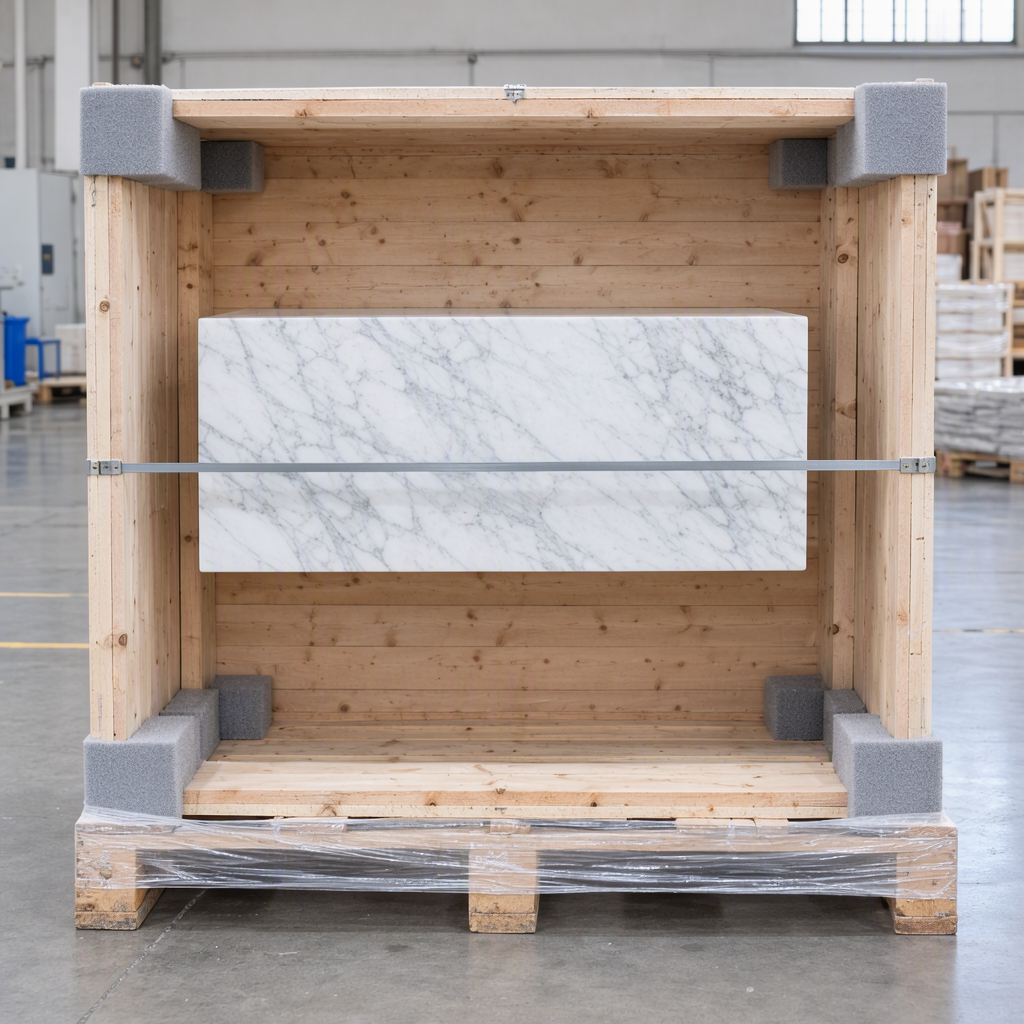
Two costs sit outside the sticker. Freight: a crated 200 cm table is 300 to 380 kg on a pallet that will not fit a standard lift, so measure the lift door, not the cabin. A walk-up delivery without a lift adds a two person carry charge, quoted per flight in most cities. Installation: a 216 kg top needs two people and a suction cup, and the base has to be levelled before the top goes down, because a 2 mm shim under a plinth becomes a 6 mm rock at the far end of a 240 cm slab. We ship top and base in one crate with foam corner blocks and a steel band, and photograph the packed crate before it leaves the factory. If the table ships in two pieces, the joint sits under the top and you will never see it, but the base arrives with a bolt kit and a levelling tolerance you have to work with on site. Budget an hour for that and do it before the top goes on.
What to measure before you order
Five numbers decide whether a table works, and all five come from the room. Clear width from the table edge to the nearest wall: want 100 cm. Door width on the delivery path: want 80 cm clear, then subtract the crate, which adds about 10 cm per side. What the floor is made of, if you are above a basement. Seat height of the chairs you already own: 45 cm seats want a 73 to 76 cm top, and a 40 cm stool under a 76 cm table is a child’s seat. Finally the lift door diagonal. Send us those five and we will tell you which of the 70 dining tables in the collection actually fits, or whether the base has to ship in two pieces. The order is not negotiable: wall clearance and door width kill more orders than budget does, and both are free to measure. We would rather lose a sale than ship a table that has to live in its crate because it will not go up the stairs. Send the numbers before you fall in love with a slab.
Frequently asked
How many people fit at a 180 cm dining table? Six, three per long side at 60 cm of edge each, provided the table is at least 90 cm deep and the base leaves 60 cm of clear knee width per seat. Eight only works if you accept 45 cm per person, which is a bench, not a chair.
Is a marble dining table too heavy for a wood floor? A 200 × 100 cm top at 30 mm is 162 kg and the base adds 80 to 150 kg. That is fine on a concrete slab and on joists at ground level; over a basement or on a suspended timber floor, put the table near a load-bearing wall or beam rather than mid-span, or drop to a 140 cm round.
Honed or polished for a dining table? Honed. Wine, vinegar and lemon etch calcium-based stone on contact, and an etch on honed marble scatters light like the rest of the surface, so it disappears. On polished marble the same spot turns into a grey cloud that only re-polishing removes.
Will a 200 cm table fit through a standard door? The top usually will not, and it does not have to: a 200 cm slab travels on its edge through an 80 cm door. The constraint is the crate, which adds 10 cm per side, and the base, which cannot be squeezed. Ask for the base dimensions and the lift door diagonal before you buy.
Related guides
All our tables are made to order from a single slab, with the base cut from the same block. Tell us the seating count and the room measurements and we will send slab photos before cutting. Shipping is insured and door to door; orders over $3,000 ship free.


 Calacatta Viola